anzeigen
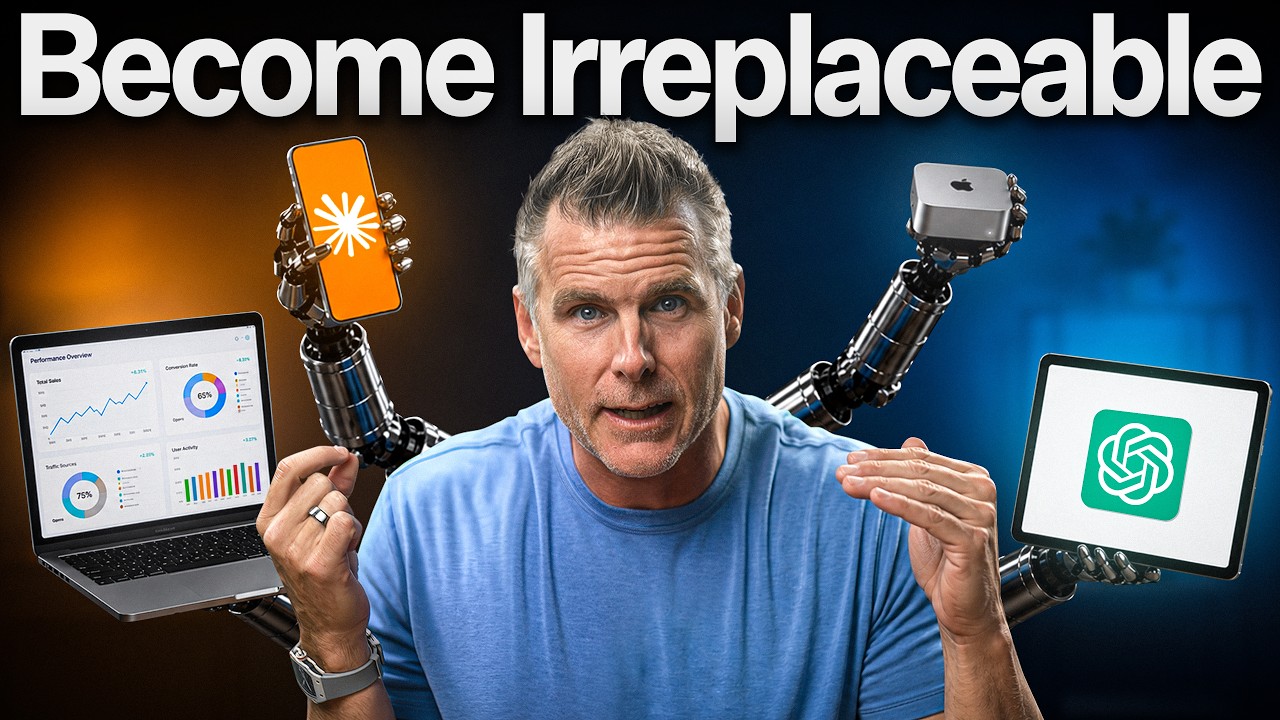
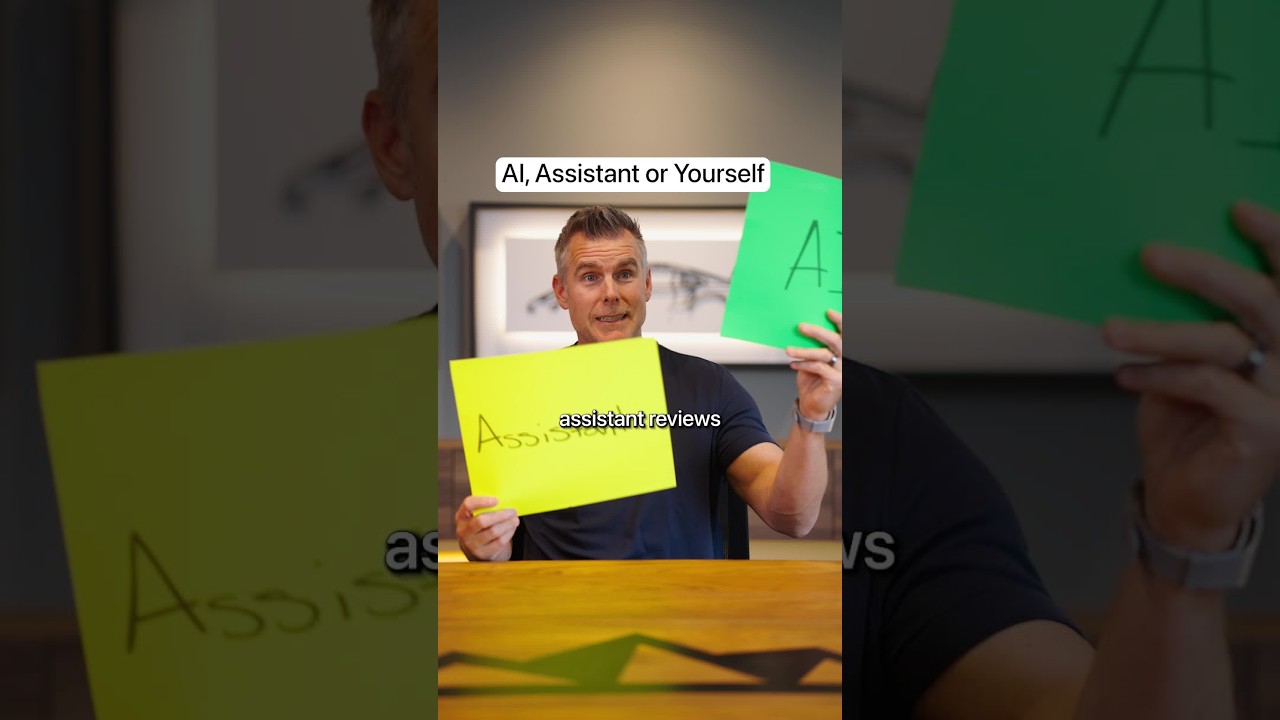
Winning with AI in 2026 is actually pretty easy. Most people are just thinking about it the wrong way, and I'm not going to tell you how to get better at prompting or use this AI tool. That won't get you anywhere unless you use a simple framework. I've built and scaled several companies past a million dollars in under 6 months through Martel Ventures, and the most important thing to understand first and foremost is AI doesn't actually solve problems. The person using it solves problems. AI just does stuff. For the longest time, winning has been man plus tool, man plus laptop, man plus bike, and it still is man plus tool. So, as long as that's still the equation, then your job is to be a better man that uses the tool. Like, if I just gave you a computer and you didn't know how to use it, it wouldn't make you any money. And a lot of people think, "Now that I've got AI, I should be rich." Unfortunately, AI isn't going to make you rich. You being the person using it and the tool, that's how you get rich. And the truth is, some tasks belong to you and some tasks belong to the AI. And if you're stuck between both of them, you'll just feel really busy, but you won't be making progress. In this AI era, the person who understands the problem the best, they'll actually win, not the person who understands the tool the best. And to figure out what problems you should be solving with AI, I've come up with a simple framework. I call it the gain matrix. There's four letters and four quadrants. The left side is easy for computers, the right side is hard for computers. The top is easy for humans, the bottom is hard for humans. Each quadrant will show you how to collaborate with AI to get things done. And the easiest one to start with is give it to AI. This is easy for humans, but also incredibly easy for computers. Think about all the stuff that you started using ChatGPT for, things like synthesizing text or looking over emails or updating your CRM or creating spreadsheets, things that you could do, not hard, but the AI does it way better, way faster. Yesterday I was working with my finance guy, and he was working on a new proposal, and I was like, "Bro, stop writing. Just talk and give it to AI. It'll analyze the financials, it'll analyze your words, and it'll put it together, and it'll get us a table that gets us clear on the decisions we have to make to move it forward. Why are we trying to do stuff that's so wildly easy for AI that takes our time just cuz we can do it?" These are just the small tedious tasks that AI can do, and you just want to give it to it and automate it. I'm talking about things like meeting notes, right? I use Granola. It's one of the best tools out there, but essentially every meeting is recorded, it's summarized, it's tagged, it's added to Notion. It is the easiest thing. The other one is pulling reports, okay? Think about the ability to have dashboards of all the data about your life and your business in one place so you can see if anything's going off, if all the numbers are what you expect them, and it's just a really easy thing for you to do and automate. And then the third is to summarize your messages, okay? Think Slack, think email, think text messages. You can do a lot of stuff with AI that most people have no idea about. And these are just some examples. And I know the dopamine hit of clearing out your inbox and getting to inbox zero can feel awesome, but it's still work, and you don't have to do it. Let's let AI do it. So, for example, this morning, I asked my agent to go check all of my messages, my email, my calendar, my Slack, and tell me the top three things that I need to prioritize today based on my goals. So, it told me I had a YouTube shoot and a reel shoot, so I got to save my energy. It told me that Anne needed a call to review the podcast that I'll be doing on my San Francisco trip. It also said that team needed sign-off on a new feature that we're adding to our Apex voice system. Now I know exactly what I need to do today without scrolling through the countless messages, without getting distracted, without doing stuff that I don't need to do. So, how do you know when a task belong in the G quadrant? I use what's called the rule of R's. First, is it repetitive? Is it something I have to do at least once a week? Second, is it rules-based? Does the task have the same inputs and outputs every single time? The third is does it generate a return? Does it take me more time to run this whole automation than just do it every time? The last thing I want to do is spend 60 hours to build something that takes me less than 2 minutes a week to do. So, if the answer is yes to all three, repetitive, rule-based, and gives me a return on my time, then I hand it to the AI today. And look, you can use a ton of different AI tools for this quadrant. Some are Some are awesome. So, to help you out, I put together my entire AI tech stack, every tool I use in every business that I own to run a super efficient business. It's 100% free. Just DM me the word YouTube stack on Instagram and I'll send it right over to you. Now, that's the easy stuff, and with it, you could probably free up a couple hours of your week. Now, we need to move on to the next quadrant where the real work happens. Quadrant number two, accelerate. I know my handwriting sucks, but just listen to my words, okay? Accelerate. Now, this is where it's hard for humans, but easy for computers. Really complicated processes where you're trying to find a signal in the noise, AI strives at this thing. And the cool part is you can accelerate all that work with AI, where AI buys you back days of work. So, here are just a few things that you can use AI to accelerate with. First off is research. I use this probably the most every day. I have an idea, I go to my AI. I go, "Hey, do some research, find some people, tell me what you think." "Hey, I found this link for this cool idea. Tell me based on what I'm using today, is it helpful? Should I add it?" Do deep research projects around strategic decisions. Look at my life, tell me is there anything I'm missing? The other one is data analysis. If you're starting off as a business owner for data analysis, think about it. You have Facebook ads, you can get it analyzed. You have social media data, get it analyzed. You have contracts, why don't you ask it to go analyze all your legal contracts to see if you signed something you probably shouldn't have. You shouldn't be spending hours on spreadsheets, especially creating anything from scratch. That is where AI shines. Market breakdowns, like figure out what's going on in your industry, what's going on in the market. Every morning, I have multiple prompts that scan and research and figure out what's new in the news that tells me all the things I should be paying attention to as an innovator in my space. Your job as a leader is to be able to see around the corner. The news is out there, have the AI go analyze it. When you think of tasks in this quadrant, these are the three questions you can ask yourself. One, is it looking for a pattern? Because AI can spot patterns faster than any human. Two, would it take you hours to do manually? Or would you normally hire a really expensive specialist to do this? Think about like visual designers, researchers, consultants. That. Most consultants just ask you to borrow your watch and tell you what time it is. These are the signs that you should accelerate that type of work where you're processing it with AI. I see a lot of people not even accelerate because they're like, "I just don't think the output is very good." And I'm like, "Fine, then use my 10 80 10 rule. 10% ideation, the input, the prompt, the innovation, have it do the 80% research, have it go do some of the work, and then come in at the very end for the last 10% where you give it the thing that makes it really awesome. At least the AI took 80% of the work off of your plate. 80% done by somebody else or AI is 100% awesome. So so far, we've been giving AI just the easy stuff. This next quadrant is where we start adding the human element to the mix. Quadrant number three, integrate with AI. This is where it's like still hard for computers and hard for humans. AI can help you get some things done, but the human has to still be the director. And unfortunately, if you don't have experience or taste, it's actually really hard to get great work out of this. And the truth is is the AI isn't perfect. Did you know if you ask the AI that you're going to go wash your car and the car wash is 50 m away from where you live, and you asked it should you take your car or walk, it would actually say you should walk. So right off the bat, it can't be left to do really important creative strategic work on its own. It doesn't have the context, it doesn't have the nuance, and this is where having it help you calibrate makes a lot of sense. AI can generate 2,700 versions of anything, but it still takes a human to look at it and go that feels right. That is the way I would do that. So, here are some things to integrate with AI. Number one is creative work. I really don't know many people in today's world. I don't care if it's media or ads or brainstorming or design or brand where they're not using AI to come up with illustrations, examples, to help shape the idea, to give them something visual they can look at. Most music today uses AI in some aspect of the production of the beats of the sound. It still takes a human with an ear for what the world of the market or the culture wants to decide how you're going to finalize and shape a song. Next is digital products. This for me is like building out MVPs. Think about the prototypes. Think about the apps. If you haven't tried building something like an app or an artifact or some kind of visualization, you're missing the opportunity. It still requires taste. Still requires vision to direct it, but the AI can execute. It can write the code. It can publish it online. It's kind of wild what it can do for you. And the third is strategy. Strategy equals sequencing. AI can suggest options, but AI doesn't know your personal preference. know other people's psychology. It doesn't understand the situation, the landscape of your world. So, it can give you ideas, but you still have to make the decision. So, partnering with AI to give you those options, huge opportunity. For example, when I wanted to create a workbook for my book Buy Back Your Time, I asked the AI go through my book, pull out the frameworks, and build me something I could look at. The first version was fugly. I couldn't believe that it would design these diagrams this way, that the workbook was laid out that way, but it at least gave me something to work with that I could prompt and change and prompt and change. Eventually, I got it to a place where I'm like, yes, this looks good. Give it to my designer. He makes it look great. Now, I have a completed workbook. The The idea is AI is your partner in very creative and strategic work. So, how do you know if a task belongs in this quadrant? There's three checks. One, does it require taste? Your personal opinion. AI can generate options like ads, it can generate emails, but it still requires you to pick the right one. Two, does it require vision? This is the strategy, this is the sequencing. The AI can execute, but it still needs to be told do it in this sequence. That's why most developers build apps in plan mode. It shows them what the plan is, then you can change the plan, the sequence. It gives you options. The human still decides the sequence or the phases it's going to build in, then the AI can build it. And last, does it require care? AI can help you draft messages, but you may be the person that needs to deliver it because humans still want to hear from other humans. How many times have you been really pissed and you want to send a message and you know you shouldn't? So, you sit there and you work with AI to help it craft you 17 different variations. Am I the only one? Just me. And then finally you find one that says the thing the way that you know the person's going to receive and you're like, "Oh my gosh, crisis averted." That's this box. I don't think AI replaces humans, it actually takes away the things that have been keeping us apart. So, if you answered yes to any of these, integrate it with AI. So, you've handed AI the easy stuff, that's the give. Then you gave it the stuff to accelerate, things that take you a lot of time, but it can do it really easily. Then we went to the I and we've integrated, so we start collaborating with it on some pretty creative work. Now, this last quadrant is where you want to spend all of your time. Quadrant number four is no AI. These are the things that are easy for humans and wildly hard for computers. These are the moments that need your presence, not a prompt. I don't believe business is B2B, I think business is H2H, human to human. And like I said, the more we can give AI to do the stuff that keeps us away from being more human, the better the human experience is. No AI is actually the quadrant that makes you a weapon irreplaceable. Now, taste, vision, care don't just guide the action, they are the center of it. So, here are some things I think you should never outsource to AI. One, leadership. People don't follow computers. They follow people. People inspire them. If you're a leader, by definition, it means you have followers. I've never met followers of an AI. Now, there might be some weird people out there, but we'll leave that alone. I think that your opportunity to show up for people, to believe in them, to communicate, to invest in them, to build the people, that is a very human thing to do, not an AI thing to do. Number two is kind of like persuasion. I think that there are certain situations when you're doing certain negotiations that you need a person involved. When we're talking business development, we're talking partnerships. Yes, you can use computers for a lot of sales processes, but I'm a big fan It's like if it's important to your business, you show up. You look at them in the eye. You sit knee-to-knee. When you're negotiating with somebody, that human part is what matters. Number three is coaching, right? It's different than training, and it's different than just learning. Coaching means you sit down and you help guide somebody to become more. This is where I say, you build the people and the people build the business. The best way to do that is to coach. Have them come into your work and shadow you. And number four is networking. This is where you go out and you talk to people. Hand to hand, voice to voice. And you build relationships with them. You find ways to add value. Most people's value is in their network. Your network equals your net worth. Nobody's going to trust their relationships with an AI. They'll trust you with it because if you're somebody that adds value, they know if they introduce you to somebody, you're going to add value to their life. Not your AI, not your email response, not your templates. They want to talk to you. And this quadrant right here comes down to one question. Does this revolve around your humanity? If a human is on the other end and they need to feel you, not a machine, then it's no AI. Me on stage is way different than you watching a video of me on stage. You hanging out with me in this room, way different than you just watching this video. That is where no AI comes into play. So, there's four quadrants we got to give to AI, we got to accelerate with AI, we got to integrate into our life and then there's no AI. And any task on your plate lives in one of these quadrants. Because here's the big idea. AI is reshaping every industry, every job, every business. There's a thing called the GDP valve that actually shows you where AI is affecting what jobs at what percentages and how it's going to continue to evolve. There's just no future where the AI models don't get better and start doing more of the things for you. Learning this and working your way up to no AI, where you're the most in vision, the most taste, the most care, that's where you compete. So, drop a comment below and let me know what's the thing you would love to be doing more of that AI can't help you with. Because that is your focus and everything else, let's give it to AI. And remember, I put together an entire AI tech stack, every tool I use to run my hundred million dollar business. If you want it, just find me on Instagram and message me YouTube stack and I'll send it right over to you. >> [music] >> And if you want to see why I'm going all in on AI this year, click here and I'll see you on the other side.