anzeigen
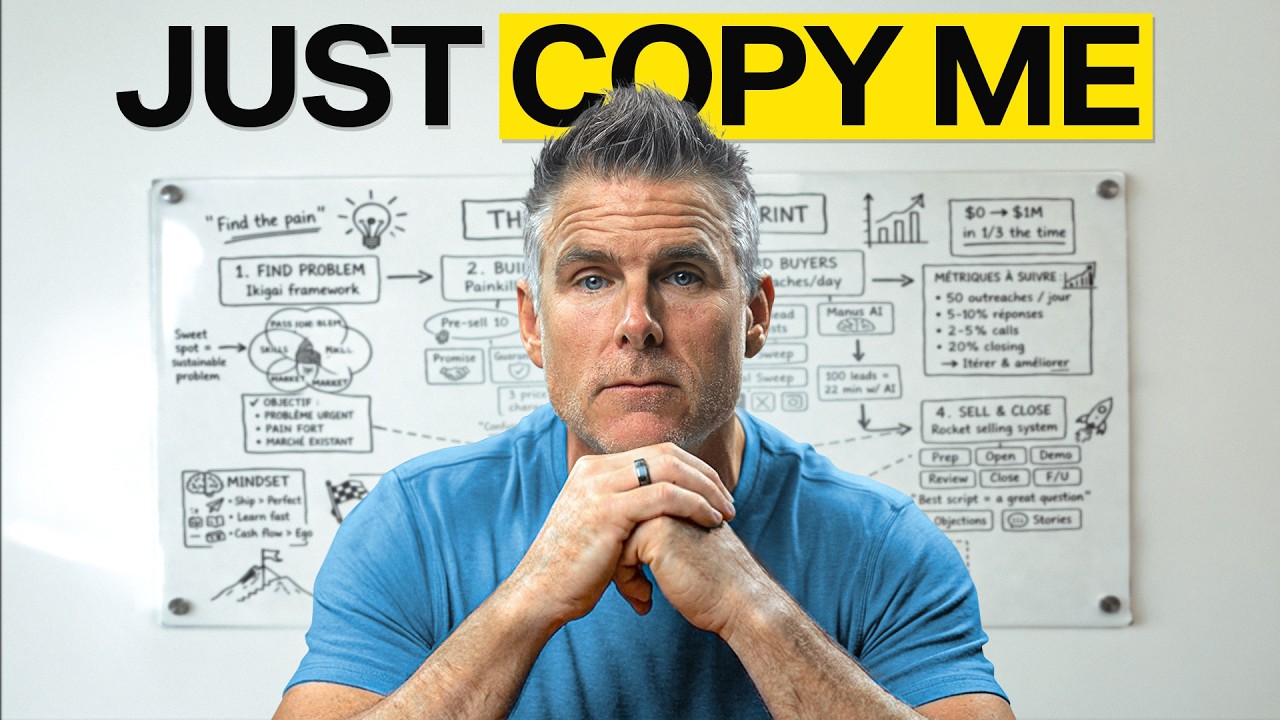
I became a cash millionaire at 27, but before that, I'd been to jail, >> man has been arrested this evening. >> Dan Martel, Dan Martel. rehab, I had no money and no education. But now, I live the life of my dreams. So, if I had to go way back and start over today, especially in this new era of AI, here's exactly what I would do. Point number one, you got to find what to build. Forget finding your passion. Find a painful problem. People will pay for a painkiller, not a vitamin. There's this process called the ikigai, and it's a great exercise. There's only four circles, and it's the intersection that you want to look for. The first one is what do you love to do? What do you naturally want to do? The second is what are you good at? These are things that people say to you like, "Oh, you're really good at that." What does the world need? What are the people saying they have problems around? And then what are people willing to pay for? And what you want to do is you want to find out what's in the center of that thing. Most people treat this like self-discovery. Wrong. This is actually market validation. And here's [music] the best part. Have AI interview you to figure out your ikigai. Just tell it, write this in the prompt, "I want to start a business, interview me one question at a time to help me find my ikigai." It's going to ask you the right questions, going to challenge your blind spots, and it's going to completely be unbiased. My rule is a business is started the moment you sell anything to a stranger. So, the faster you can do that, the faster you become a business. You can have all the passion in the world. If you don't get payment, then you just got a hobby. So, now you know what you're going to sell, but knowing what to sell and knowing [music] how to sell it are completely different things. So, I'm going to teach you how to do that. Point number two, build your offer. You now got the idea. Now, it's time to turn it into a real offer. See, nobody buys a tool. They buy a solution to their pain. The more acute pain you can identify in the market that you sell to, the more likely they're going to buy. And the way we do that is by wrapping up in an offer. The mistake people make is they make the offer too crazy, too confusing, too detailed. And what I've discovered long time ago is a confused buyer never buys. So at this stage, there's two things you need to nail. First, your offer and your pricing. A great offer has four key components. The first is a clear promise. What is the transformation they'll get, not the features. Often called the benefits. People aren't buying AI, they're buying AI to solve a problem. That's the [music] promise. The second is the guarantee. You need to provide a risk reversal. You need to give them something you're willing to commit to that makes the risk go on you, not on them. For example, you've heard this a hundred times, is a 30-day money-back guarantee. Or we will get you 10 leads within the next 7 days or you don't pay us a cent. The third is the bonus. And the key to a great bonus is it overcomes the number one objection they have before they buy. For example, if you're helping people with sales training, and then they're like, well, where do I find my leads? You have a bonus to help them find leads. Number four is scarcity. People need a reason to buy, if not, they'll just get themselves in their own way for making the right decision. Most people use scarcity to saying like they only got like three spots left, but the truth is that doesn't work anymore. The better way is to do internal scarcity by getting them to understand the cost of not acting and what that means to their life, so they're like, I need to do this or it's going to continue to happen to me. For example, just ask them, what's the cost of not making this change right now over the next few months? That creates internal scarcity for themselves to make them want to buy. The cool part is we use AI to build the offer. Just tell it this, here's my service and who it's for. Describe your business. Draft me an offer with a clear promise, a guarantee, three bonuses that handle common objections, and an internal scarcity angle. You'll now have a first draft of your full offer in minutes instead of weeks. [music] The second thing we need to nail is our pricing. To nail this, you have to have three price points. You want to have a higher anchor price of something you're selling, usually five to 10 times more. Then you have your main offer in the middle, that's the thing you want to sell. The anchor price makes that look cheap. And then you have a cheaper version that nobody really wants cuz then it makes that look like not the right thing. This is what I need to do in the first place. The number one key is you have to charge more than you're comfortable with. Under pricing attracts terrible clients. It literally builds a resentment between you and them because they're not paying you enough to deal with their crap. And it doesn't give you enough money to actually invest in your skills to be better at the thing or to improve your delivery. So, nobody wins. Now, here's the pro tip. I want you to go back to your AI and I want you to stress test this whole thing. So, just say, "Here's my offer. Act as a skeptical buyer. Pick apart what's weak, what's confusing, and give me every objection a real prospect would have." Then you ask it to fix every hole before you pitch anyone and watch the AI give you the play-by-play strategy. >> [music] >> Now, if you want to make this even easier, I have my Sell by Chat Playbook with my exact offer template. I use it across all my businesses and it's fill-in-the-blank. You just put in your offer and it's done in minutes. It goes even deeper than a bunch of the stuff we'll touch on later in this video, but if you want that, just DM me the words YouTube offer on Instagram and I'll send it right over. Go get it and follow along. So, now that you know what you're selling and you know how you're presenting it, now let's find the people you're actually going to sell it to. Point number three, you got to find the buyers. Who's got my money? That's what I always think about. I got a product, I got an offer, who wants it? See, most people build their offer and then sit and wait. It doesn't work like that. You're actually going to have to go and find them. Outreach is your job, especially earlier on. I used to say five outreaches a day. With AI, you can get that thing going up to at least 50, make it super personal and awesome. I even have a buddy that builds lead lists for businesses. He charges a monthly fee and he delivers 100 leads in chunks. The The part is that Manis does all the heavy lifting for him. The client doesn't know that, they pay him for it, and he just has a whole thing automated. They think he's spending hundreds of hours getting him leads and it took him 22 minutes. So, here's how we use Manis to get your first leads. [music] First thing, we got to go to the AI tool. So, go to Manis. If you don't have an account, go create an account. Now, have it ask you the question so it knows exactly what you're looking for. Ask me who my ideal customer is, what my industry is, what size business, what are the problems I solve. Give it the offer that you just created, and then it's going to start asking you those questions. Then say, "Go find me some prospects online." Have it deliver the name, the company, the contact info, and a personal outreach message for each one. The personalization work gets cool, cuz you can have the AI research what they're up to, who they are, and mention something specific and nuanced and recent that only somebody that took the time to do the research could write about, which is going to make the response rate go through the roof. Once it does that, just have it run it on a schedule. Maybe every day, maybe once a week, you can set it up, and Manis will keep feeding you leads automatically. Now, if you want to take this to the next level, I actually built a tool called Social Sweet, cuz most people already know the people they need to know to actually get customers, [music] they just don't know how to find them. So, if you use the tool, you can scan all your social media contacts, your calendars, your CRMs, all the tools, and search through it to find people that are interested in this topic or could be buyers of this, and it will know what you're looking for and find the people within your network to tell you who you should reach out to. And if you Social Sweet, because they're already following you, they're way warmer, so they're going to be responsive when you send those messages. That will get you replies, introductions, referrals, it'll get you started to make some money. Now, do not start reaching out to them yet. Sure, you've got a list, but there's a few things that you need in place before you can have any real conversations. Point number four, how do you sell? This is the question I get asked all the time. People are like, "I got an idea, I know how I'm going to build it, but what do I say to get them to buy? Sales isn't answering [music] just questions. It's them answering their own questions. You're just the guy. A great salesperson doesn't talk, they listen. They shape the conversation, they shape the decision through the questions. Think of it like a staircase. The first stair is hell, it's where they're at right now and the problems they're dealing with. And at the top of the staircase is heaven. And what your offer is, what your solution is, are the steps to get them there. And what happens is you'll find some people are different stages of that staircase. So some people will be at the bottom and they just need a longer conversation. Some people are closer to the top and they'll buy quicker. But regardless, it's questions that get them to evolve to the next step, to the next step, until they say yes. But here's the pro tip. Don't ever sell somebody who's not ready to buy. You have to qualify and you can only sell things to people that are a perfect fit to be a buyer. What I want to do is walk you through my nine box model for selling that I call the rocket selling system. The first thing is the setup. This is where we got to prep. We got to figure out who the person is we're talking to. And the cool part is with AI, you can have it do it all for you. You just give it the prospect's name and you ask it, here's a prospect, their name, their company, their role, so it knows who they are. Research them and give me a one page brief, what they do, what problems they're likely to have and what do we have in common. Those uncommon commonalities could be the reason why they trust you over somebody [music] else. The second one is the customer. And this is asking them about who they are. So if they're business owner, who's your customer? How do you solve the problem? How long you've been in that role or how long you've been doing it for? You're building intelligence. They feel like you understand their context. If I don't feel like you know my problems and I won't trust your solutions. The third is the decision. You want to ask them, I'm just curious, what made you decide that now is a good time for us to have this conversation. [music] Stop talking. It's kind of like when I went and I did a Orangetheory [music] class. At the end they held us back, my wife and I, and the first thing she asked me was what did you like best about this workout? Well, I started talking about splat points and the equipment and how efficient it was. And then I sat back as I'm talking and I think to myself, she just had me sell me on me. I bought. Because that one question. The fourth box is results. For me, it's asking them to dream a little bit. Sometimes I'll say, "In a year, we're meeting up at your favorite restaurant. I need you to tell me what we're celebrating from the work that we've done together." And I write those things down. Because [music] that's giving me their desires. The fifth box is the reality. I want to know what they're dealing with today, that hell at the bottom of the staircase. "What are you struggling with? What is it specifically? Is it this? Is it that?" The more I can x-ray or MRI their situation, the more they're going to feel heard and seen. The person who feels that is going to buy. Then I want to talk about the roadblocks. [music] And roadblocks are specific things that they know they need to overcome those challenges. As I'm getting those roadblocks, I'm now making a list. Now I've documented what they want, their situation, and where they feel blocked. Now I'm going to go to the model, and I use the word model because it's essentially how I do what I do. It's what makes you different, what makes you better. It's presenting how you do what you do. Then we go to the offer. You just repeat back what you heard them say. So it sounds something like this. "You told me you want this outcome, this is your current reality, and you feel like you need this to be able to generate those leads. Did I get that right?" Whatever they said, you ask the questions that you actually solve the problem for, so at the end of it you go, "Perfect. Because based on what you just shared with me, it's exactly what we do. Where would you like to go from here?" Once you do that, this is where we ask for the credit card. And it sounds like this. "Based on what I just shared, it sounds like you'd be a perfect fit for our product or service. To get started, all I need is a credit card to put a deposit on to lock your spot in. What card did you want to put that on?" Now, here's a pro tip. If you want to practice everything I just shared, do it with AI. You can actually say, "Act as a skeptical prospect who runs whatever kind of business your buyer runs, and I'm going to pitch you. Push back and give me some real objections." And just practice. By the time you talk to a real person, you've already done this dozens of times. The best sales people in the world ask great questions. The worst think it's the perfect pitch. So now they know what to sell, who to sell it to, and how to close them. But here's where most new people drop the ball when they get started, because it's not what happens during the sale, it's what happens after someone pays you that matters. Point number five, deliver value fast. The second someone pays you, buyers remorse kicks in. They wake up the next morning and they start questioning themselves. They think, "Did I make the wrong decision? Is this the right time?" Most businesses make it worse on themselves because after the sale, they go silent. They don't realize the person might be thinking, "I probably shouldn't have done that. I might need to cancel, etc." Oftentimes on a sales call, I'll tell them what's going to come next, because that's how much I want to get them ready for what I'm talking about. See, as soon as someone becomes a paid customer, it's how fast can you move to get them a win? That will separate them not only sticking around, but them bragging about you to everybody else. And that strategy is called time to first value, TTFB. If you can shorten it from days into minutes, they'll stay. One of my portfolio companies, Precision, does this perfectly. They take the onboarding intake, they do it all over voice using AI, and they auto-create a client's business scorecard in minutes. The results start immediately after signing up. And the best part is it doesn't take a person to do this. The client doesn't care, they just want to start using the software. So here's how you reduce your time to first value with AI. First off, have AI create an onboarding questionnaire. You can just give all your information to the AI and ask it to create the questions you need for a new client. Poof, it's done. Second is send that link to that questionnaire right after the client pays. So, they got the email, check your inbox, is it there? Perfect, fill it out and we'll get you on board. The third is plug in the response into Claude and ask it to build a road map of their transformation. Meaning like, here's where that, here's where they want to go, build me a road map. You can grab that and send it to the client so that they know that they're getting something right away to help them get the outcome they want. You can separate yourself from everybody else. I know people that get referrals from new customers before they ever even got value just cuz they're impressed with the onboarding. So, now you know what to build, you've got your offer, your leads, you know how to sell it and you know how to deliver it and get people value fast. There's only one thing left. Point number six, go now. Don't overthink it. Everything I just walked you through, none of it matters if you don't actually do it. Most people get stuck in this world of preparing to get ready to do the thing. It's the wildest thing. Just start small, start messy. Every company I've ever started, what I started with isn't what ended up being the thing that really worked, but at least I got going. When people say to me, "Oh my god, Dan, you're so lucky." I've failed more times than most people have tried. Is that really luck or I decided to go now? Just be patient with results, but wildly impatient with action. Here's the reality, the person that I was as a 16-year-old that struggled with addiction and rehab and ended up in juvenile detention twice, I'm not that same person. I can't even believe what's possible now in the life I'm living, but it all started because I decided to make a commitment to take an action, even something as small as just showing up and smiling and introducing myself to people. If I can build from where I was to where I'm at today, then I know wherever you're at, you can do it, too. So, out of everything I shared with you, you probably resonate with a few things. I want to ask you to put below in the comments, what's the one thing from this video that you're going to do before you go to bed. Leave a comment below, let me know what that is. And remember, if you want my whole process, it's like 17 pages of the sales process, and my content strategy, and my offer doc, the whole thing is there. Just find me on Instagram and message me YouTube offer, and I'll send that right over to you. And if you want to learn how to use AI to run your entire business, click here and I'll see you on the other side.