
Most people decide whether to buy from you in about three seconds, and it's almost never the price that sends them away.
1,3×Faktor (Views / Median 6.485, n=35)
8.512Views
104Likes
8Kommentare
Analyse-Fehler: 400 {"type":"error","error":{"type":"invalid_request_error","message":"Your credit balance is too low to access the Anthropic API. Please go to Plans & Billing to upgrade or purchase credits."},"request_id":"req_011CesTCbki8LmnBJbvNn7nz"}
Verlauf
| Messung | Alter | Views | Likes | Komm. | Label |
|---|---|---|---|---|---|
| 09.09., 09:10 | 6.8 d | 7.816 | 99 | 8 | t0 |
| 14.09., 06:49 | 11.7 d | 8.512 | 104 | 8 | t7 |
t0 = erste Erfassung, t7 = etwa 7 Tage, t28 = etwa 28 Tage nach Veröffentlichung.
Notiz
Caption
Most people decide whether to buy from you in about three seconds, and it's almost never the price that sends them away.
After two decades in digital marketing, working with brands like Amazon and managing over $1 billion in ad spend, I compressed everything I know about why people leave a page without buying into four fixes. None of them require a bigger budget, a rebrand, or another tool you'll cancel in a couple of months. They just require honesty about how strangers actually read a page: fast, skeptical, and one confusing sentence away from leaving.
Transkript (scribe, 1982 Wörter)
anzeigen
I spent over two decades in digital marketing, working with brands like Amazon and managing over a billion dollars in ad spend. If I had to compress all of the experience into one video, this is it. By the end of this, you'll know exactly why people leave your page without buying, and the four things that fix it. Number one: say what you actually do. People leave pages in the first few seconds without reading a word, and when we dig into why, it almost is never design. It's almost never the price. They just couldn't tell what the company does. Most businesses describe themselves using professional language, polished language, industry terms, copy that sounds impressive in a boardroom. Conversion focused digital commerce solutions. Sounds expensive, right? It also is too much to think about. Vague copy is friction, and confused people don't buy. They leave. And look, this is nobody's fault. You're too close to your own business. You lived inside the jargon so long it reads like plain English to you. Every founder has this. I have this. My team edits it out of me constantly. We made a rule internally. Every client page gets read out loud by someone who didn't write it before it ships. It feels silly the first time, but it catches something almost every time. So run every page you own through the smart friend test. Explain what you do the way you'd explain to a smart friend who knows nothing about your industry. Not conversion-focused digital commerce solutions, just we help online stores stop losing sales at checkout. Same company, only one of them gets read. And to be clear, plain doesn't mean dumb. Plain means fast. Even the enterprise buyer you're pitching is skimming. Everybody skims. Every page needs to answer one question immediately: what is this? Answer it in the first line in words a 12-year-old can repeat back to you. This works in every industry, by the way. A consultant selling holistic organizational transformation is really helping companies stop losing their best people. The SAS platform with AI-powered workflow orchestration helps teams stop chasing status updates. Say the second version, and say it out loud. Your ear catches corporate nonsense your eye has learned to skip. Here is the fastest audit I know. Pull up your homepage, cover the logo, hand it to somebody outside your industry for 10 seconds, ask them what you sell. If they hesitate, you don't have a marketing problem yet. You have a translation problem, and nothing downstream works until it's fixed. Now, once someone understands what you do, that's still not enough. They also need to feel like it's meant for them specifically. Number two: match the person, not just the product. This is the one that genuinely surprises people. The exact same page performs completely differently depending on where the visitor came from. We see it constantly. Same page, same offer, widely different results by traffic sources. Here's why. Most businesses send everyone to the same page. Search traffic, ad traffic, social traffic all through the same front door. Those are not the same people. Someone who searched your brand name already knows you. They came for validation. They want proof, pricing, the thing they came to confirm. Someone who clicked a scroll-stopping ad 30 seconds ago has zero context. They need orientation before they can handle persuasion. If you treat both the same, you'll be losing conversion in every channel at once. And my team measured this. Message consistency, how well a page matches what you brought the visitor here for, drives higher conversion rates. The pages that finish the sentence the ad started converted better. Try this. Pull up your best performing ad and your homepage. Read them back to back. Half the time, they don't even sound like the same page, right? The gap is a leak. The fix doesn't require rebuilding the site. Open your analytics. Look at where your volume actually comes from. If one channel dominates, and one usually does, build one page just for that audience with a headline that matches whatever brought them there. If the ad makes a promise, the page opens by finishing that exact sentence. Continuity is what converts. Whiplash doesn't. We did this for a client that was spending over 100K a month on ads, but sending all the clicks to a generic homepage that assumed a visitor already knew their brand. We built one dedicated landing page that exactly matched the ad's promise. Nothing else changed. Suddenly, those expensive ads became profitable. The traffic was never the problem. The disconnect between the ad and the page was. If you only have bandwidth for one of these pages, match it to your most expensive traffic first. Paid clicks cost real money every day. That's where the mismatch bleeds fast, and that's where the fix shows up on the P&L the quickest. And by the way, with the technology we have today, you shouldn't have issues cranking out landing pages. Our partner, High Level, has a solution that allows you to just type in a sentence or two of what you're looking for, and landing pages instantly pop up. Now, if most of your volume is brand search, you've got the opposite assignment. Those people came to confirm. So the paid job is validation. Proof up top, pricing findable, zero mystery. So now they understand you. They feel like you're speaking directly to them. But there's one thing standing between them and actually buying. Three: prove it before they ask. Here's a pattern we see all the time. People who seem genuinely interested understand the offer, hovered over the button, and then bounce. Nine times out of 10, the missing ingredient is proof, and specifically where the proof lives. Most businesses stack their trust signals at the bottom of the page. Testimonials, results, client logos all buried at the end, if they even made it onto that page at all. What we found is trust signals only work when they sit right next to the claim that needs them. The claim creates the doubt. The proof has to kill the doubt in the same breath. Make somebody scroll to find your evidence and they already started doubting you. And this isn't a small gap. My team measured how much companies think visitors trust their website against how much visitors actually do. Companies think they look trustworthy. Visitors disagree. So every specific claim gets a specific proof attached immediately. Not results that speak for themselves, an actual number right there touching the sentence it supports. Think about how doubt actually works for a second. Doubt shows up the moment you make a claim, not at the bottom of the page, not at your testimonials page. Right at the point. "We deliver fast." Do you, though? That question fires in the person's head instantly, and your answer is sitting four scrolls away where they'll never see it. So the rule is simple. The bolder the claim, the closer the proof. Do a pass on your own claims and you'll see how deep this goes. Trusted by industry leaders becomes used by 214 dental practices, including three of the five largest in Texas. Fast turnaround becomes delivered in six days on average across the last quarter. Loved by customers becomes one named customer saying one specific thing that actually happened. Then check placement. Proof goes next to price, next to the buy button, next to the boldest promise on the page. Whatever claim makes somebody's eyebrow go up, the receipt sits right beside it. And know what doesn't count: the generic logo wall. Eight gray logos floating in a row convince nobody. There's no claim attached to them. Take the two logos your buyer actually cares about, attach a sentence to each, what you did and what changed. Two logos with receipts beats 20 logos with vibes. Even with all that right, there is still one exact moment where most sales actually are lost, and that happens faster than you think. Four, catch them at the moment they almost say no. There's a specific moment on every page where the sale is won or lost, and most businesses never see it happen. With almost every visitor, hesitation peaks somewhere specific, a question they can't get answered, a risk they can't quantify, shipping, refunds. Will this even work for my situation? The cursor drifts, and they're gone. And my team mapped out where B2B and B2C funnels actually lose the most conversions. The biggest leaks show up at the decision moments, not the top of funnel, right at the point of commitment. Most businesses only try to win that person back afterwards. A retargeting ad, a follow-up email two days later. By the time your retargeting ad finds them, the moment is dead. Interest fades fast, faster than your ad's scheduled. Your own data will point out that moment, by the way. There's usually a page where time on site falls off a cliff, or a checkout step where carts pile up. Or skip the analytics entirely. List the five questions people ask before they buy. Those five are exactly what's stalling the silent majority who never ask. The sale is won or lost right there, live, which is why businesses pulling ahead handle hesitation the instant it happens with AI-assisted real-time responses on the page itself. Somebody stalls on pricing, the answer surfaces. Somebody hovers over a refund policy, the reassurance shows up before the doubt hardens. Not a chat bot with canned lines, a response tuned to the exact hesitation at the exact moment it forms. We tested this with a client last quarter. I can't name them, but they're in the B2B software space. Just fixing the moment people hesitated at checkout lifted conversions slightly over 20%. My guess is most sites are leaving at least that much on the table. Hold that against your retargeting budget for a second. You're paying to chase people two days after the moment they almost said yes. In two decades, I haven't seen a cheaper fix convert better. This is the kind of thing my team at NP Digital bills for clients all day, by the way. So if you'd rather have us do it for you, the link's below. But if you wanna start yourself this week, keep it small. Take your single highest traffic page, find its one biggest hesitation, answer that one question at the moment it forms, measure from up, then move it to the next page. This compounds fastest when it's boring and sequential. And notice how the four fixes we talked about stack up? A clear message makes the match page easier to write. The match page gives your proof somewhere to land, and proof lowers the hesitation you're now catching in real time. Fix one, you get one improvement. Fix all four, and they multiply. The visitor moves through one continuous argument instead of four disconnected pages fighting each other. So that's 20 years compressed into four fixes. People need to instantly get what you do, feel like the page was built for them, see proof next to every claim, and get their last question answered right when it forms. None of those four require a bigger budget, a rebrand, or another tool you'll cancel in a couple months. They require honesty about how strangers actually read a page, fast, skeptical, one confusing sentence away from leaving. Most of your competitors will never do this work. It isn't shiny enough. That's exactly why it keeps working. 20 years from now, the tools will all be built differently. These four won't, because they're about the three seconds a stranger gives you before deciding whether you're worth a fourth. If you wanna dive deeper into mastering marketing, watch this video next.
Weitere Posts von @neilpatel
alle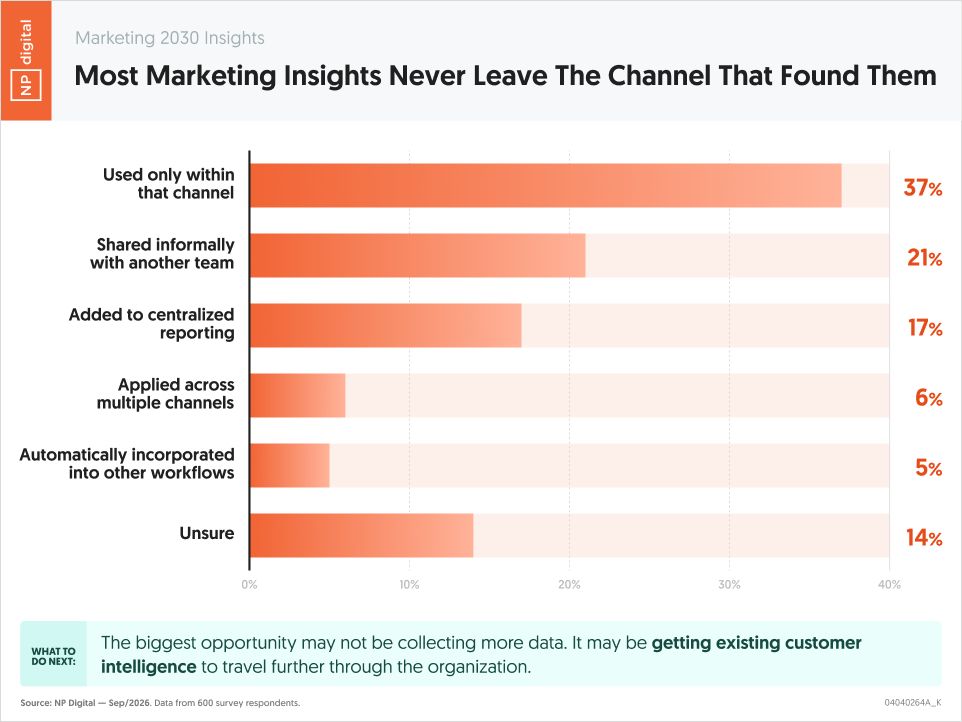
0,2×*
Bild
This is where 58% of marketing teams fail.
Nur Text / GrafikFallstudie / Proof
18 Likes18 ♥1 💬
1,8×*
44s
Reel
Ranking number one on Google is an entire game. It's barely half the game now.
B-Roll mit TextTutorial / How-to
11k Views216 ♥2 💬
0,7×*
37s
Reel
AI now writes half the Internet's new content and earns a 20th of the reward.
Talking Head + B-RollFallstudie / Proof
4.795 Views62 ♥8 💬
0,8×*
Bild
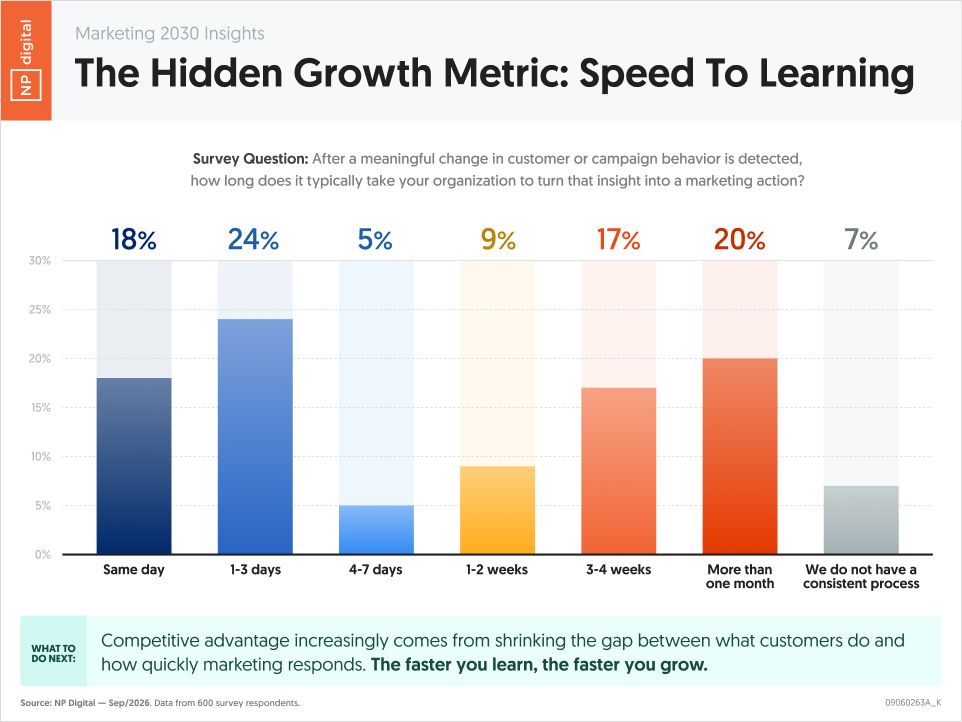
The Hidden Growth Metric: Speed To Learning
Nur Text / GrafikFallstudie / Proof
58 Likes58 ♥8 💬
0,7×*
1:19 min
Reel
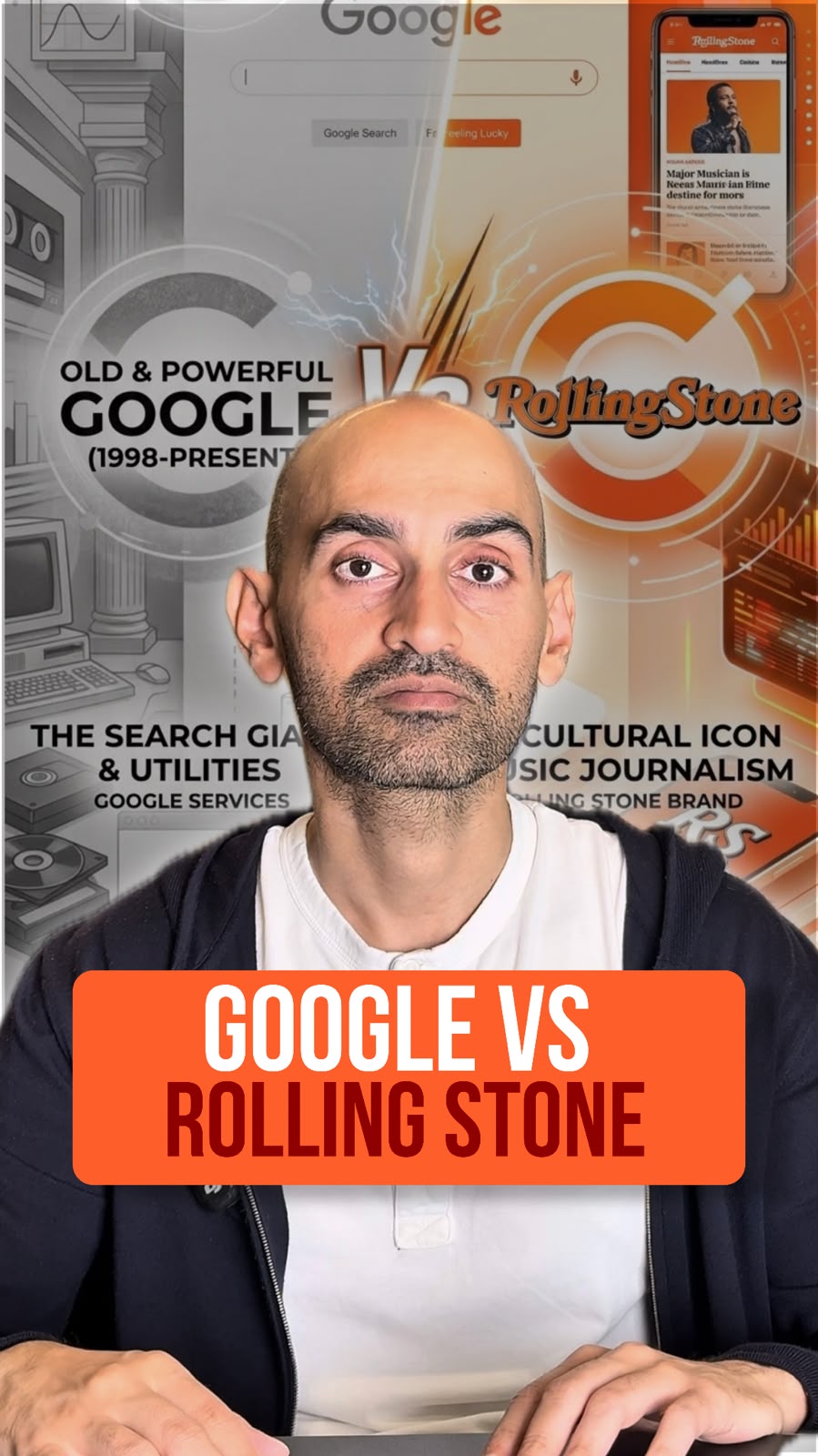
Google about to lose AI Overviews??? Penske Media, that's Rolling Stone, Variety, Billboard, Deadline is suing Google.
Talking Head + B-RollNews-Kommentar
4.342 Views64 ♥7 💬
0,6×*
48s
Reel
Your readers can't tell it's AI, but Google can, and nearly every major AI company adopted the tech that makes it possible.
Talking Head + B-RollNews-Kommentar
3.866 Views46 ♥5 💬