heartbeatRadar

← Instagram

Original öffnen ↗
@thechrisdoChris Do—Personal Branding/Sales Coach·US·1 Mio. Follower

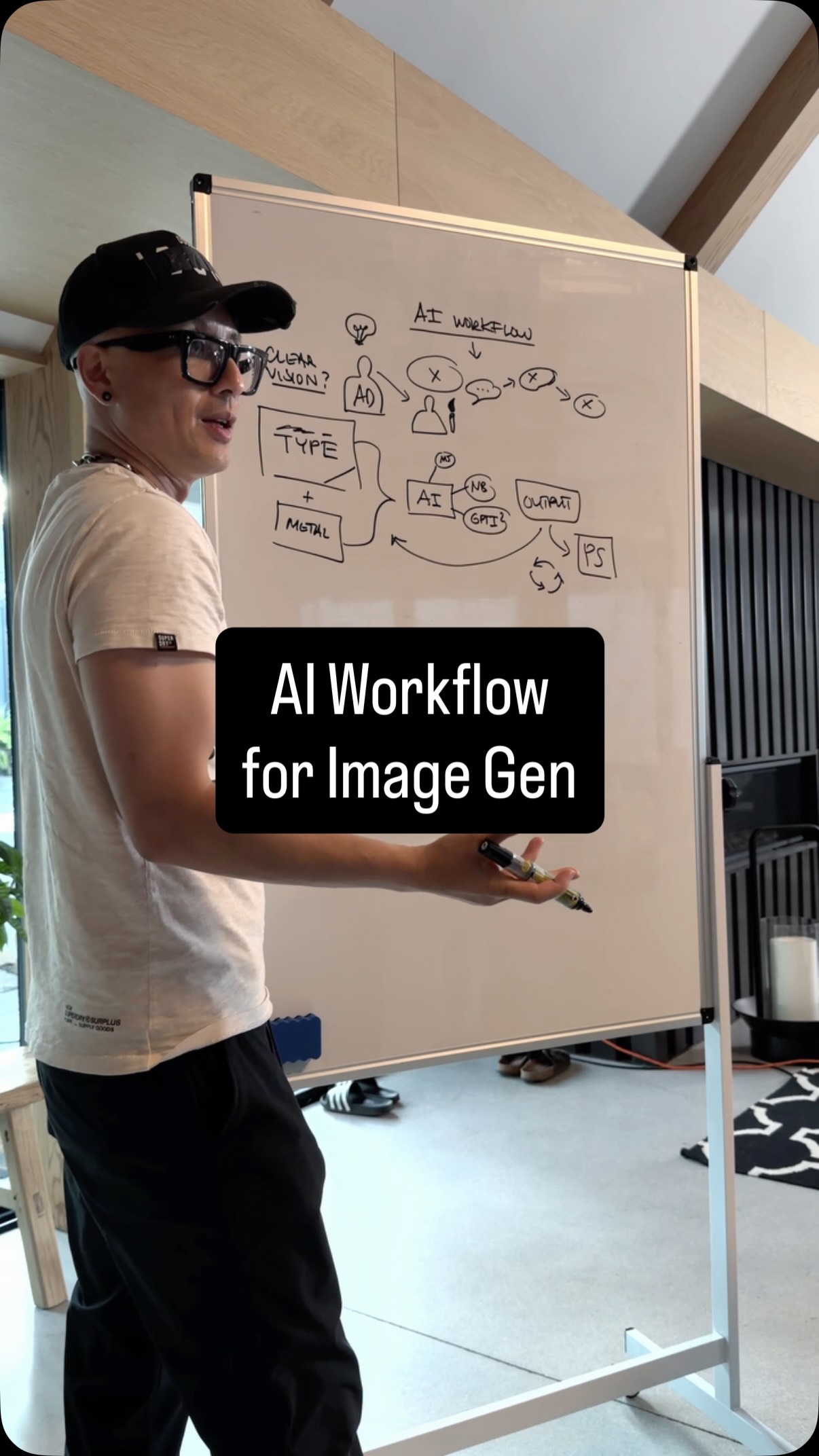
AI Workflow for Image Gen. Okay, when we talk about AI workflows, we wanna be careful about trying to one-shot things or when we don't know what we're looking for to let the machine do the thinking for us.

Reel·2:55 min·veröffentlicht 12.09.26 (vor 1 Monat)·erfasst 14.09.26
2,2×*Faktor (Views / Median 35.501, n=36)
76.734Views
1.904Likes
145Kommentare
Screen / WhiteboardTutorial / How-toHook: insider wissen90s-3minProduktion: mittelUntertitel: styled burned inCTA: kommentar keywordKonfidenz hoch

Warum es zieht

Der Post erreicht einen Ausreißer-Faktor von 2.19x gegenüber dem Median des Accounts, liegt also deutlich über dem sonst Üblichen. Sichtbar ist ein Whiteboard-Tutorial mit durchgängigen Karaoke-Untertiteln, was das Halten der Aufmerksamkeit auch ohne Ton begünstigt. Der Hook mit Text-Overlay und Ansprache eines konkreten Fehlers der Zielgruppe (Kreative und generative KI) spricht vermutlich direkt ein bekanntes Problem der Follower-Basis an. Die Kommentarzahl von 145 bei relativ wenigen Views deutet auf ein engagiertes Publikum hin, das durch die CTA-Frage im Text zusätzlich zum Kommentieren motiviert wurde.

Belege
  • ausreißer_faktor 2.19x über account-median
  • styled_burned_in untertitel im gesamten kontaktbogen sichtbar
  • hook_typ insider_wissen mit text-overlay 'AI Workflow for Image Gen'
  • cta im caption text 'Let me know in the comments'
  • 145 kommentare bei 76.734 views, vergleichsweise hohe interaktionsrate
Hook

„AI Workflow for Image Gen. Okay, when we talk about AI workflows, we wanna be careful about trying to one-shot things or when we don't know what we're looking for to let the machine do the thinking for us.“

Titel-/Hook-Muster

Was [Gruppe] falsch macht + wie man es behebt

Für Stefan / Heartbeat

Dieses Whiteboard-Format lässt sich direkt als System Breakdown übernehmen, bei dem Stefan einen internen Prozess oder ein Framework live auf einem Whiteboard skizziert und dabei einen konkreten Fehler der Zielgruppe adressiert.

Thema

Richtiger KI-Workflow für Bildgenerierung Kreative

Sichtbar
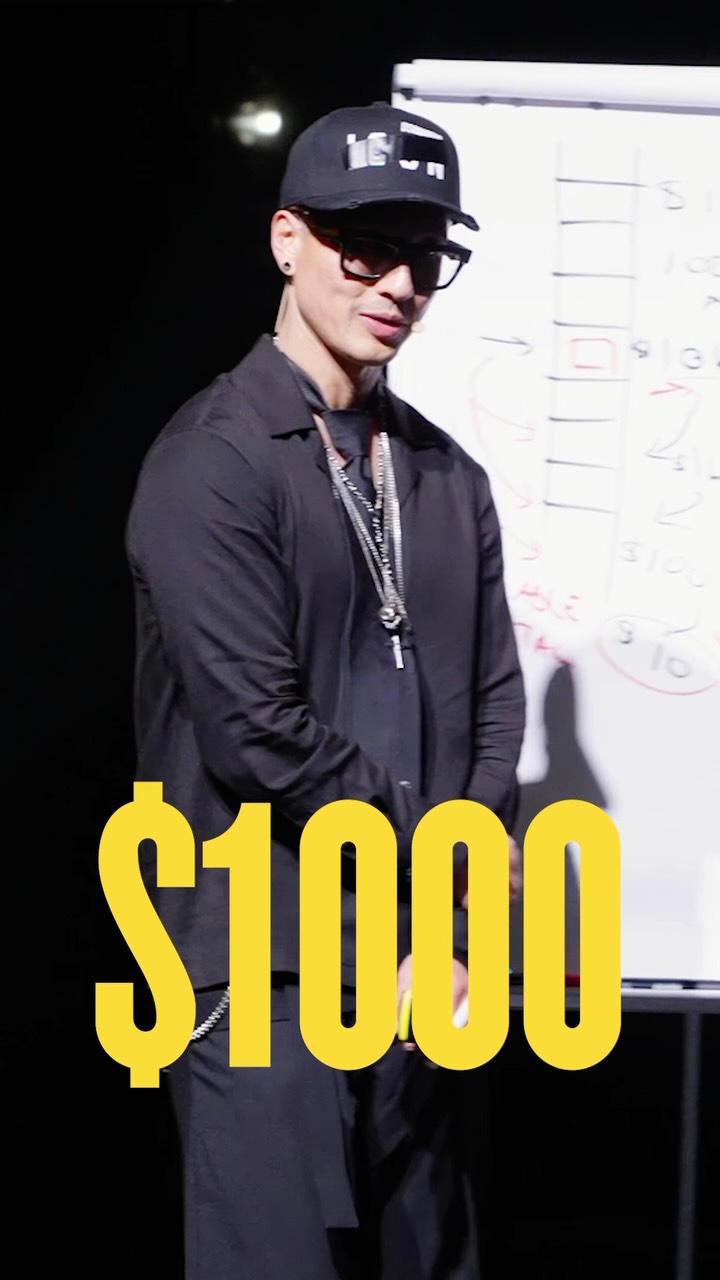
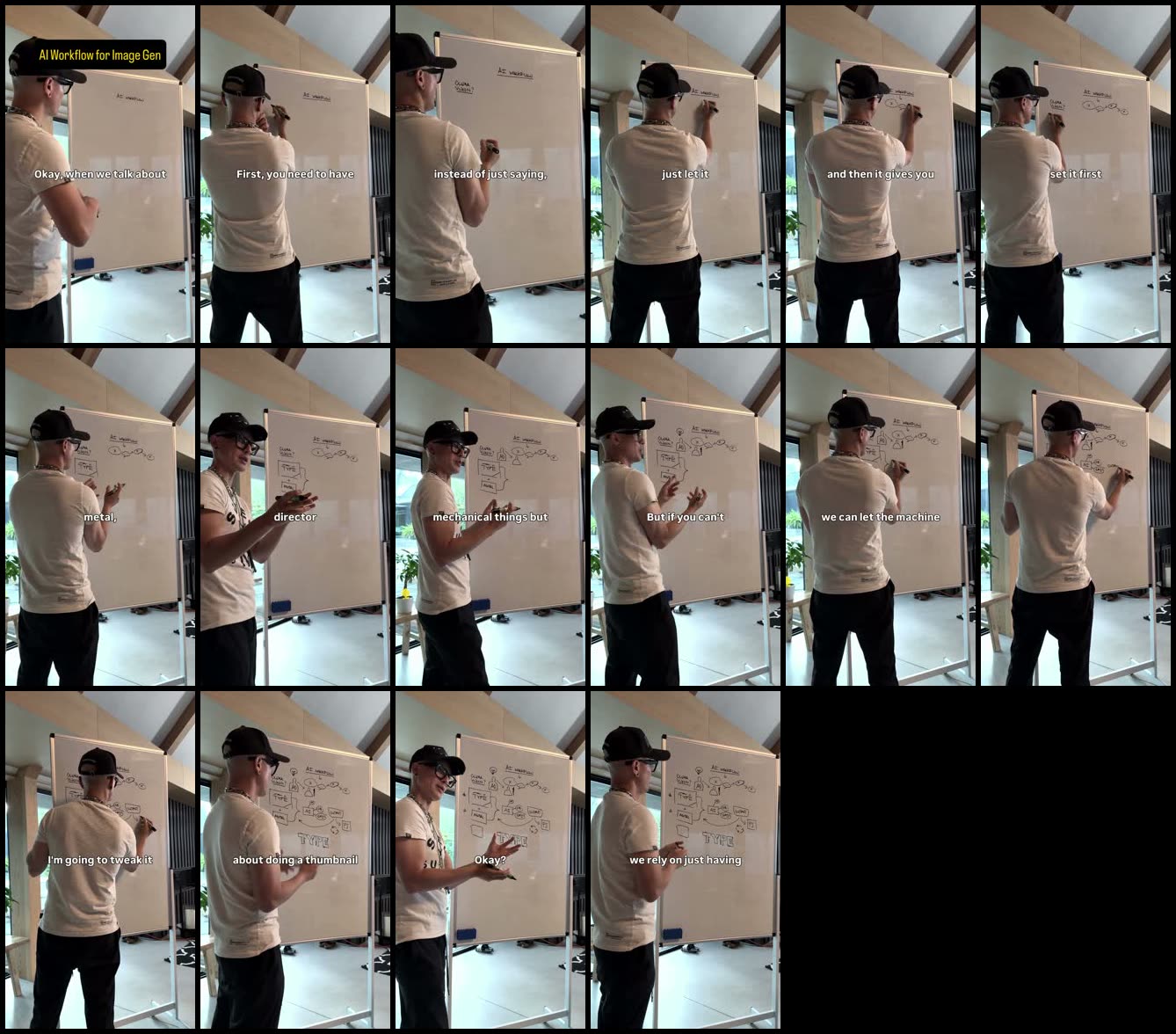
  • eine person vor whiteboard stehend
  • whiteboard mit handgezeichneten diagrammen und begriffen
  • styled burned-in untertitel unten im bild
  • text-overlay titel oben links am anfang
  • einfaches raumsetting mit fenstern und pflanze
  • person trägt cap und schreibt kontinuierlich mit
whiteboardki-workflowtutorialpersonal-brandingkreativitätprozess

Analyse 14.09., 07:07 · claude-sonnet-5

Kontaktbogen (16 Standbilder, zeilenweise; Zeitpunkte: 0.4s, 13.5s, 18.2s, 20.7s, 26.9s, 40.4s, 53.8s, 67.3s, 80.8s, 83.6s, 94.2s, 107.7s, 121.1s, 134.6s, 148.0s, 161.5s)
Kontaktbogen

Verlauf

MessungAlterViewsLikesKomm.Label
14.09., 06:382.1 d76.7341.904145t0

t0 = erste Erfassung, t7 = etwa 7 Tage, t28 = etwa 28 Tage nach Veröffentlichung.

Notiz

Caption

What creatives get wrong about generative AI and how to fix. Here’s my AI workflow in a nutshell. Have a clear vision or direction before you start. Provide references or better yet, input your own design, logo, typeset, etc… Then be precise about what you want. Build in stages. Don’t try to get everything in a “one shot” prompt. Critique the output. And at some point, it makes more sense to open Photoshop and edit it yourself. Curious? Want to know more specifics? Let me know in the comments.

Transkript (scribe, 609 Wörter)

anzeigen
Okay, when we talk about AI workflows, we wanna be careful about trying to one-shot things or when we don't know what we're looking for to let the machine do the thinking for us. I'm gonna tell you what I think is the ideal AI workflow. First, you need to have a clear vision in your mind. Like, what is it that you want? Instead of just saying, "Hey, make me something..." Let it, uh, leave it on its own device. It'll give you something, and then what you have to do is you have to give it feedback, and then it gives you something else, and then you're like, "Why doesn't it give me what I want?" It's, well, because you started out too broad, not specific enough. So what you wanna do is like, "What is it I want?" Well, okay, if I want to typeset it a certain way, well, typeset it first. Design your type the way you want in the typeface that you want. So you have to give it stronger, clearer inputs. So instead of saying sans serif, typeset that thing. And then you can say like, um, "I want it to look like metal," and you could just tell it or you can show it a reference, so this plus a reference of some kind of metal type. Now, if you were just to take these two things and say, "You know what? Put these two together," like an art director. The way I would look at is like this. You're the art director. You're the person who's in charge here. That's you, right? You, you wanna be able to communicate something to a production artist or a finisher who's really good at mechanical things but isn't super creative. So I have the idea, but if you can't describe to that person and you just say, "Make me this," they can come back with a thousand solutions, and you'll be stuck. Once we have references and, and a vision in our mind, we can let the machine do what it needs to do. Now, sometimes the machine will use an engine that isn't appropriate, and you're like, "Why does this suck?" So not all engines are created equal. And then it's gonna give you an output. This is the important part here. Now it gives you an output, and you're gonna be so much closer to that initial concept that you had that then you can just make little tweaks. At some point, you have to decide, is it good enough or you know what? I'm gonna jump into Photoshop. I'm gonna tweak it myself. You can get caught in a really weird and vicious cycle that's a complete waste of time and devoid of humanity by just asking the machine to keep fixing it when you yourself can fix it. So when we talked earlier about doing a thumbnail where it's a photo composition, don't just say, "Make this thing." You can build these assets, whatever other things, and say, "Put all those things together, A, B, and C, and then give me what I want." Okay? Okay. So that's, that's usually how you use this so that you're using very few credits, you're, you're using very little time because you have a clear idea. Otherwise, the, the, the problem is if we rely on just having the machine make stuff, someone else is gonna write a robot that just makes it, and then you're out of a job. We don't wanna do that. So you have to have the ideas. You have to know what it's supposed to look like.

Weitere Posts von @thechrisdo

alle