anzeigen
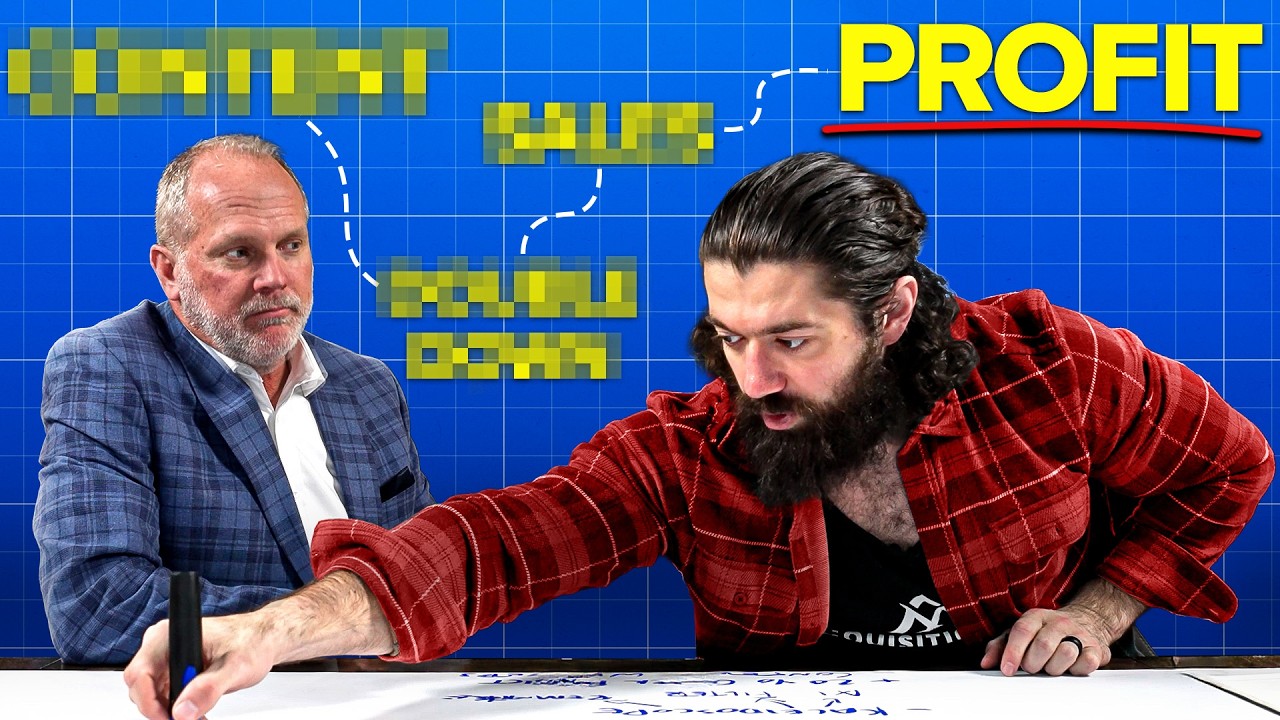
This is Joel. He runs a coaching and course business that teaches people how to basically use credit cards to get sweet vacations. [music] Problem is that he's dependent on one platform. If that platform goes away, his business could die basically overnight. I'm Alex Hormozi, founder of acquisition.com, which helps businesses scale. And so, let's meet Joel. Hey Alex. I'm Joel McDonald, founder of Just Get Out of Town, also known as JGoode. Tell me about the business. So, we help travelers turn everyday expenses into multiple bucket list vacations every year. Our largest audience is retirees, empty nesters, and business owners. >> I would not have guessed that. That is really interesting. Okay. The way we help them is through something we call travel hedging, >> [music] >> not travel hacking. We differentiate ourselves there. This allows travelers to stretch their vacation budgets three to 10 times farther. >> So, what's the difference between hacking and hedging? >> Travel hacking basically requires that you churn 10 to 20 credit cards a year, and that's why it has such a bad association. >> Uh Travel hedging is [music] choosing the two or three best cards for your individual spending profile, and learning how to effectively use them. >> So, what's the current state of the business? >> Our trailing 12-month average is 6.4 million. Got a 1.9 profit margin. That's about a 30% profit margin. ROAS is 4.5 to 1. And then our LTV to CAC is a very skinny 1.4 to 1. We'd like to change that. >> Yeah. So, what do you want to have happen? >> We've got about 12,000 clients that we put through either our mini memberships or our high-ticket coaching program. Our goal is to have 10,000 more in the next year. We'd like to diversify our advertising channels and start to include a lot more affiliate partnerships and charities. Uh I've got a goal of a million donated through partnerships with charities in the next year. >> Oh, cool. In order to do that, we're going to need to double our revenue. So, now tell me about how you get customers. Basically, like I said, it's a book funnel, and 85% of our customers come from buying the book. >> I'm familiar with book funnels. Another 10% comes from conferences, meetups, guest podcasting. We're beefing that up. We're trying to diversify our channels. >> [music] >> And then right now, affiliates and charity partnerships are kind of in their infancy, but we do get about 5% of customers there. So, what are the problems right now? So, our biggest problem right now, single channel advertising. Uh we're heavily dependent, like I said, about 85% on Meta. We were we're kind of hitting a ceiling at 100 grand a month. Yeah. I spent 150 grand last month and it got 10% extra book sales. It is a loss leader. It's currently taking us about 6 months to break even, even with the the back end. >> Yeah, second problem. A lot of skepticism in this industry, largely because we are associated with travel hacking. A lot of people assume this is a lot of trouble to save 10 or 20%. The actual savings when you travel the J Go Way is more like 70 to 90%. When people plan a trip, the odds of them getting a great deal on that trip, and that they've already painted themselves into a corner, say if they want to go to Italy in June, the odds of that being a good deal is kind of like placing a chip on roulette. Yeah. Most times it's going to be very expensive. Every once in a while, like 1 in 20 times, they get lucky. The J Go Way of travel is you find the good deals, there are thousands of them out there. You plan your vacation around them, and it's like placing a chip on the roulette table after the marble drops. >> Anything else that you have? So, knowing that you probably have more points than you know what to do with, but not enough time to figure out what to do with them, we put a little itinerary together that includes a Singapore suite Ah. >> that typically goes for 5 to 10 grand, apartment that's another 5 to 10,000 dollar flight one way. And we basically put an itinerary around the world that would normally cost uh about 70,000 dollars for the five countries that we found, and we showed you how to do it on points for 1,800 bucks out of pocket. Love this for us. So, basically, we're going to send you from Vegas to San Francisco to Singapore to Abu Dhabi, then to London, and back home through Mexico City. >> images. And all of these are first-class flights that would normally costed either $70,000 or 7 million points, and we put them together for about a million points. It's a clear savings property. You have to spend money in order to sit you have to spend money to save money type thing. What percentage of your sales right now are outbound versus inbound? Right now, so we just implemented some aggressive outbound like within the past month. It's been probably 60/40. 60% inbound, 40% outbound. We'd like to really ramp that up. That'll probably be a central feature of what we're talking about. What do you want to have happen with the business? Do you want to double it? Do you want to sell the business? Or do you just want to make money with it? I have zero interest in selling this business. Great. Well, then this makes it way easier. I'd just like to impact twice as many people's lives. So now that we've gone through Joel's business, I'm going to work through core areas where he's stuck and what we can do to fix them. And for each area, I'll break down the exact principles and tactics Joel can use to scale, which are likely going to apply to your business as well. So let's get started with number one, which is being clear whether Joel has a supply-constrained business or demand-constrained business. I have a bunch of ideas. You want to come on this side and we'll utilize this brand new beautiful paper desk that my team made for me. Very excited. Let's do it. >> [laughter] >> My first trash question that I'm always thinking through is this a supply- or demand-constrained business? So this is demand-constrained business. Like you can handle more customers. So there's two ways we can think about this. So if we have this from a decision tree perspective, right? It's like, okay. So this is demand-constrained business. Got it. So in order to fix demand, we can go new channel. I know that you're considering doing like the second channels. I feel like there's a lot more that you can work on the existing one by like a lot. Just because the nature of this offer is so broad. This is the type of offer that can probably scale to like 100,000 plus a day in spend. It's like, okay, so we have new channel. We have lower CAC, which underneath of this we can do through CRO, so conversion optimization. We can do this with better creative. Or offer. So this is this is me just kind of sharing how I'm thinking through this. So we can get that or we can just spend more, all right? Which is always a fun one. But given the fact that you said you've had these constraints on whenever you do spend more, you you like quickly hit a wall, which is fairly common, then it's going to probably be a combination of one of these three things. I'm basically going to focus on those pieces because these are basically the three things that are going to unlock that. So right off the bat with better, where are you getting your UGC? So user user generated content. Because you have the most visual type of product. The image that I saw was just like you and the team. My god, people take pictures on their vacations and I'm feel like your groups probably have crazy, you know, them in front of the Taj Mahal and you know, whatever else. I feel like if you have that kind of like a TikTok style, like check out this trip that I just booked for under X, I think that would destroy. So like video user generated content. Yeah, like selfie style, like you I mean I'm sure you probably get all these like think about these Instagram pages that just show like trips and like all these kind of like hacks and stuff. And a lot of them have like 1 million, 2 million plus and like they're very active, like super engaged. I would model those style videos. Michael, can you just try and pull up a good travel page on Instagram? So this style just like this. Okay. >> With your real like and that's a real person. You can tell. She's not some model. It's like a real person. >> [music] >> And if just had a pinned thing on the top that was like I did all this for under $1,800, I think it will work really well. And just run all of it, test it all. And I mean again, we can run it organically and test >> is so visual. This is so visual and people watch these so they can just vicariously live through it and it's like you don't have to live through this, you can do this. A plane far. Okay, that's compelling. The highest point of leverage that I think in this business and I'm going to change some back end stuff too, but like if you unlock the UGC loop, this thing will flourish. And so I think are you on TikTok? Uh embarrassingly low following but yeah. >> Okay. There's some businesses that it's tougher. If I have a tax savings business, it's like maybe I'll have a business and they're talking about it's tax savings. It's not very visual, right? Maybe you get some emotional about the story and things like that. That's how the angle you'd have to take there. This is so visual. What we need to do is number one, we need to incentivize people to post the reels inside of the story. And when they do that, they get to unlock some sort of checklist that you hold back and people are like, how do I get access to that? It's like, oh, post a a montage of your trip that you were able to do in under 60 seconds. And here's how you do it. And you can show them how to how to put it together. And I think a lot of people would want to do that. And you already probably have a a ton of them anyways. Right. But just ask for permission to use them and then you can get the and basically in exchange for permission, they get this extra training or they get this extra thing. I think that what will unlock this is a decentralized content machine. So instead of you trying to be like, okay, we have to go make more ads. It's like every week we have 20, 30 videos that are coming from our community of the trips that they were able to take. And every week we just blast off 30 videos up there and we see where the winners are. And then boom, once we have the winners, then we just juice them and then we try to cut them a bunch of different ways. Okay. So the second thing, so the UGC loop, right? I'll go into more detail in a sec, but that's kind of like the the big thing number one. Second one is something I call kaleidoscope. But basically I know you have one piece of creative. Do you want to pull it up, Michael? The the highest converting one of all time. So one of the interesting thing we can do here is like so this image, it's like there's 20 ways to Sunday we can we can do this. So like you had the AI versions of me that you did in all those. I want you to take this image and then AI-ify a bunch of different versions of this. It's like, okay, how do I make this black and white? How do I do with a sepia filter? We could take this and put it into AI and say make a 3-second video of this image, which it would then just make a 3-second video of it even though it's just an image. Let's do a cartoonized version and let's do cartoon in this version and Ghibli and let's do it like cuz right now that's trending and so that will give you 20-30 variations of whenever you do have your winner, blast the hell out of how many more slices and angles that you can take on it. In terms of the copy, what I found in scaling like a campaigns is that when you do have copy that wins, you don't need to change it nearly as often as you think. So like when we ran The School Games all last year and pushed it really really hard, we had one version of the copy that we ran for 6 months and then a second version of the copy that we ran for three. In a different company that we own, we spend gosh, a couple hundred thousand a day and after 5 years, there's three hooks. There's three like when you find the winners, you just run them. And so I think so part of it is just like putting your mind at risk of like, what do we need to do this different? Like, no, you found your winner. So now we just need to like create different verse So the creative on the other hand, that changes all the time. But with the copy and the messaging, it's like we just leave that. If it's if it's working, it's like you can just keep using that over and over and again. But I do think this UGC loop will be really big and then once we have the winners, we kaleidoscope the hell out of them. Which is like how to which is like AI, we have filters that we can do. We have you know, remakes, which is can I Sorry. It's okay. Remake. Can we take this um video and then just re-film it? Cuz these are a lot of these are going to be video-based. And so it's interesting about video versus static is that statics work better for a lot of businesses because they suck at video, not because video doesn't work. But good video beats images. Yeah, good video beats images, but images beat bad videos. And so most people are like, "Oh, statics work like we can't get videos to work, only statics work." It's just cuz the videos aren't good. And it's the same thing as people who make content and like, "Oh, content doesn't work." It's like, no, good content works, but bad doesn't. Do you make shorts or anything like that? Very painful and slow growth, but yeah. You need to just get one hyper-caffeinated uh 20-year-old who lives and is brain-rotted Gen Z. Um see I see I'm using I'm using this I'm using the slang, right? Who just really is native. They're plugged in to the platforms because they'll be able to look immediately at your stuff and be like, "Oh, this one's not working." It's like, "Okay, the hooks off. Like, you're not using trending audio. You're trying to make these look professional, but they just need to be like iPhone selfie style and we can use something like a pinned comment on the top of the video." There's so many like meme versions of this. It's like, "You can travel around the world for less than $1,000. Prove me wrong." And then it's like and then you'd have troll city right? Underneath of it. Like, there's so many different contextual like trending things that are happening right now. I would say that the number one biggest thing that's limiting the business is better creative. So, typically when there's a cap, sometimes it's a money cap, which is like, "We just can't afford to spend more." And I'll cover that in a second. But like, the creative unlock is usually why someone gets limited. We've scaled to $10,000 a day, whatever it is. And it's like, "Okay, so $10,000 a day is all we can spend based on how good this creative is." Right. And so, the easiest cuz I know you come from an ad background. So, if you're familiar with the Old Spice commercial, guy on the horse, >> Mhm. my theoretical view of the world is that if you have a product that everyone could buy, then there is one ad that is good enough that could convert everyone. So, that ad took Old Spice from a small player in the men's body wash into the majority of the market with one campaign. That campaign literally took the entire market for them. And it's because it was so good that it could convert everyone. Typically, the limits are just that as if you think about how Facebook or Meta or spends, it's like they're going to go to the most interested people first cuz you're optimizing for conversions. And they'll be like, "Okay, these are probably a little bit less interested, but still kind of adjacent." And then this is like your CPA starts going up. Okay, now there's this way bigger market over here. And then as soon as you hit you try to break through this wall, your CPA goes up because the new creative's not good enough. This UGC loop plus 20-year-old uh crack addict Yeah, like that. Uh >> [laughter] >> uh, who lives on his phone or her phone, uh, is probably the unlock here because the best way to test this out is start getting more aggressive with your short-form content. They can make these as obviously like organic posts and then when you find your winners, just take that same post, add a 5-second CTA at the end, and then run that as an ad. It crushes. It's a double dip because you're posting content and they don't have to waste any money and then when one of crushes, you take that, boom, post it and then run it. So, that is the content winners. Also, I'm going to bet something interesting here. This is Alex just making a bet with no informed data. Part of the reason that you have avatars that are retirees and business owners is that you are a retiree business owner and they see your ads and also Facebook's AI reads Susan the ad and then displays the ads whether or not you choose to target them based on who is most likely to convert. And likeness is one of the strongest predictors of conversion. It doesn't take an AI genius to be like, oh, we've got an Asian lady, let's show this to Asian ladies because Asian ladies are more likely to convert. But they do through the algorithm so it's not racial profiling. But if you want to have more diversity in terms of the types of customers, and this is also like you think about this little loop here, well, there's another one of these that's for Asian ladies and another one of these that's for Asian does men. And so like you could probably get to kind of saturation on each of the circles even with your existing quality of creative by just having a diversity of avatars in the ads themselves. [music] And so even though we're we could still target the exact same audience, but the algorithm will go target subject of the Yes. Cuz they're the most likely to convert and they're the most likely that you'll keep spending cuz it's converting. Right. So, I'm going to write a bunch of these down and then we're going to just prioritize which one is the most likely. But AI avatars right now are just about good enough to be used. And so you can have these kind of like TikTokified AI videos that are 15, 30 seconds of like guys you won't believe it. I just went around the world for under $1,200. And the craziest thing is it didn't objection number one, objection number two, objection number three. And the best part is I got it with this book and I found it on a random ad. Totally changed my life. That's it. And they go straight to the book funnel. Mhm. I think that'll crush it. All of this means we don't have to do all of that other stuff. More of More and better first if [music] we can. It's just the nature of what you sell is so visual. And people naturally take lots of pictures. They want to share food and travel. This is super visual. Tons of people post about this stuff. Travel, tons of people post about this stuff. And I would look at the top travel pages, look at the most viral content they have, and model that for my ads. Seven hidden gems that you've never heard of before. And it's it shows these like crazy montages. And those things get like gazillions of views. All we have to do is just weave the fact that we have a pin. How do you see the seven gems for under $1,000? Huh. Okay. Right. Just we just have to just layer a filter of like our offer in front of it. And I think it'll I think I think I think you have so much creative like if this is the creative that's been running the business, there's so much room. I think it looks authentic. But again, this is where I think the UGC loop will be big. [music] So one is you can use it with AI avatars, you don't even have to ask for them. But I think the UGC loop is like probably the faster, easier, immediate thing that you can do without having to learn, you know, new stuff. I think that this is really the front-end stuff. Like this is >> [music] >> how do we lower CAC with just better creative? So this gives us more from the customers. This expands and multiplies that even more. This gives us a content loop that the 20-year-old crack addict is going to be able to make by modeling um travel pages. Real quick, I'm going to show you the exact 10-stage roadmap from zero to 100 million plus that less than 1% of companies finish I've now done multiple times and so I can say with a lot of confidence that these are the stages as head count increases that you need to get through and I broke each of these down by eight different functions of the business what the constraint feels like like what are the symptoms of it when you're going through it and then what steps we actually took to graduate and we've done this across software physical products uh service businesses brick and mortar all of this and it works and it's my gift to you it's absolutely free and so the link's in the description but you just go acquisition.com road map just enter your info and it'll spit it right back to you all free. The meat of this is still going to be the sales team so the fact that you started last month I think is encouraging. I do think that we can improve dialer pick up rates. What's the benefit of the annual call? We want to make them help them get as much out of the book. For the people who don't qualify like if they spend less than 5,000 a year they just aren't going to have the muscle memory to learn [music] these strategies. And so when you're saying when you said the $5,000 thing you're saying if they spend 5,000 a year on their vacations >> [music] >> that's too small. Uh on yeah on travel in general yeah. Okay per year. Interesting. Okay. Does it have anything to do with their credit card spend? Yes those are the two most important factors. So So Also 5,000 a month. So remember when I was asking at the very beginning like are there are there specific factors that qualify the avatar? So if those are the two factors that are most important for the sale then those are the two things that I would want to weave into the funnel that we could get. So that way it's like if your team's going to make the outbound dials and your dialer probably can't score leads or should be you know prioritizing the leads then it's like we'll then we're going to start with all the people who are spending over 5,000 on their credit card and then if 5,000 a year on their vacations then it's like they're two for two call those first and if it's a one out of two call them second and zeros it's like maybe we'll get to them if we're bored. So I think lead score which is [music] then add credit card spend and what's the other one? Oh and then um vacation spend to uh opt-in. All right. One of the things that you brought up was that the big list of excuses that come up when you do the pitches. So, one of the things that I want to do is we need to call it out before they do. So, on the sales call, I want to basically front-load all of our damaging admissions. Because you said it's too good to be true. And when you even offer this too good to be true, you make it less good. So that it's more believable. That sounds counterintuitive. No, I mean we have to do this, but it's like our testimonials are often accused of being fake. >> Yeah. Generated AI. Sure. Too good to be true. How old are you? 53. Yeah, you could be like, "Listen, I'm 53. I don't even know how to work AI." >> [laughter] >> Like these are real. No, but what I would do with the damaging admissions piece is say, "Listen, before I tell you about the good, let me tell you about the bad." And then I would just start listing off all the things that suck about this. It's like, "Listen, if you want to only go on a specific day per year, it's not going to work for you. If that's a problem, then like I want to tell you that these are some of the issues. If you want to go to top-shelf places, that we're good. So, you can have what you want, just not when you want. Mhm. And so that's the trade. Now, if you're at a different point in your life where you're like, you know, I can take off whenever I want, they don't mind if I take 2 weeks in the middle of September versus the middle of, you know, October or June, to your point with Italy, you can backpedal. It's almost like selling off the back of it like, "Hey, if you That's a problem for you, then this isn't going to work." So it's like telling them all the reasons it's not going to work up front so that they're like, "Okay." So then they can self-qualify. "Okay, I could do that." Yeah. Versus "I refuse to do that." >> There's no way. It's too good to believe. There's tons of other things that suck about this. So let me tell you about the things that suck. No, but the thing is is that after you put all that damaging admissions, so now when I tell you what's good about it, you're going to believe me. But we have to I think you front-load You want to take all the wind out of their sails and give them all of the reasons that And then oh, you can weave in over comes obviously, but you can do it from the position of like, "Here's all the reasons it won't work." But a lot of people are like, "Oh, I don't mind that." They're self-qualifying because everybody still wants the benefit. They just don't believe it. They want it. They just don't believe it. So, damaging emissions front-loaded. We went through all of this, but I'm going to simplify this into really just two steps. If that works for you. That sounds great. I'm the master of overcomplicating things. >> [laughter] >> I think big picture this right here is thing number one. And I'm actually just going to go this way. Dialer, lead scoring, and I think you need to increase your number of sales people. If we added this all up, we've got call it 250 book sales a day. And then you said you have 40 a month who joined the $99 thing? A free a week. Well, we're averaging about 600-700 a month. Okay, 700 a month. So, divided by 30 is 20-ish per day and then book which is free with shipping, right? >> [music] >> Something like that, I'm guessing. And then Facebook group you said was 1,500 per month? Yeah, 1,000 to 1,500. >> Okay. So, we got 30 here. 30 new Facebook members, we probably get 10% of them who give a phone number. Okay. We could just make it required if we wanted to. And I think the reason they would do it is because you said we include a free travel assessment. So, I think that's the nugget that we give. And I think you do that for both of these. But here, I'm just going to just use rough math here. I'll be able to put a little bit of But we have about 300 prospects per day that are coming in the funnel. If you have 300, I would probably be thinking like gosh, you're going to need a bigger team. Like if you really want to work the leads, you'll probably need six guys with a power dialer. Their KPI should be like $300 a day each. And you can use something called a parallel dialer. What it does is it calls 10 numbers at once for each of them. You have 5% pick up rates. So, that you definitely need something like this. But let's just say two people pick up here. It'll automatically connect this per one of them with that person and one person this person. So, basically the bigger the team, the more better it works. [music] >> That would be the answer, right? Cuz it'll just roll to Exactly. And so, now you just have massive amounts of dials that are happening. And what you do is you're maximizing talk time. Instead of them just spending a lot of time just waiting for a connection, they're going to be like connected. And so, the efficiency seems also going to go up by a lot. And I think you can actually work these leads cuz I think that the two doubles, you probably have more than one double in the business. This is a multi X unlock. And this is a multi X unlock. And I don't think there's anything else you have to do. And I think these two things, the nice thing is that like they all will work off of what your existing spend is. But this will drive down CAC. All this. This will also drive down CAC. So, your LTV to CAC ratio will improve, so will profitability. But then what it'll do, and the main long-term benefit, is that it'll break you through this barrier into this much bigger pool. Mhm. And then you'll be able to continue to spend. And scale. Yeah, and that's something that I've written off. But I started the company for this bigger pool. Yeah. Started the company because I was broke. Yes. I I had no business traveling, but I discovered it and it was only by getting past assumptions. Yeah. And I can't advertise to them. I'm advertising to these people. Yeah. Cuz they pay the bills. But I'd love to impact them. [snorts] Yeah. And I think >> This This solved that problem. Yes. You have a demand constrained business. So, these are the paths. You know, we can spend more, which we tried. New channel, little too hard for right now in my opinion. Can we lower cost to acquire? Yes. We're going to do that through better creative, conversion optimization. We could have tweaked the off The offer's already converting, so I don't really want to mess with that. [music] These are the two angles that we attacked it from. This is the ad side. This is the conversion side. Love it. Rock and roll. Easy. Pleasure. >> Thanks, Alex. >> Yeah, yeah. So, if you enjoyed this episode with Joel and want to see how I'd approach scaling a different business, you can check this out.