anzeigen
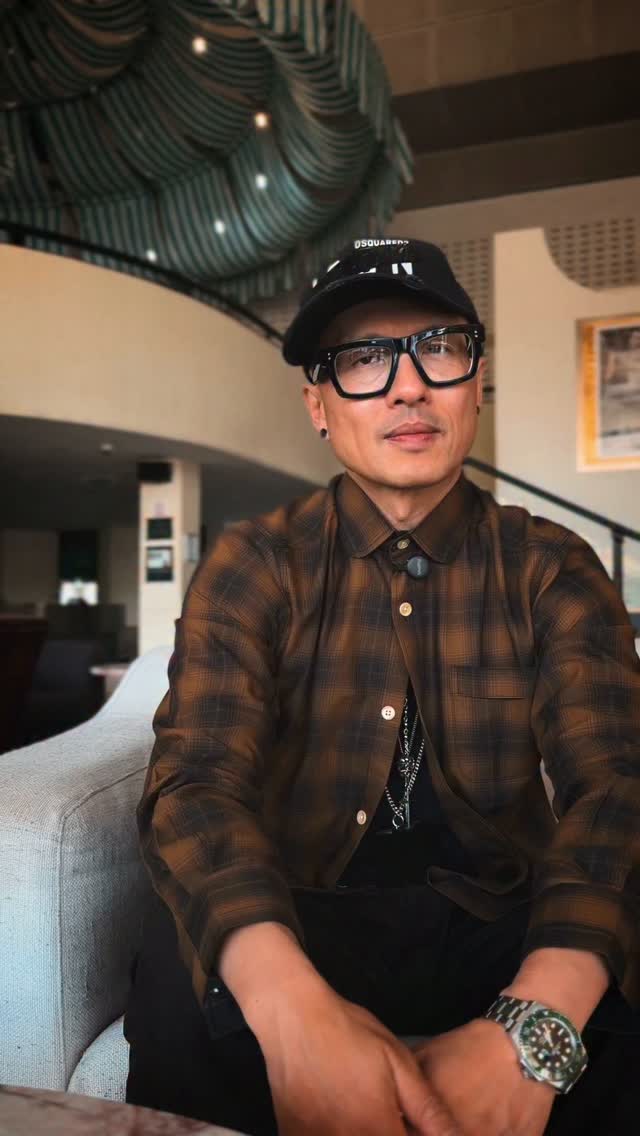
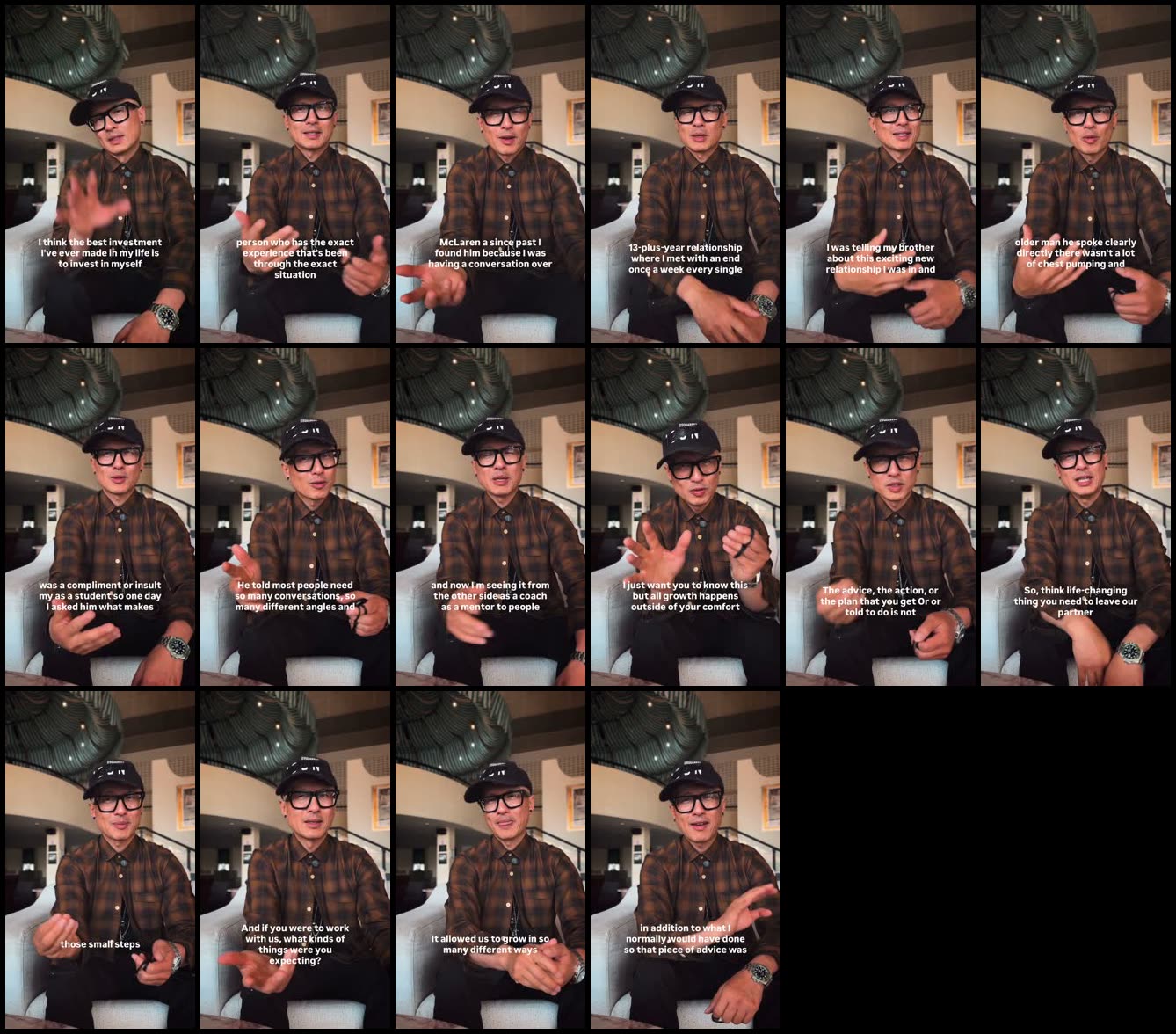
I think the best investment I've ever made in my life is to invest in myself. You hear things like this all the time, but people who haven't done this don't realize the benefit. So I'm on this trip here in Bosnia, and people are asking me, "So Chris, how did you find your coach? What was the reason? And what if you couldn't afford a coach? And what was the thing that motivated you to do this? Why do you need a coach to begin with?" People obsess over finding the perfect coach, the right coach, the perfect person who has the exact experience, that's been through the exact situation that you would like to get through. And in an ideal world, that would be just fine. But quite literally, the coaches, the therapists, the teachers I've had, I've selected them mostly because I had a problem and I believed that they could solve it, and I conveyed one hundred percent of my heart to doing the work, regardless of how uncomfortable the coaching got. So my coach, as many of you know, is Kieran McLennan. He's since passed. I found him because I was having a conversation over lunch at a restaurant when somebody mentioned that their business has doubled and that they're working with a business coach. And at that time, I didn't even know what a business coach does. I thought it was something that it was a made-up term that you see on TV or in certain power circles. But that curiosity got me to ask Kieran if he could be my coach and I could get some help. And what started out as a casual first meeting turned into a thirteen-plus-year relationship where I met with the man once a week every single week for thirteen-plus years. And people wonder, like, "Chris, how did you learn about business, about sales, about communication?" I attribute most of this to Kieran McLennan. And I remember our conversation quite distinctly because I felt so empowered. I felt, uh, like I was no longer alone in this journey in, in entrepreneurship, 'cause it can be a very lonely journey. And I was telling my brother about this exciting new relationship I was in, and the first thing he was asking me was, "What are his credentials? Where did he go to school? Who does he work with? What has he done?" And it occurred to me in that moment that I never even thought once to ask these types of questions, because here was a person who I thought I could trust, who had sound business advice, who's clear in his thinking, and most importantly, the energy that he had was right for me. He was a calm, gentle, older man. He spoke clearly, directly. There wasn't a lot of, uh, chest-pumping, and I just felt like I could trust the person, and I did. I put my faith in his hands. And the reason why I got so much out of the business relationship and the coaching was I was just a really good student. These were not my words; these were his words, 'cause he had said to me, "Chris, you are the best student I've ever had." And at first, I didn't take too much of it. I wasn't sure if it was a compliment or an insult my-- as a student. So one day I asked him, "What makes me the best student you've ever had?" And he told me, "It's because you just listen to what I tell you to do." And it shocked me because I was thinking, "Why would people pay money," really good money at that time especially, "to receive advice not to do it?" And he smiled in the way that he normally does because he understands the way people work. He told me most people need so many conversations, so many different angles, and so many different reasons before they take action. In fact, many of his clients take over a year before they take action. And he says, "You were different because every time I tell you to do something, you just do it." And I thought maybe it's because I'm immigrant, because I'm really thrifty. I don't like to waste things. But I thought to myself, "Why would you pay someone money not to do what they tell you to do if you believe the other person will help you?" And now where I'm seeing it from the other side as a coach, as a mentor to people, is I, I give advice to people who ask for it. I give them a plan of attack, and then nothing happens. The thing that I feel so much is the resistance. They just keep pushing back. They push back like, "Oh, I don't know. Why would this work?" Or, "What evidence do you have?" Or, "Don't you think this?" "But what if that?" They do all the what-if-isms, and they wanna look for a reason not to do the work because the advice is uncomfortable for them. I just want you to know this, that all growth happens outside of your comfort zone. So if you're getting advice that is confirming your own bias or belief systems, what is the point of having a coach? Just continue to do the things that you're doing because things are working out so well. Clearly they're not. That's why you're seeking coaching and mentoring. So if you want help, you have to realize something. The advice, the action, or the plan that you get or, or are told to do is not going to be easy for you. It's gonna make you go out of your comfort zone, but that's where you're going to have some breakthroughs. And every single time you dispense something, and I did exactly as I was told to do, I saw a little breakthrough. And sometimes those little breakthroughs leads to really big breakthroughs. And I'll, I'll rest it on this thing, is that a lot of us confuse this gigantic movement that we have to make, something massive and life-changing, that we need to leave our partner, fire our employees, change our entire business model, move to another country to get the big results that we want. But in fact, it's the smallest little things. Now, while it feels small in your heart because you're thinking, "I don't wanna do that," but they're very small changes. Oftentimes, they're just belief changes. Because the world is full of information, all the tactics are out there. The reason why you'll implement those things is because you refuse to take those small steps. So it's counterintuitive. The small steps that you take will lead to the biggest results. And speaking for myself, the first big step I took that Kieran told me to do was just to ask for what I wanted. So when I'm in with a client in just a new business meeting, I just ask them questions like, "How many people are pitching on this? How will you make decisions? What is your budget? In your ideal scenario, what happens? And if you were to work with us, what kinds of things were you expecting?" So those kinds of questions, for whatever reason, I told myself, "You're not allowed to ask that," because I saw myself, my identity at the time was this creative auteur, a director who's supposed to use his intuition, his experience, his taste, and just my instincts to determine, prior to talking to the client, without any input from them, what it is we're supposed to do. So with this one small change, just the courage to say what you think and to ask for what you want, it allowed us to grow in so many different ways. With that first year working with him, with this one small change, we went from doing two point two million dollars a year to three point nine million dollars a year. So one piece of advice could be worth one point seven million dollars a year. And I wind up doing this math, that over the course of working with Kieran, since I got that piece of advice, how much money I made in addition to what I normally would have gotten. So that piece of advice was worth tens, about a hundred million dollars, because I use that, the same information to this day to teach other people to do the same thing. I share this with you 'cause I wanna tell you something. If you wanna change your life, most important thing you need to do is to pick one mentor and to put your trust and faith in them and do exactly what they say. Follow that one plan and stay super focused. Don't look for ways for it to fail. Look for ways for it to succeed. That's it. See you next time.