heartbeatRadar

← Instagram

Original öffnen ↗
@thechrisdoChris Do—Personal Branding/Sales Coach·US·1 Mio. Follower

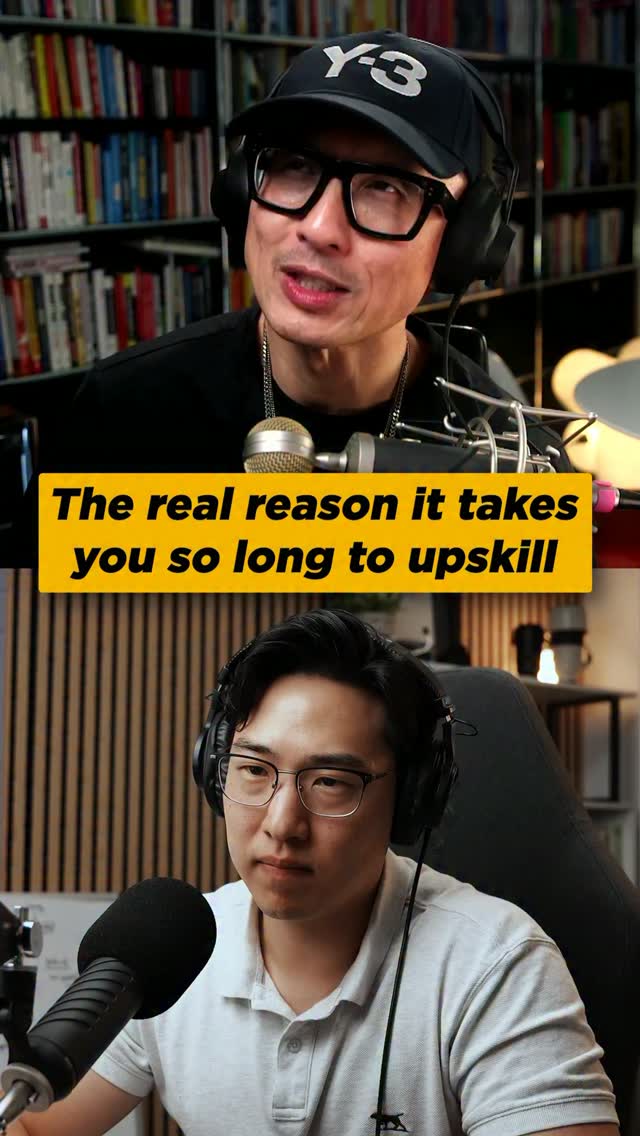
The real reason it takes you so long to upskill

Reel·1:47 min·veröffentlicht 22.08.26 (vor 1 Monat)·erfasst 09.09.26
0,9×Faktor (Views / Median 36.721, n=36)
31.715Views
743Likes
17Kommentare
Podcast-ClipTutorial / How-toHook: insider wissen90s-3minProduktion: mittelUntertitel: satzweiseCTA: followKonfidenz hoch

Warum es so läuft

Der Post lag mit Faktor 0.85x leicht unter dem Median des Accounts, also kein Ausreißer nach oben. Der Hook verspricht Insiderwissen über einen echten Grund, was Aufmerksamkeit erzeugen kann, aber die Engagement-Zahlen (723 Likes, 17 Kommentare bei über 31.000 Views) bleiben moderat. Vermutlich wirkt das Split-Screen-Podcast-Format mit Dauerpräsenz beider Gesichter und satzweisen Untertiteln solide, aber nicht außergewöhnlich viral, da das Thema abstrakt und erklärend ist statt emotional zugespitzt.

Belege
  • Ausreißer-Faktor 0.85x, also unterdurchschnittlich für den Account
  • Hook-Text mit Insider-Wissen-Formulierung im Overlay sichtbar
  • Satzweise eingeblendete Untertitel im Kontaktbogen erkennbar
  • Split-Screen-Setup mit zwei Sprechern durchgängig sichtbar
  • Nur 17 Kommentare bei 31.128 Views, geringe Diskussionsrate
Hook

„The real reason it takes you so long to upskill“

Titel-/Hook-Muster

Der wahre Grund + Problem der Zielgruppe

Für Stefan / Heartbeat

Ein Podcast-Short mit erklärendem Insider-Konzept wie hier könnte Stefan als Ausgangspunkt für einen System Breakdown nutzen, in dem er ein abstraktes Prinzip aus dem Consulting-Alltag mit konkreten Kundenbeispielen unterlegt, um die Erklärung greifbarer zu machen.

Thema

Warum Skillaufbau lange dauert

Sichtbar
  • zwei Personen im geteilten Bild
  • Podcast-Setup mit Mikrofonen und Kopfhörern
  • gelbes Text-Overlay als Hook zu Beginn
  • satzweise eingeblendete Untertitel
  • kurzer B-Roll-Einschub mit Whiteboard und Arzt-Szene
  • Bücherregal im Hintergrund
podcastlernenskillaufbauinsider_wissensplit_screencoaching

Analyse 09.09., 08:28 · claude-sonnet-5

Kontaktbogen (16 Standbilder, zeilenweise; Zeitpunkte: 0.4s, 3.5s, 5.9s, 11.7s, 14.8s, 16.8s, 19.0s, 28.3s, 33.4s, 42.9s, 47.1s, 63.6s, 66.7s, 86.8s, 94.0s, 97.7s)
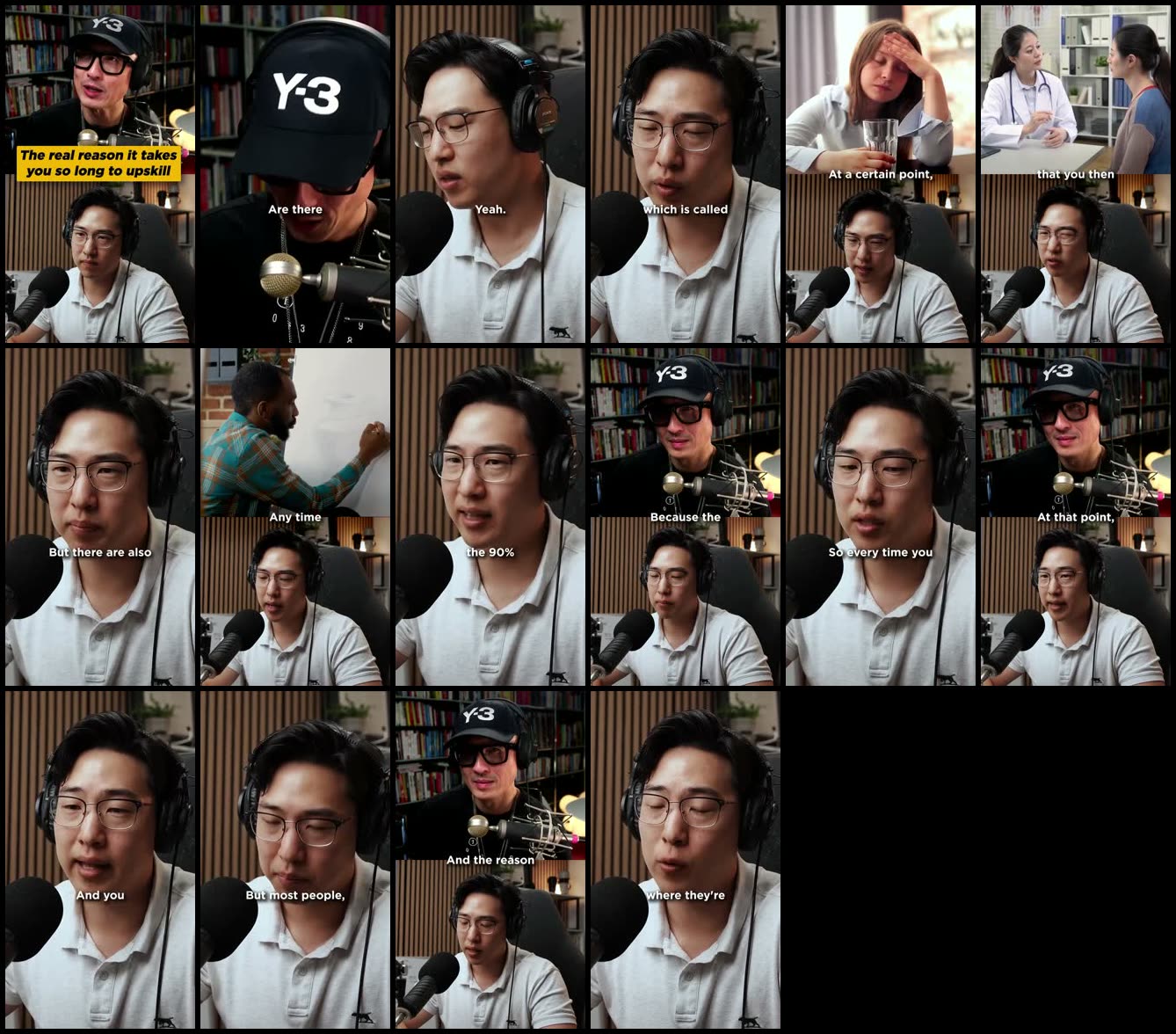
Kontaktbogen

Verlauf

MessungAlterViewsLikesKomm.Label
09.09., 08:2417.7 d31.12872317t0
14.09., 06:3822.6 d31.71574317scan

t0 = erste Erfassung, t7 = etwa 7 Tage, t28 = etwa 28 Tage nach Veröffentlichung.

Notiz

Caption

Follow @drjustinsung for more evidence-based learning and productivity advice. Thanks to @thechrisdo for having me on.

Transkript (scribe, 400 Wörter)

anzeigen
As a professional learning coach and a person who's developed programs, are there any other nuggets that you wanna share with people? Yeah. One, one thing that I think will be really helpful, this concept that I first encountered when I was working as a doctor, which is called a subclinical symptom. At a certain point, the disease becomes obvious enough that you then go to the doctor and then you get it diagnosed. But there are also these things that we call subclinical features or subclinical disease, and this is basically when the disease is there, but there aren't actually observable symptoms of it yet. Any time you're trying to develop or build a complex skill, like learning faster or anything, the ninety percent of the journey is subclinical. You do not actually see observable changes in your performance or your outcomes for the vast majority of skill development, because the vast majority of skill development is just figuring out how to not do it wrong. So every time you try to do this and you feel like it's difficult and it's not working and you just can't get the right outcome, don't take that as a sign of discouragement. Reflect on that and say, "Well, what was the reason why I didn't get the result that I wanted?" And that process, for some skills takes months, even years, if it's a really complex skill. At that point, you are also very, very slow, and you recognize that the next part of learning is actually gaining fluency. So now that you can do it accurately, do it accurately more consistently, and don't focus on trying to get faster because speed is a symptom of fluency. You will naturally get faster as that thing becomes more and more of a habit. See your speed as a symptom of progress. As you continue to learn and develop mastery, the speed will just naturally increase. But most people, even though they completely have the cognitive capacity to be exceptional learners, never become exceptional learners. And the reason that most people will not is because they see those subclinical period where they're making mistakes and it's not working, and they'll say, "Okay, well, must not work for me." They stop. They give up before they actually have a chance for it to manifest in the outcomes that are actually worthwhile waiting around for

Weitere Posts von @thechrisdo

alle