heartbeatRadar

← YouTube

Original öffnen ↗
@alexhormoziAlex Hormozi·US·4,5 Mio. Follower

“Why Won’t My Team Work Harder?”

Hook: „Why Won't My Team Work Harder?“

Short·1:30 min·veröffentlicht 07.09.26 (vor 1 Monat)·erfasst 14.09.26
3,1×Faktor (Views / Median 23.003, n=139)
70.197Views
2.363Likes
32Kommentare
Split ScreenLive ConsultingHook: frage90s-3minProduktion: mittelUntertitel: styled burned inKonfidenz hoch

Warum es zieht

Der Post erreicht das 2,76-fache des Median-Views des Accounts, was auf überdurchschnittliche Performance hindeutet. Sichtbar ist ein Split-Screen-Aufbau mit Hormozi oben und einem Bühnen-Fragesteller unten, der eine reale Coaching-Situation dokumentiert. Der Hook ist eine direkte, alltagsnahe Frage, die vermutlich viele Zuschauer mit Führungsproblemen anspricht. Die Themenkombination aus konkretem Business-Problem und Live-Beratung passt zum bewährten Format des Accounts.

Belege
  • Ausreißer-Faktor 2.76x über Account-Median
  • Split-Screen-Bildaufbau mit zwei Bildquellen gleichzeitig
  • Hook als Frage im Titel, direkt zitiert aus der Situation
  • Untertitel styled_burned_in mit Hervorhebung einzelner Wörter
  • Live-Coaching-Setting auf Bühne mit Mikrofon und Publikum sichtbar
Hook

„Why Won't My Team Work Harder?“

Titel-/Hook-Muster

Frage-Titel als Zitat des Coachees

Für Stefan / Heartbeat

Dieses Format lässt sich als Live Consulting Reel übertragen, in dem Stefan auf Bühnen- oder Call-Situationen reale Beratungsfragen von Agenturinhabern beantwortet und dabei konkrete Führungs- oder Skalierungsprobleme in Schritte übersetzt.

Thema

Team-Motivation und Führung im Vertrieb

Sichtbar
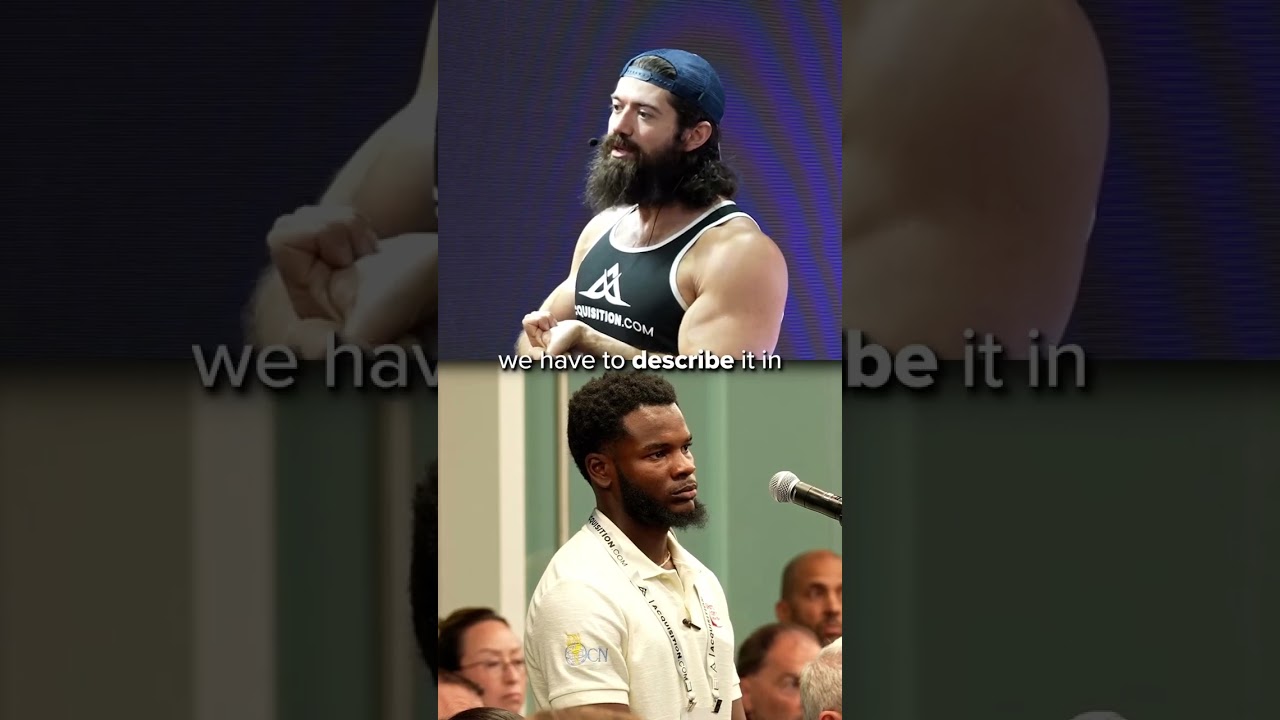
  • Split-Screen mit zwei Bildfeldern übereinander
  • Oben Hormozi mit Mikrofon in Tank-Top auf Bühne
  • Unten Fragesteller mit Lanyard vor Mikrofon im Publikum
  • Styled Untertitel mit fettgedrucktem Schlüsselwort
  • Bühnenumgebung mit Publikum im Hintergrund
  • Text-Overlay synchron zum gesprochenen Wort
live_consultingteamführungvertriebsplit_screenbühnecoaching

Thumbnail-Stil: mehrere personen

Analyse 14.09., 07:36 · claude-sonnet-5

Verlauf

MessungAlterViewsLikesKomm.Label
14.09., 06:456.5 d70.1972.36232t0
14.09., 06:496.5 d70.1972.36332t7

t0 = erste Erfassung, t7 = etwa 7 Tage, t28 = etwa 28 Tage nach Veröffentlichung.

Notiz

Beschreibung

Growth hack: word your problems as personal deficiencies. “My sales people suck” VS “I don’t know how to hire train and manage great salespeople.” If you can improve it, it’s a skill. If it’s a skill, you can learn it. But you have to admit you suck before it can get better.

Transkript (apify, 364 Wörter)

anzeigen
I have a sales team, right? We door-to-door. This year I I'll for sure do about 800. >> What's stopping you? >> I was going to say me, honestly. I'm always in the field. I'm always doing some type of field training. When I'm not in the field >> Yeah. >> it seem like >> They don't try as hard. >> Yes. >> Okay. So, the good news is that people listen to you. The bad news is is that there's only you. And so, when you disappear, the reason to work hard disappears, too. You have to duplicate your ability to motivate them in other people. >> So, duplicate myself. >> Yes. Basically, you have to define what good looks like in terms of behaviors. So, instead of saying try harder, it's like you need to knock more doors. We have to describe it in terms of visual things that they can under-see with their hands, what they would do with their body, right? We have to model that behavior, which means that you do it in front of them, which means those leaders have to do the ideal behavior so that the people can learn what good looks like. We then have to get them to try, right? So, rather than explaining it over and over again, we want to elicit trial attempts. Then you can do the next thing, which is watch what they do. And you can observe their behavior. And then, you can give them feedback. And we either correct them in the moment or we reward them in the moment. But either way, they have a contingency that happens as soon as they do the stuff. And then after that, we repeat it until it sticks. That is basically how you shape behavior for an individual. When it levels up to the organization, the team, that's when we have to do that publicly. So, we have to enforce those standards publicly, which usually means eliminating the people who suck. After that point, you then have to start running those same steps, but saying, "Hey, leader, great job reinforcing him." And that's a done. >> Appreciate it. Thank you.

Weitere Posts von @alexhormozi

alle