anzeigen
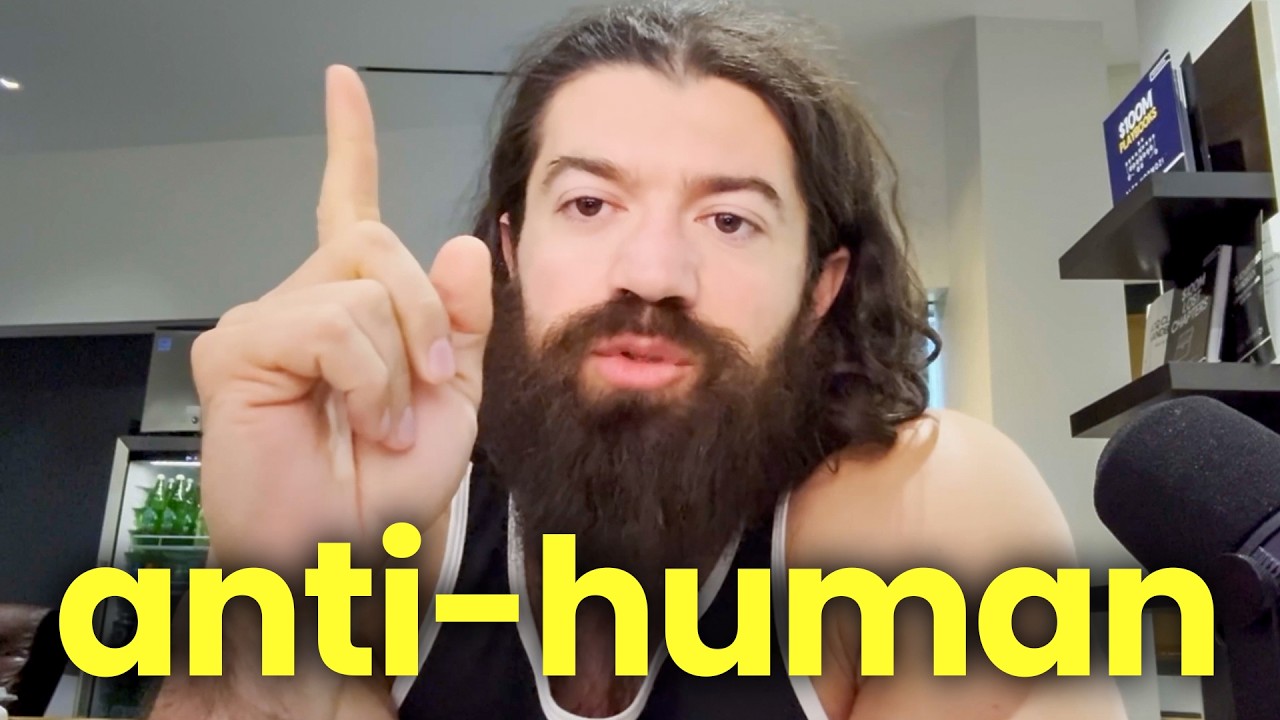
So, there's three reasons that entrepreneurs do not succeed that are not technical. So, what I mean is this. I get questions a lot about tactics, and I have tons of tactics, and I walk through lots of videos, and you can watch the other videos for that stuff. But, when I talk to entrepreneurs, and I talked to plenty of them cuz we have about, you know, we have people come out every single, you know, week here in in Vegas. And and this is to be clear, not small entrepreneurs. So, we're talking, you know, 1 million, 10 million, 50 million. That's kind of the range of the people who come through uh our headquarters. So, legit businesses, right? The things that limit them are not the tactics they seek. And so, there are three things that are that are required to be super successful in any business. And the reason that I think most people cannot do it is because they are anti-human. So, who we are. And also, when you see some of these really successful CEOs and and and billionaires and whatnot, and they come off almost robotic, I don't think they started that way. I mean, in fact, sometimes if you look at some of my earlier videos, they I seem less robotic there than I do now. Um that's not it's not on purpose. Um but, the issue is this, is that we as humans want new stuff. We want it now, and we want it to be easy. And those three things are actually the antithesis of what is required in order to be successful in business. We need to not do new stuff, right? We need to keep doing the old stuff. We need to not pursue shiny objects, right? That's what focus is. >> [sighs and gasps] >> We have to be willing to delay gratification and not get it now, but be willing to work now, get no reward, and hope that we will get something later. And when we fail, which we inevitably will along the way, we have to be willing to continue uh and not question our original is it worth it uh to begin this pursuit. And so, when you back that out, the three I would say character traits, which we'll just say behavior patterns, how you behave in a number of different conditions, uh are focus, you have to be able to do one thing, patience, you have to do it for a long period of time, and frustration tolerance. You have to be willing to get kicked in the nuts or the face or whatever in the gonads. There you go. That's That's coed. Um for extended periods of time. And so, I I say these things because when I talk to entrepreneurs, they always seek the tactics. But, I can this is going to sound I have decent pattern recognition at this point. I've talked to a lot of entrepreneurs. And I can usually guess, I'd say, what range of entrepreneur they are by how they behave. And that's because all businesses can get very big. Not all entrepreneurs can get very big. And it's because they can't stay focused, they are impatient, they quit too easily. And that means that you do not lack tactics, you lack character. And I find that to be really interesting. And so, the question then comes, okay, well, if that's if that's what's required, and I don't think anyone's going to really argue with me on this. Like, yes, I should be more focused. Yes, I should be more patient. Yes, I should be more long-suffering, enduring, being able to continue um when when things become frustrating. I don't think anyone's really going to fight me on this. So, the question is, how do you do it? And so, I think taking a different perspective of if I were the worst or the most dangerous competitor, somebody who I would not want to compete against, what would that person do in my specific situation? And interestingly, when you I think it's like called third-party bias or there's some some fancy psychological term. But, basically, when you when you are not trying to live your life through your own eyes, and you try and give someone else advice, you give way better advice than you follow for yourself. And so, like, why is this? And I think this is called the Solomon paradox. There we go. Um but we give better advice than we adhere to because we do not have an emotional tie to the situation. And I think that that is kind of that robotic thing that I was referencing earlier, which is like as much as Hollywood and the movies always try to make it seem like, you know, uh these humans against the robots and then the humans somehow pull it out in the end. It's like, no, like, try have humans go against uh robot and just and humans lose literally and I would imagine that in cockpits for, you know, airplanes, like, humans will lose against AI, you know, fighter plane fighter planes, right? Like, it's not it's not reality to think that we're going to we're going to win. Like, we do a memory contest, computers win, right? And so, the idea is that um the things that are that it takes to be successful in business does not necessarily make you more human. And so, I think that is that is kind of like an interesting notion. Um we have to behave more logically. Um and I would say this, if your emotions encourage you to take an action and that action is aligned with logic, then great. But it's not the emotion that caused it uh to work. It's just that the logic was was valid and it was just also aligned with how you felt. But being able to make the correct decision independent of how you feel, I think is where it becomes more difficult. And so, this is the kind of tactic um that I'll share with you, which is um embracing emotional discomfort and not making the fact that you were uncomfortable, in pain, frustrated, have this feeling, this itch to take action on something because you feel bad, because you want to change how you feel, you feel like you need to change your business and that in changing your business, it's going to change how you feel on the inside. Now, you taking action often times does alleviate anxiety, but it doesn't mean that the action was still correct because it might take time for us or or for that to to to play out, right? And so, while you're while you're in it, you feel better, but then you look back at the carnage or the the rubble of of you breaking your business yet again and and shifting your team's focus and said, "Well, they said it was this priority last week." And then the next week it's the this next priority, right? It's that you're constantly whiplashing everyone, including your customers, which more realistically looks like very confused messaging and marketing, which means that you stand for nothing because no knows cuz you change your mind all the time, right? And so, and that's because you're reading an article or you watch a video or whatever and it's like, "Ah, actually that's this is the most important thing." And so, you you have to be able to stick with things for an extended period of time and not start new projects, um so you can see things through because fundamentally like all great things come from doing more work in a very narrow place that other people are willing to do. Super real. I think about it like, um surface area of thinking. How how much time have I given this idea? How much air? Like how how many how many coats of paint have I put over this problem where I walk away and I come back and look at the paint, make adjustments, go back, look at the paint. And the reason I think this is important is that like over time you're in different moods, you talk to different people, you you look at that painting with different eyes, different lenses, different perspectives, different things you're comparing it to. And the more diverse the lenses that you look at a solution through, the more complete and elegant the the solution will come. And that only comes from having that many repetitions over periods of time on a specific problem. And when I say specific problem, it doesn't have to be just a problem in the business, it could be the business as a problem as a whole. And I think that is why the people who are unfocused do not necessarily win. And to be clear, this is actually less a question of intelligence. This is why I say this is this is a character trait issue. Like, um a focused fool will beat a distracted genius. Men with focus will beat the men with intelligence. Real. And so, in thinking about that, one, how can a How can I behave this way? Which is What would the most dangerous competitor in my place do? Let's do that. Number one. Number two, if I feel an emotion, am I Is the action I'm taking to try and make this emotion go away, or is it what my business needs me to do? And those are often not the same thing. More often than not, what you need to do is keep doing what you were doing, and just let this let this emotion pass. Cuz emotions are like the weather. They come and go. Right? And so, we have to sometimes just give give them time, give them space, acknowledge they exist. Great, I feel you, and I'm going to continue doing this thing. Um And then finally, laddering up to those big three, those big three character traits, patterns of behavior. Am I this this new this second business that I'm considering, this second revenue line, this new idea that I have, is it really required? Is there anything that that logically stops my existing business from doing twice as much or five times as much or 10 times as much besides the fact that it's quote hard? I somehow think this other thing is easier because I haven't done it yet, but I promise you, it will also be hard. And so, it's just unknown hard versus known hard. And so, you just take unknown hard. Don't do that. Like take known hard. In terms of patience, the patience I think is um is giving yourself that surface area of thinking. Is being able to have multiple coats of paint over the same problem and come back and revisiting it with different perspective and different eyes. And then finally, the frustration tolerance component is am I able to sit with discomfort and continue to take the actions that I thought I should take before my emotions tried to convince me that they were inconvenient or incorrect. And so, um just something to think about on this Sunday as I just review the week and I think about some of the conversations I had with different entrepreneurs and how almost none of them They were all seeking tactics, but what they really needed were traits. They needed to change the way they acted in their business because it didn't matter what tactics I provided, they were never going to scale because they are not the type of person who can. So, yeah. Happy, uh, whatever day you're watching this on. Rock and roll. Bye. If you like this video and you're business owner who wants to break through your current revenue ceiling, I distilled every lesson from scaling 10 businesses past 10 million and three businesses past 100 million into a completely free scaling road map that I've used to go from zero to one, zero to 10, and zero to 100 plus. And so, you can click here and you can check it out. Again, absolutely free. And since you're business owner, appreciate you and, uh, enjoy.