anzeigen
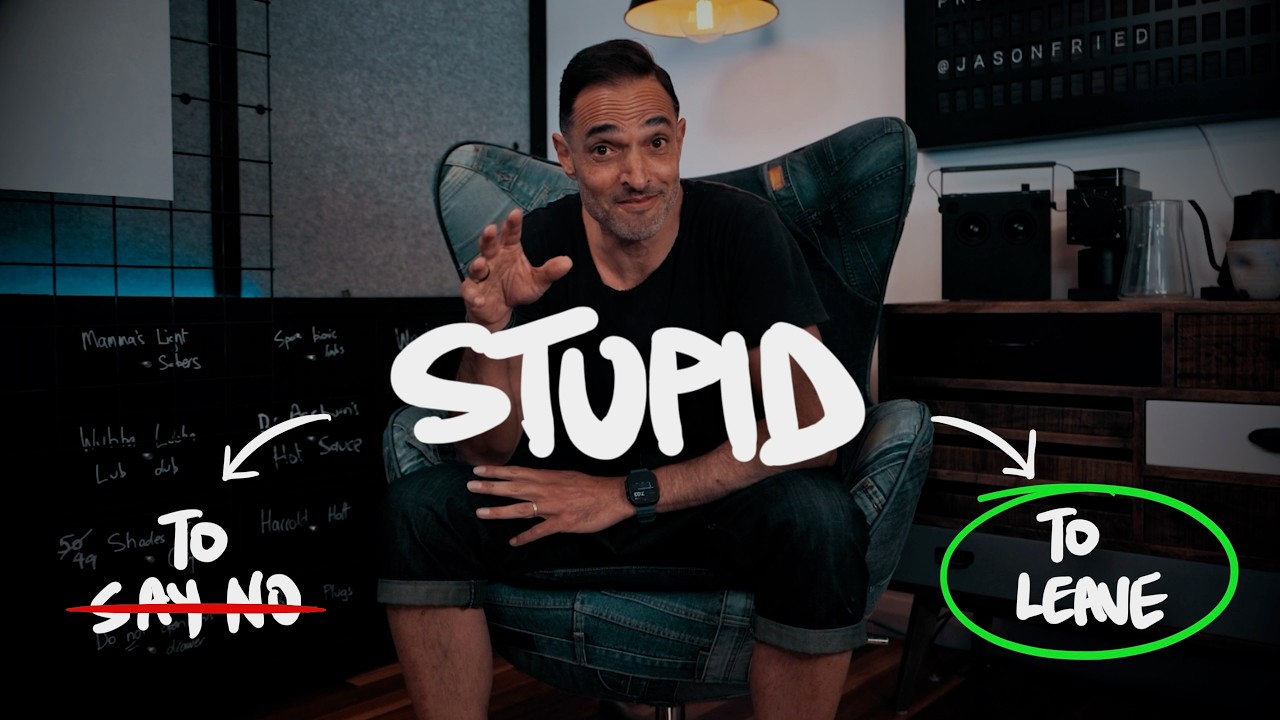
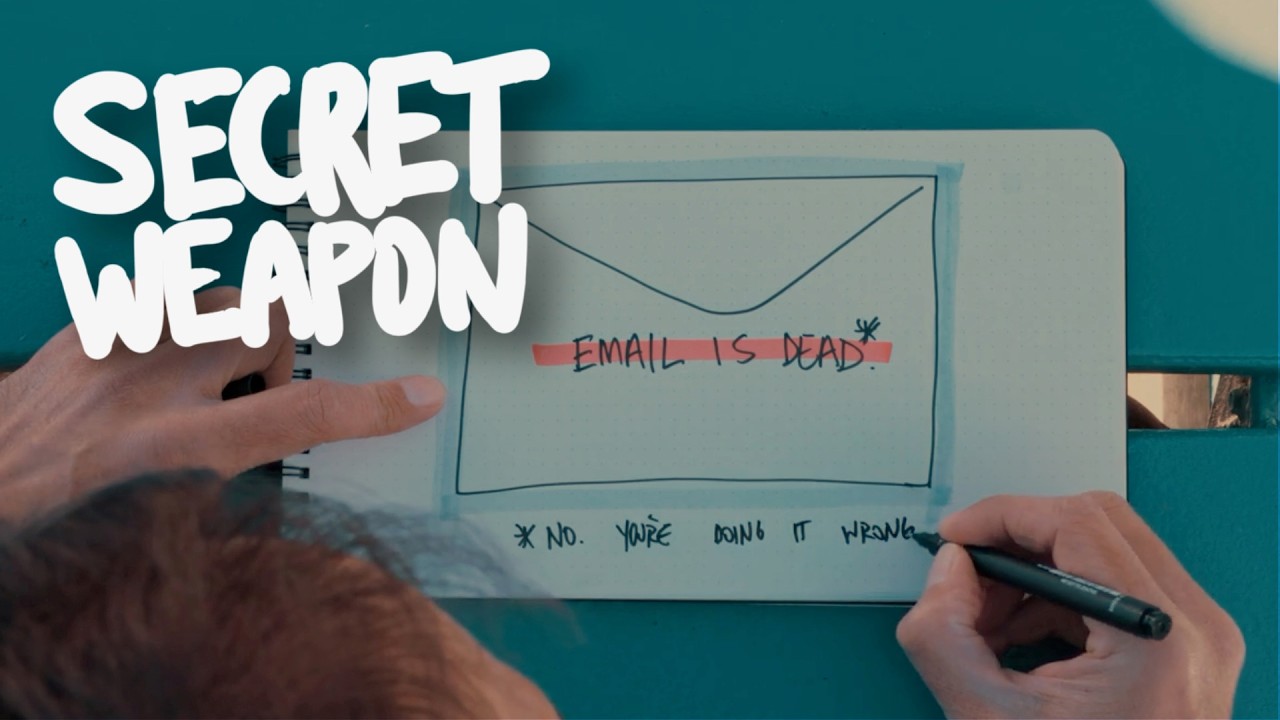
I've got this great client. His name's David Duggan, and he's been with me for 14 years. He's had something like 97 record quarters in a row. So, he's been with me a long time. But, his average client stays with him 7 and 1/2 years, and that's average client over 100 clients. He asked me a question once that hurt. He said, "Like, Taki, how big would your business be if you had never lost a single client? If every client who ever started with you was still with you today?" And I cried for days. We've been focused a lot over the last couple of videos on how do we market and how do we sell? How do we get the clients? But, that's like half the game. Because most coaches have to put so much work into marketing and sales because they don't keep the clients they got. In the last video, I told you about this quote from Naval, which said, "You're doing sales because you failed at marketing." If you look So, on the board, there was a dot dot dot at the end, and I I cut the rest off. Let me finish the sentence. It's It was this. "You're doing sales because you failed at marketing, and you're doing marketing because you failed at product." Our product is coaching, and I'm not going to tell you how to coach your clients, but if we can get them to win faster and stay longer, I think that's a conversation worth having. And we shouldn't need to talk about this, but we do because coaches are working so hard on getting leads and finding new funnels and all this stuff because they've got leaky buckets. So, I don't know if you're noticing the same trend as I am. You probably are because we're in the same circles. There's a a trend that was big a couple of years ago that grew in huge popularity, and now we're reaping the downstream effects of it. And the trend was, "Let's create an offer [music] so irresistible, so good that people would feel stupid saying no." And from a marketing and sales point of view, it totally makes sense. But, what it's led to is a bunch of big promises getting made that now have to get fulfilled. And so, we've got coaches who just want to run a coaching business, but now they're proud owner of a a software you know, a software business as well. Or running an agency and doing done for you and doing tons and tons of one-on-one and stuffing their portals full of all of these like extra >> [music] >> bonus material they use just to get the sale. Here's what's wrong with that. It's not good for anybody. Your clients are completely overwhelmed and the coaches, us, are completely burned out. And then there's AI. And I think some coaches are down this end of the spectrum who's like, "No, I'm not touching it." Head in the sand and they're just getting left behind. And then there's other coaches who who have gone all the way to the other end and they've basically uploaded them into an AI and that's what their clients get right now. And wonder why their clients don't get results and they want to bail because they can get the same answers for 20 bucks a month off GPT. So, if you want your clients to win and stay [music] and for you both to enjoy the process, we've got to move away from irresistible offer to creating an energizing experience that's just as good for you as it is for them. I think I can show you how to do it. Let's chat. I'm not going to teach you how to do basic stuff. Like, you should have a community on school or on Facebook or whatever. Or you should run Zoom calls. That's basics. You know how to coach your clients and you know how to get them results. I think there's three three reasons why clients leave, why clients >> [music] >> get stuck, and why they drop out. Firstly, they're lost. They get overwhelmed, bogged down, and then they lose heart and they bail. Second, they're stuck. Like, even if they know what to do, they're just not good at it yet and so they don't get the results. And then third, all of this is compounded because most of our clients are operating alone. And so, they lose heart. If they lose heart, they run out of future. When they run out of future, they leave. So, we've got to fix lost, we've got to fix stuck, and we've got to fix alone. And that's our road map for the next couple minutes. Here's the biggest mistake we make. We want to help our clients. We want to give them as much value as we can. Plus, we're trying to make our our offer irresistible. So, what do we do? We give them stuff. We give them more. We give them content. We give them workshops. We give them webinars. We give them Zoom calls. We give them trainings. We give them PDFs to read. We give them all the stuff. And in the middle of all of this content, they get lost. Clients don't starve, they die of indigestion. Like if they got too much stuff, they don't need more. And if they're lost, what they need more than anything else is a map. They don't need content, they need context. That's the first fix for us to nail together. So, if I'm sitting down with a a new client [music] and they want some help designing their program, there's a simple shape I use. It's got a magic model and it gives their clients a map, so they never get lost. It also gives uh the coach a real clear sense of what needs to go in the program and what they don't even need to talk about cuz it's not helping solve the problem. So, we draw a triangle >> [music] >> and in the middle we just go, "Hey, what's the dream come true? What's the result?" Every time a client hears a result like a promise, there's a part of their mind that goes, "Yeah, but I can't because reasons." Guess what? Those reasons are important. They're the obstacles that they need to overcome. So, the second piece we add is the obstacles. You know, obstacle one, obstacle two, obstacle three. I draw them in red cuz red's bad. Then [music] we go, "Hey, what are they What's the opposite of that obstacle? What would it look like if they hit a milestone?" >> [music] >> And so, the milestones go in green. Simple, visual. I know, "Oh, that's the current problem I'm working on. That's the goal I'm after." Then the next question is, "Well, okay, how do I do it?" And then we give people a couple of missions. One or two projects that are going to move the needle. I draw them in blue because it sounds like a blueprint, which makes me feel like I should go to work. So, let me give an example. My job is to help business coaches get to a million bucks a year. Let's call that the result in the middle. There's three big problems they have. They don't have enough leads, sales is awkward, and clients bail cuz they don't get the results they're after. What's the milestone? Well, we [music] want to get leads every day. That's like a marketing job. We want to get make sales every week. We want clients who stay for years. Cool. And then the blue are just the projects or the missions around it. Now, when you look at this, it's a super simple picture, but it gives your clients a map. Oh, I'm working on that problem to get that goal, and that's my current project. I can ignore everything else. The benefit it gives you is, you know all the other you know? All of this other stuff that you thought you had to put into the program to make it irresistible, you don't. Cuz clients don't want your stuff, they want a result. They just want our help. And the secret to helping a client win is to get rid of all of the distractions cuz they're already chaotic and distracted enough in their head without us adding more. If your clients are lost, they need a map. They don't need more content. All this stuff, they just need context. A simple picture like this with a clear plan shows them where they're at and where they're going what to work on, and they believe that it's possible for them. First job, make them believe. So, the second reason that your clients don't win as fast as we like and don't stay as long as we'd like, is cuz they just get stuck. They might know what to work on, but they still have to do it. I don't know if you've had this, but like in the early days, like I'd teach them and I'd show them and I'd give them examples and templates. And they'd either go, "Oh, yeah, that's cool for you, but I could never do that." Or, "But you're so good at that." Or even worse, sometimes, they'll try and they'd proudly show me their work. And in my gut, I'd be like, "This is just never going to It's just not good enough. It's hard work." Sometimes, you just wish you could like either just go, "Hey, all right, just let me do it for a week." Which is cool, but that's not sustainable. It's not great for them, and it's super not good for you. Sometimes, I just wish I could take what I know and my skills and just stick a USB in the back of their head and like upload my powers into their brain. And it didn't used to be possible, but now it kind of is. So, let me show you the model, how we think about different ways to help clients get results faster. Remember years ago shopping at Whole Foods with um the Hormozis? I don't know which one said it. There's the muscly one. They're both kind of muscly. And they said, "The secret to our scale is that like how low can we lower the bar of how good a client needs to be before they join us and still make them successful? Still get them to win?" I've been thinking about that a lot. So, in the old days, there were really two main ways that people like us helped their clients get results. And one end was like DIY, do it yourself. Here's the course, good luck. And then that's great for the coach cuz it's super scalable. It's terrible for the client because like only 3% of clients even finish the course, let alone implement it. God forbid, like let alone get any kind of results at all. So, that's not okay. The other end of this spectrum is like, "Okay, well, I'll just do it for you. Done for you." Agency model. Great for the client cuz either it wins or they fire your ass and switch you for somebody else. Not good for the coach cuz it's not sustainable. And so, about 8 years ago, I was like, "There's got to be a better way." And I coined the term done with you. Which is like at the time the best way to like take the scalability of this and the resultingness of that and help clients really win. And so, it'd be like, "I'll teach it to you. I'll give you a template and you just pour in your content and your personality and then we tweak it." It was cool. But even despite that, the level that you can do versus the level that your clients on their very first time can do is just like night and day different. But now, thanks to AI, there's just a better way. And we call it done >> [music] >> accelerated for you. D X Y. And it's basically the exact same process, but instead of just learning the stuff and using the templates, learn the stuff, get some ingredients out, and then use a custom GPT to get in the results. So, we've been using this extensively. Every time we create a new training or there's an old training where people used to get stuck, and we build custom GPTs that either help people like create the stuff or order the stuff and get results that for a beginner are just like mind-blowingly great. Here's the thing. AI is good at creating stuff, but someone, you, and then your clients need some taste cuz you need to like season it salt based on like, "Oh, yeah, that's good." But tweak it like that. But now we can get clients instant results and get them [music] out of their head and into motion and get results really, really fast. So, your best clients probably don't need this stuff cuz they've gotten good by developing skills like the old fashioned way. But new people, or people who are early into your area of expertise, they could use a lot of help. So, a month or two ago, I was coaching four or 500 brand new coaches who were like new to online and hadn't sold anything before. And my job was like help them design a program using the magic model map, build an offer using a custom GPT that we wrote, and then sell it live for the very first time. And obviously that like that's big and scary, lots of big decisions to make. So, we stepped them through it with the help of AI and a good old fashioned, "You've got 3 minutes, go." offer machine spits out a great offer. We showed them how to tweak it with the a magic phrase that made it better. And then it came time to like share it with the people. And so, I did my favorite trick in the book. I put on my personal trainer hat. I was like, "Okay, so you know what to do? Post this message now." So, they did it and they all crapped themselves. Uh they were called team brown pants cuz they all had to do with shitty pants. Anyway, they did it. And then people put out their hand and and started going, "This looks interesting. Tell me more." And so then I was like, "Okay, that offer that we just created, send it to them." And then people started saying, "That sounds great. How do I pay?" And live on the call, I think within the hour that we spent on this, 45 or 46 people made somewhere like the lowest was three grand and the highest was like $17,000 having never sold anything like this in their life. And that never would have happened this way. It never would have happened that way cuz I couldn't help that many people. It could have happened here, but it happened instantly here. And the belief thing we talked about before got taken care of because they got results faster than their disbelief could talk them out of it. That's what I'm talking about. So, if you think about this and applying it to you, once you've got a map, the question is, okay, well, where abouts on my map do people get stuck? What's harder than it should be? What takes longer than it should? And where do people just get this wrong? If you just like highlight like, you know, people tend to get stuck there, and this bit's tricky. And here as well, you just got like, what's the specific thing they get stuck at? And then if we can build a simple AI power up that gives them superpowers, your clients are going to whip through the model faster and get to the result much, much quicker. The solution to stuck used to be training and reps and learning and reps and weeks and months and years, and now it's how do we we get them from stuck to a result with the help of some AI superpowers. Leverage it and help your clients win faster. Have you ever worked with somebody and they got incredible results and they said thank you, maybe even sent you like a testimonial, and then asked to leave? That's happened to me a couple times. And at the at the at the time, I was like, go like, dude, I had this guy join us at like $13,000 a month, got to a million dollars a year in like 5 months, and then he's like, I think I'm done. Uh what? And then I realized it wasn't his fault, it was mine. If you think about what makes clients stay, yeah, let's talk about retention. It's a simple mathematical equation. Retention equals results, which we've just been chatting about, times relationships. I had this client called Kurt, and he was a a hard South African taskmaster. [music] And he got incredible results. In fact, I interviewed one of his clients once for a case study. He's like, me and Kurt have a a love-hate relationship. I'm like, what do you mean? He goes, I hate him every time we talk, uh I love him every time I check my bank account. He's like a results guy. And then I know the other coaches who are maybe they don't get as many results, but people feel more connected and bonded >> [music] >> and like friends, and they never want to leave because if they leave, they lose their friendship. Friendship to the coach and with their peers. If you want to keep clients long-term, you need both. And the truth is that most of your clients most of the time feel really alone. And alone doesn't mean they run their business solo or they don't have people in the world. Even if they run a company and have a big team, like who does the founder actually talk to? Not that many people. And so this aloneness problem is a huge opportunity for you to create a place where they can belong. The third transition is to take people from being alone to doing this journey in a squad. And the squad makes your life easier and their life so much better that they'll never want to leave. So if we want to make this switch from an irresistible offer to an energizing experience, the best experiences are the ones we share. And really, what we're selling often is proximity. Proximity to you and proximity to other people just like me on the journey because otherwise, how on earth do they meet their people? Let me give you an example. This morning, I run a call with our clients in BlackBox. And uh over the course of 90 minutes, I taught zero things. Okay? But what I did is I set up three questions for them to think about for a minute and then jump into a breakout room and discuss with like three or four people. And over the course of the hour and a half, they had like a chat with this group over here and then they switched to a different group and they chatted with those people here and they chatted with those people over there. Because the the content's amazing, but what really makes it stick is I'm doing this journey with others. And at the end of the call, it was like, "Okay, so like what were your best things? What do you appreciate?" And like five or six people in a row just said, "I feel like I found my tribe. I found my people." When you can create a community, not just like sell a coaching program, you build this this power. I've got this friend, Peter Low, calls himself hot Asian. One of those two things he should is true. He said, "If you want to go fast, you go alone. If you want to go far, you go together. But if you want to go fast and far, I'm like, I think that's our job, right? We want to get them results fast and have them stay a long time. If you want to go fast and far, you go with kindred spirits." So, I think the secret weapon, the hack that almost nobody in our space really does, is don't just sell a product or coach clients, but build a community. So, we know that people stay when they're getting results and they're in a relationship. If you don't have like 10 clients or 20 clients or 100 clients, it's like you and a couple of couple of clients, this is still important. But they don't have to bond to each other. The most important relationship they'll ever have in the coaching space is with you, their coach. Ultimately, the easiest relationship for you to control is the relationship your clients [music] have with you. If they know you care, they'll feel it and they'll behave appropriately. They'll do the work to impress you and they'll stick around because they love being in your presence. The give-a-shit factor is kind of the secret source in this whole factor. Whether it's one client or 10 or 100, if you give a damn, they'll know it and it'll pay off in spades. So, let's land this plane. I want to give you a really, really simple tool. Every week, my team meets and they run the traffic light meeting. You can do this by yourself. It's quick. The less clients you got, the easier it is. Every client at any given moment is at a set of traffic lights. They're either green, they're clear and they're moving forwards towards their goals. Or Uh let's go to the other end. Or they're red. Like they're stuck, stalled and and they've got problems. Or they're missing in action. Or yellow, somewhere in between, not sure. There's a simple tool below. It's got It's basically put the names of your clients, their traffic light score, red, yellow, or green, and then what the next action is. If you don't know the traffic light score, that's a red. Cuz our job as a coach is to know. If they show a red flag, it doesn't mean they're actually in trouble. It just means that we don't know and we'll find out. This is a simple rhythm whether you do it once a week or once a month, you'll have a finger on the pulse and know exactly how to move your clients forward. They'll feel you care and they'll win >> [music] >> and you'll get rewarded with great results you can brag about, stories to tell, and clients who stay for [music] years. So, if I was to summarize, just to give you like all of this in one idea, it's this. Don't just make an irresistible offer, create an energizing experience. And the easiest way to do that is to go, "Look, what would I want? What's the kind of thing that I would love to be a part of?" Cuz there's one thing to have something that you think other people would buy, it's a completely different, way better thing to build the thing that you would be stoked to buy and be part of yourself.