anzeigen
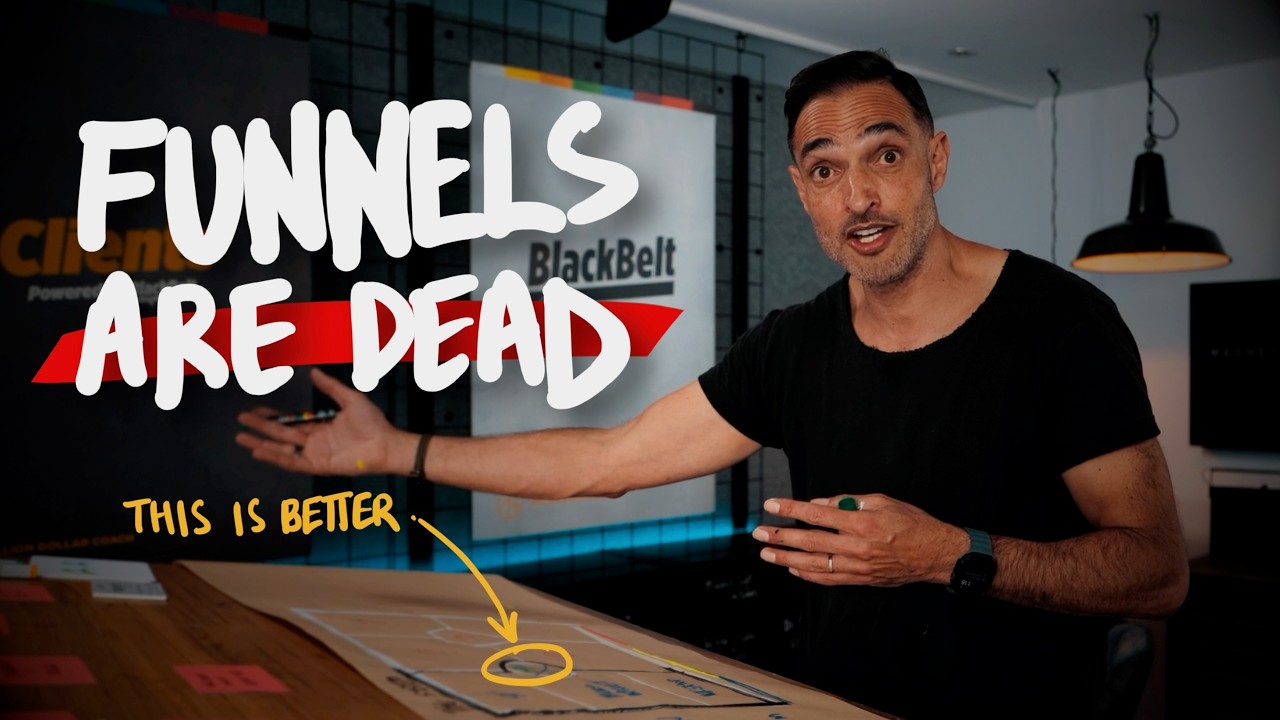
When I got started in this industry, no one even knew what a coach was. You had to educate people about what coaching even meant. But now, every man and their dog's a coach. I mean, your mom's just got her certification, your dad's a high-ticket closer, and your cousin's just enrolled in Hustlers University. The market is more crowded and noisier than ever before. Your prospects are more skeptical because they've hired seven people and none of them went well. And you? In a crowded market, you're invisible. That sounds like a challenge, but it's actually a massive opportunity, especially as social media's changed. Because we switched from a a social graph, which meant the person with the most followers, the biggest audience won, to now the interest graph, where the algorithm helps your content find your perfect audience. The good news is that people don't buy coaching, they buy coaches. And so, the game has shifted. If you've been around this game for a little while, you've probably heard these two words: traffic and funnels. In the old days, that's all you needed. One funnel away, and then a ton of traffic, ad spend, or whatever, to get people through it. That's the old game. Now, it just comes down to two things: becoming magnetic and bingeable. I'm going to sip my first Vietnamese coffee of my entire life. I'm going to shoot back to the office and tell you all about it. That's actually really good. So, to start us off, I want you to think about two creators whose work you admire and would kind of love to emulate. There was bits of what they do that you just like, "Ooh, I love that. I wish I could do that, too." Just come up with two names. For me, I'd say uh Casey Neistat. I love his vids. And business-wise, there's a ton uh who I admire for for various things. So, got two names. What is it about those people that you admire and would like to emulate? Cuz I've got a hunch. I reckon the same things that you see are the same two things that are going to set you free and make your marketing absolutely kill without it ever feeling icky or marketing or salesy. I want to show you what what's going on, at least in my head. This is true for me. It's true for most of the coaches I know and every great creator, and like let's be honest, that's what you are. Every great creator has these two things in spades. Two parts to me and two parts, I think to you. On one side is the business. The business has some specific needs. It's main request of you is, "Please ship content." It has a need for commercial production. So, it's looking for, "Can you produce a volume of content, your stuff, that produces results, you know, leads and clients?" So, I call that commercial production. And so, it's got needs. Um and if we're not careful, and all we do is we tap into this business side of things, we become like a cog in a mindless machine, or we've got other people doing the content cuz they can be efficient and like we're too busy, or AI's doing the stuff and it's not very good. So, that's the business side. It's important, but it's not the only force. And on the other side, this is the bit I want to talk to for most of the rest of this conversation, if I'm honest. There's the business, and then there's the artist. And the artist has a really different driver and a really different set of needs. In me, the artist, like it's driven like I'm driven by creative expression. I just want to like make [clears throat] things and share them with people. And the problem is, if all you do is listen to the artist, and you don't think about the business, you end up in the cliché, like starving artist. They say, "Just talk about the things you care about." Okay, cool. I care about coffee and sitting on the beach. Nobody's been willing to pay me for that yet. So, here's the thing. They've both got strengths and they've both got weaknesses. But when we combine them, a little bit of magic happens. So, let's just look at these as a couple of examples. Who's the most prolific in terms of creating content? It's probably Alex Hormozi. They're putting out like, I don't know, 450 pieces of content a day, a week. I don't know, there's just lots. They're everywhere all the time, and most of it's really good. I would say they are prolific. Prolific just means Let's just start with consistent, right? Cuz most of us aren't prolific. Probably part of you that goes, "Man, I wish I was more consistent with my content." Especially if you haven't posted or sent an email or shot a video in a while. On the artist side, this is These are kind of my people. The artists have got a really interesting quality cuz like yeah, you could admire the production, like the volume that these guys do, but there's something about these cats. They've got something to say and they say it well because they feel it in their bones. I call that being dangerous. If we can get you prolific, consistent, and dangerous, by dangerous, literally all I mean is you're talking about stuff you've got some energy about and you have an opinion about. People follow people with energy and an opinion cuz most people don't. They're walking around umbilical cord in hand just looking for Who can I plug into that kind of believes what I believe? Who can take me where I want to go? If you can get prolific and dangerous, you get paid. Those two creators you thought about at the start? That's them. On a simple note, here's what's cool about this. We use this not as like a teach point but as like a a frame of reference to to for you to think about producing content and creating marketing differently. Cuz artists don't market, they just create and they share. All I want you to think about is what would happen if I could create and point my creativity at the offers that the business wants me to talk about. If we're prolific, we get this unmatched, you know, ability. We We can't be matched production-wise. So, let's just call that can't be matched. That's cool. That's like one advantage that you can have. What about the artist? Well, they're unique. They can't be copied. So, if you can't be matched and you can't be copied, you can't be beat. And I don't mean beat like there's competition trying to beat I don't mean that. I just mean you stand way the hell out as someone worth following. So, what I'd love to do is spend a little bit of time helping you get more prolific and more dangerous so we can get you paid with your content. So, every coach I've ever listened to and every coach who's come to me for help growing their business has said you need to be more consistent or I'm not as consistent as I want to be. That's cool. We can talk about that later. None of the consistent matters if you don't have something to say. And often we feel like like there's other people in my niche saying the same sorts of stuff or I'm not good on camera or all that. And so the most important ingredient in all of your content is you. Our first job is to be the content. And there's a risk right now. You're busy. You've got stuff on. Maybe you're not that good at videos or emails or or posting on social. And so we outsource it. We either like get someone on the team to like help us with the social media or we use AI. And we get the robots to do the thinking for us. And then pretty quick you get ignored. Here's what happened to me. I was >> [music] >> um running a big business and it and it got a little bit crazy and out of hand as um >> [clears throat] >> as often happens. And so I I thought, you know what? I've already said the words once to our clients in Blackdot. I don't need to like say it again. I'm just going to get someone to clip little clips from the webinars and workshops I run for run for my clients and we'll share them on social. That'll be fine. For our emails, I'll just get someone else to take the transcripts of those workshops that I run for clients, >> [music] >> uh transcribe them, edit them, and like publish them out as emails. And it was okay for a bit until it wasn't. It's like uh this guy was I ran a big business and then it went bankrupt. I'm like, "So, um you know, you used to be a billionaire and then you went bankrupt. How'd you go bankrupt?" He goes, "Well, two ways. Slowly at first and then quickly." That's what happened to me with content. This is the exact trajectory. You know, outsource the content, somebody else is looking after it, whether it's AI or it's a person, doesn't really matter. First I felt like relief. I don't have to do this. This is great. This is what happens when you outsource your voice. First it was relief. Then people sort of started to tune me out. And if they knew it wasn't me, they probably maybe they didn't maybe they didn't they just knew it wasn't as good. It was sort of what I wanted to say, sort of how I'd say it, not that great. So, they started tuning me out. And then when we'd make a offers and invitations, response went down. So, what do you do when people aren't responding? Don't do what I did, which is like Well, clearly we just need to send more. So, we'd send more, we'd spend more, we'd hustle more. We work like four to five times harder. And funnily enough, it didn't work because we were just like getting more like force-feeding more crap that nobody liked down their throat. When you outsource your content, it ends up homeopathic. You know those like one drop of onion juice in an ocean of water is somehow magically meant to cure cancer or whatever they say. My content was lame. It was like a photocopy of a photocopy of a photocopy. That's what happens when we get a robot or somebody else to do the content. The future in our world is founder-led marketing. If you think about Virgin, it's a great company. Richard Branson, he's the he's the brand, he's the face. That's us. So, eventually after getting fed up with this like stuff not working and having to work so hard, I decided let's take back control. And for me, I started with email and then to short form and then to long form, which we'll talk about all the how-tos in a in a minute. And a really different sequence of events started. Um instead of outsourcing my content, I decided to own it. Just as an experiment, see what happened. At first I was scared like it was nice not having to do the stuff. I remember the first time I created a piece of content and I looked at it I'm like, that's that's pretty good. I got like a taste. That's actually great. You ever done that where you're like you create something and you're like man, I'm smart. I had one of those. And then it didn't happen straight away, like the bankruptcy but in reverse. People started to replying going, "Hey, that was really good." So, um people started to tune in. And then we'd make an offer and responses went up. And then instead of having to work four or five times harder, now we're selling four or five times more every single month without anyone like tapping on the leads. It was like, here's the content, you know, [music] here's my point of view, and here's an invitation. And people just jump. So, four or five times not This is four or five times work. This is four or five times results. And instead of homeopathic, the content is like heroic. It's me in a video. That's what I want for you. And I think the biggest danger is to go, "Well, I don't have anything to say." or I'm not good enough on camera. The skills to find something to say, we're going to fix that today. And the the skills, that's just time. Can I show you how? Cuz I'd love to. So, we're talking about being magnetic. Back to those two creators I asked you about at the start. There's something about them that makes them magnetic to you. I'm sure there's as many people who don't love them cuz a magnet's got to attract and repel, but for you, they're kind of it's vibing. If I break it down, it's probably they're saying something kind of interesting, and they're really good at delivering. It's like there's what you say and there's how you say it. And we get obsessed with like looking right and sounding right and how we deliver stuff. How we come across on camera, what the lighting and the gear is. The secret to great communication, it's not body language tips or pauses. Like, that's all nice. The hack is conviction. It's saying something you believe and have an opinion about. When you've got energy, like you I just felt it then in me. I don't know if you picked that up, but I got the oh, Tucker gives a about this and like he he wants to make sure that it gets across. That's what's going on. So, let's talk about AI. It's a great tool. There's kind of, broadly speaking, two camps. There's the AI is bad, don't touch it, it's really useful, but just don't look, people, and there's the use AI for everything people. And they're both kind of stupid. The people who use AI for everything say, "Hey, write me a thought leadership piece about topic I don't know anything about, and then post it." They're dumb cuz they get found out real quick cuz their stuff's The people who don't use it all, they're just missing out on a great tool. Most of us work by ourselves and I think if you treat AI like a team member, like a brainstorm partner, an editing partner, like it's magic. Uh a few years ago, a mate of mine, Matt Matt Church, told me about the three stages for doing great work. Like imagine imagine you're not a you're not a coach, you're a brain surgeon. Well, the brain surgeon gets paid top dollar to do brain surgery. They don't prep the patient or get the OR ready and they don't like stitch up afterwards and clean up and move them into after operation care. There's three phases, right? So, all of the work goes through these these three phases. There's the setup, which in surgery is like prep the patient and prep the OR, get the team briefed. In creating content, there's like figuring out what I'm going to say here. Then there's the makeup, which in surgery is doing the procedure and in content is like shooting the video or writing the post, and then there's cleanup, which is in surgery stitch the patient back up and wheel them into aftercare or notify I'm really sorry, we did all we could. Hopefully it's not that. And in content is like post the thing, maybe look at your stats and learn some lessons. I think AI is great for setup and cleanup and my job is makeup. So, I use it a ton at the start like I've got this idea, ask me a bunch of questions and I get it to like you know, to challenge me or prompt me or help me like help me find a couple different ways to say this. And then I just go. Now now I've got enough, I can go. It's an amazing editor, especially for someone who's like a little bit passionate and types full of weird typos. So, I use it to brainstorm and I use it to edit and I don't never use it to think for me. Think if you do that, you're going to be great. And the what you say takes care of the how you say it. Cuz if you have something you care about that you have an opinion about, it'll come across with conviction. So, if you want people to pay attention and you want people to follow you, then we need something to say. And here's the biggest lesson. I got it from Kanye West and I got it from Rick Rubin. >> [music] >> So, Kanye West was working with Rick Rubin on a new album and they're sitting down in the studio listening to all the songs that might make it on the album and Rick Rubin looks at Kanye and just gives him the best piece of advice. He's like, "Listen, if any song sounds like it could be on anybody else's album, it doesn't belong in yours." So, the big the big lesson, the third big idea here is say what only you can say. But Taki, everybody else is talking about lead generation and all the same stuff as Yeah, yeah, yeah, yeah, yeah. Topics are fine, there's two things nobody else can say because only you've done it and AI can't say cuz it's a freaking robot and it's not a human being with your lived experience. It's your point of view. This is the stuff that makes you you. We call it a a POV, a point of view. If you share things from your world. Stories, right? Stuff you did. Uh either stuff that's work related or frankly stuff from outside your world. Bring people into your world then all of a sudden, because people don't buy coaching, they buy coaches and they get to see into your world. Well, guess what? I know this guy. I like this guy. Have you seen somebody on the on the internet and you're like, "I feel like I know them." I had a friend who met someone famous. Oh, who they just binge their stuff and they're like, "Hey, great to see you there. I love the thing about that." And they're like, "Who are you?" It's like a What do they call it? A para whatever it's called, some kind of relationship where you feel like you know them and they don't know you back. That's what we create with this stuff. >> [music] >> So, let people into your world. And then from that, share your world view. If you tell people stories from your real world lived experience, hey, you've got receipts. That's proof. You've got conviction. I just did this. Let me tell you about it. And your world view, what you believe, what you notice, what you think, all of a sudden you become super attractive and you're the only one in a sea of like how-to people teaching the three steps to this and the seven mistakes to that, which comes across kind of preachy. All of a sudden, you're a character worth following. So, I want to give you a second Kanye story. Kanye West is hanging out with Dave Chappelle, you know the comedian? And they're uh backstage at the after the taping of the Chappelle show, like Dave Chappelle's comedy show, and they're about to look at some of the tapes as they're getting edited. So, they're sitting down there and and uh this is Chappelle tells the story. And Kanye's phone goes off, and he picks up the phone, and obviously Chappelle can only hear Kanye, so the story is like, "Hello?" "No, I'm sorry, I can't." "No, I'm at the taping of the Chappelle show looking at episodes before they go live." "Because my life is dope, and I do dope shit." And hangs up the phone. That's the whole secret to this. In that little story is our secret weapon in terms of standing out with content. It's do dope and tell people about it. And the dope you do could be business stuff and life stuff. It doesn't really matter. Marketing was really hard for me a couple of years ago cuz I wasn't doing anything cool. Not like flying on helicopters and stuff, but like I wasn't doing new stuff in my business, so I didn't have anything to talk about. So, my marketing was flat and stale. If you do do do cool things [music] from your world and share what you learn from it, you become super super irresistible. All right, let's make this super tactical. We've talked about world and worldview. Let's break this down. How do you actually share stuff from your world? Here's the thing, you don't have to live the most interesting life in the world. Everything's interesting if you scratch a tiny bit. So, what I do every Friday, I sit down and I look through what happened last week. What's in my calendar? What's in my I take photos of everything, like anything that's interesting. So, I look at my photos. I search my DMs. Look in my in my calendar, my community, uh content I'm creating, content I'm consuming. I'm just looking for stuff that stands out for me. And I just circle the top three, four, five things, and that gives me heaps to talk about. So, that's your world. Remember, we want something that we have some energy about that we have an opinion on. Energy comes from finding interesting stuff. The opinion is your worldview. It's like, "Okay, about that, what do I believe?" Because you do if you just share like, "Here's what happened and the tactics." There's no soul to it. Tell us what you think, what you love, and what you hate. Uh every piece of content is designed to take someone from somewhere to somewhere else. There's an old dumb way, and there's a new better way. I hate this, and I love that. So, anytime you create a piece of content, just think like, "Okay, what do I believe about this?" If it's just like a statement of facts or some how-to stuff, nobody cares about that stuff. You get ignored. All right, take a big breath in. And out. Remember, we're here to talk about traffic and funnels is the old way, and it's kind of dumb and doesn't Well, didn't work for me. But magnetic and bingeable, that's the ticket this year and next. So, while we've dove pretty deep into magnetic, I want to get you bingeable. So, one night, I'm in bed, up too late, scrolling Instagram Reels mindlessly like an idiot, and the algorithm decided to show me a vid by this Brazilian cat called Filipe. And he was doing stuff on Zoom that that I'd never seen. I'm not really good at Zoom and workshops and stuff, but he was doing like ninja tricks from the third dimension. I was like, "This is cool." So, I watched like, you know, four or five or six of his Reels, like, what's that? 8 minutes? I was like, "I wonder if this dude's on YouTube." So, I jumped over to YouTube, and I found him on YouTube, and all of a sudden I'm in bed, and I watched like two of his YouTube videos, like 20 20 minutes, 30 minutes. So, I met this guy like 45 minutes ago. Next thing I know, I'm Googling, and I find the dude's phone number. And I text him in Portuguese cuz I lived in Brazil for a year. He's He's Brazilian. I'm like, "Hey, man, just found your stuff. It's amazing. How do I buy your thing?" He says, "Well, I'm running this masterclass." I'm like, "I don't want the the free challenge. What are you selling at the end of the challenge?" He says like, "Ah, it's it'll be ready next month." I'm like, "No, no, no, no." But this time I was like hooked. I'm like, "Whatever he's got, I'm buying it even if it's not for sale." I've gone from I don't know who you are to that's interesting to oh my god to cyberstalking, I suppose you could call it, and making a purchase. Have you ever done that? [music] Maybe not as extreme, but like found somebody and then binged and then bought? Magnetic makes you worth watching. Bingeability is engineered because binges are buyers. I was chatting with one of our clients, Sharran, a little while ago. At the time, he was running a bunch of coaching and and education programs in the real estate space. He took to his head of marketing. He's like, "Hey, I want you to do an analysis of everyone who's bought in the last 2 years. Try to figure out what's the funnel that's working or the the ad set or the demographic or the lead magnet that's working best so you just like double down on what works and not waste time on the other stuff." So his data nerd's like, "Aye, aye, sir." Goes off. He's going down into the to the lab. Comes back a week or two later. He says, "Hey, I've done the I've crunched the numbers, but didn't find what we thought we'd find. But I found something super interesting." Sharran's like, "Ooh, >> [music] >> what'd you what'd you figure out?" He goes, "Well, I got to get the everyone who bought in the last 2 years, and there was no matched demographics, the funnels, there was nothing that obvious there. There wasn't a specific ad or a particular magnet or a product even. They were all over the shop." He's like, "Well, this doesn't sound super helpful. What'd you learn?" He goes, "Well, this is the interesting part. Every single person who bought in the last 2 years consumed at least 47 minutes of your content." Sharran's like, "That's interesting. I wonder if there's a correlation between how much content they consume and how yeah, how buyish they are." Doesn't I'm sure that's not what he said, buyish. So they set up a split test. It goes like this. They kept uh the same lead magnet. And when people opted in, they sent them down one of two paths, like an AB split test. Group A just went down the same path that it always done. You know, there was like an email nurture series and every now and again there'd be a video or whatever and da da da. And group B, some of the people consumed the 47 minutes of content over months, some over years, and some of them like in a day. It didn't matter how long they'd been on the list, it was just like how much stuff they consumed. So he's like, "Okay, what if we just get some of our best stuff and assemble it over you know, over a month." So there was like some long-form videos, some audio podcasts, that's meant to be headphones, some written stuff, some like GIFs and memes, which [music] probably don't take that much time to consume, but it was entertaining I suppose. Uh some short-form content, some podcast interviews, a range like they didn't think it through. Just like, let's get some of our best stuff and feed it to people over a month. At the end of 30 days, they do a debrief. What happened was a little bit [music] mind-blowing. Well, group A, the guys who went down the normal path, they just did the normal thing. Like, no change obviously cuz it's the same. But, the group B guys, they bought two times more than the group A guys. And when they had sales calls, the conversion rate was 40% higher. And the only thing that was different was these guys were deliberately shared content to help them binge fast. So, Sharan shared this story with me and and we boiled it down like this. It wasn't the time on the list that mattered cuz remember some had bought quick and some had bought slow. It wasn't the time on the list. It was the time on brand. I found this fascinating because never been really good at the get somebody in and get them to spend money straight away to pay back my acquisition cost. Like, I'd get people in and I'd just like nurture them for a long time. And some people would buy straight away, but most people would take like weeks or months or or years. And it turns out that it wasn't the time on the list that mattered. It was just like it took that long for them to consume enough stuff. So, we started doing the same. It's like, if it's just about time on brand, we can accelerate that. And just give people more useful long-form stuff quicker. We call [music] this brandwidth. It's a big idea. Brandwidth is just defined as the number of minutes that your prospect [music] consumes. Uh because if they binge, they'll buy. So, what I'd love to do is to help you do two things. Number one, build some brandwidth. And number two, build some bridges between your content and your offers. That's where the magic [music] happens. So, in the main lesson from this Sharan brandwidth conversation is that bingers are buyers. And the second lesson is you often don't need to create as much content as you think you do. Most of us create too much and we market it too little. We've all got like a a Google Drive like garage full of assets that we've already made that we're just not putting to use. So, action point for you. Look in that garage, your history of cool stuff you made and share it with your leads when they come in. And even share it with your uh your colder audience as a way for them to warm up to you quickly and binge fast. I think we're often focused on creating content when we should be creating assets. So, you might be asking like, "Okay, well, what's an asset or what kinds of >> [music] >> content assets do I need to create?" We'll get there in just a sec, but first I just want to address the elephant in the room. You're probably watching this cuz there's a part of you that's like, "Yeah, my content's not that you know, not as good as it could be and I'm not consistent enough." And that's because maybe it feels hard and you're probably busy. But, I just want to let you know, this is the most important job in your entire business bar none. I can prove it to you. Last month I spent 12 hours creating content. Some videos for YouTube, some short-form reels, and some emails. 12 hours. That 12 hours created yeah, a bunch of sales. Some people in Black Belt, some people in Boardroom, few workshop tickets. [music] It made us an extra $185,000 a month in monthly recurring revenue. And that's a big number and I'm not saying this will do that for you and I definitely don't want to impress you, but I just want to get this idea through. 12 hours made that much money every month. My hourly rate for producing content is 185 grand last month per hour. Name one other job in your business that pays like that. I'll wait cuz you can't cuz there isn't one. Like, this is your gig, dude. It's the one thing that nobody else in the planet can do. You can't hire somebody to be you on camera. Right? You just can't. Someone's got to think it and someone's got to say it and it's us. So, this is my invitation. I know you're busy with all the other stuff. You can climb the replacement ladder and get someone with customer support or admin or even help you with coaching. This This is our job. Earlier this year, rather, I was chatting with a husband-wife couple in boardroom. They're Indian. They live in in New York State. And uh she's the face of the business and he's like the ops. That sometimes happens with with your two-person partnerships. One's more front stage, one's more back stage. And she was like, "I just I've got this block about my content. I'm like so busy doing all the other things." And And he said, "Well, you're away for that girls' trip to for 2 weeks. You just got back. And while you're away, we didn't we didn't drop a ball. We didn't miss a beat. The thing's smooth. You don't have to do anything with this stuff. I've got it covered." And then he said, "If you If you did nothing else in the business but like 4 hours a week, you created content, just 4 hours, our business [music] would double this year. If that's the only job you did." So, that's the invitation I've got for you. If you do this and you do it well, you'll be magnetic and you'll be bingeable and clients just fall in your lap. You don't have to sell anymore. You just [music] be a magnet. Some people will hate it. The right people will love it and they'll come for you. Cool? So, with that out of the way, do your job. Let's talk about how. I don't want you to be wincing like, "Oh, now I've got another job? I was already busy like looking after my clients and making sales." I get it. Here's the good news. It's your job, but you don't have to make anything new. Remember before we talked about creating assets? Most people create too much and market too little. The content you're already making for your clients, that's where the stuff comes from. So, I think about it like this. You've got uh delivery content, stuff you do with your clients. You've got conversion content, like stuff that you use to make sales. And you've got like marketing content. We call it attract content, stuff that we do that get leads. I used to feel like super schizophrenic and spread really thin trying to create this and this and this and then one day I realized hey, my clients love the stuff I give them and I want my marketing and my sales to attract more people just like these guys. So if these guys loved it, what if I just broke off bits like you know, you got a a chocolate bar with 12 bits and you broke off a few few pieces and I share that with the market and they frost and I didn't have to make anything new. So sometimes that's like invite people to a workshop I'm running with my clients. Often it's like I taught this to my clients, let me re-teach it in a cut-down easier, you know, simplified version for prospects. The content isn't hard when you realize that the product is your marketing. Let me show you the menu that we pull from when we're designing marketing systems like this for our clients. I'm going to give you the the you know, most of the menu. You don't have to do all of it. In fact, I recommend you don't. I just want you to quickly understand it. There'll be a worksheet below you can download, figure out oh hell no, I'm not doing that one or oh yeah, I'm already kind of doing that one and then what's next? We do that, we're going to be golden. Given everything we've talked about, what does your marketing actually look like like day-to-day, week-to-week, month-to-month? Most coaches don't have a good picture of what it looks like when it's finished and so they're just like picking up random jigsaw puzzle pieces and going well, do any one of those? How does that fit? It's like it's messy. Sometimes what you need is like a picture of the back of the box so you can go oh, that's what it looks like when it's done. That's what this is right here. We call it the system. It's a simple one-page map. I want you to treat it like a menu. You don't have to eat everything on the menu. You just pick the ones that feel good for you right now. Let me give it a tiny bit of context. As we move left to right, we go from cold, skeptical leads. They don't know you, they don't trust you to kind of warmer more curious prospects right through to hot, primed buyers. Today, because we've been talking about bandwidth, we're going to talk about this bit. Again, there's a worksheet below you can >> [music] >> do this and then in the next video we'll talk here and we'll complete the puzzle on the video after that. So, I like to think about marketing as a as a rhythm. Uh when you've got a cadence, it's I know what to do. And so this is like daily we do this, weekly we do this, and monthly we run one of those. Daily, our whole lead generation system starts with short-form content. And short-form could be text or video. Uh it could be your pictures like a carousel. But like short-form content is it's great. I love it daily because then we can do the iterations that allow us to like [music] learn our market, find our voice, learn marketing, and it's the easiest way to get eyeballs cuz all of the prospects you want are on one of the social channels, whether it's LinkedIn or it's Instagram or it's Facebook or it's TikTok or it's wherever or it's X. They're out there somewhere, so we just got to pick the right platform, choose the right format for us, and we share daily, and we iterate. That's good for getting attention. Well, how do we get leads? How do we get them out of social and into pipeline? Well, every week we share a micro magnet. Uh a micro magnet, what's that? You probably heard of a lead magnet. Yeah, it's like a piece of bait that we dangle to get somebody to raise their hand and give their email address or or messages or whatever. It's that, but instead of trying to teach your prospects stuff what we do is we just identify a tiny splinter of a problem. You know, like I've got oh man, I stepped on a splinter, I've got this thing. Instead of like if you've got a splinter, you don't want like the seven reasons why you've got a splinter right now and 38 splinter removal techniques. You're like, "Somebody, can you just pull this out, please?" And so think about these as very low very low information and they can get a quick result, a little bit of relief in a minute or two or maybe three at the most. Nobody's on social media to like learn stuff. We're all chasing a dopamine hit. So it's like, "Hey, if you've got this problem, we can pull that splinter out." And in return for that, you get contact details and permission to stay in touch. So we run one of those a week. You don't need 52. You'll probably end up with your first one and then three and maybe five and just put them on rotation and that's heaps. And once a month, we run a workshop. Just a chance for you to get you invite the people in your world to spend more time on brand with you. This kind of the lead generation part of brand width. Which brings us here. We've got this little bit. [music] We call this the nurture cycle. So, when it comes to the nurture cycle, there's really four things on the menu. You can do any of any of them, none of them, some of them, all of them. Up to you. First up is chat. All we're really talking about with a nurture cycle is just a what do we do to warm people up from colder to warmer so they're primed and ready to buy. So, DM conversations are a great way to great way to build relationships. Next, long-form content. YouTube, particularly, uh is just the best way I know, by far, to take people deep and give them a chance to binge cuz it's built for A, discoverability, people can find you, and B, for bingeability. It's awesome. Email. I froth on email. You don't have to, I don't mind. Email's just a great way, it's an earned asset. It's owned and now I can talk to people whenever I want to. And then finally, a VSL, video sales letter, is just a place for people to like jump in the microwave oven and go from cold to like ready to buy in just a few minutes. It's like does the best job of telling my story and what I want people to know before they decide, do I want to work with this guy or not? All of this piece here, this like bit I've highlighted in black, this is what we call brand width. Now, here's the thing. I used to think about this thing like a funnel. You know, lots of people come in the top, then they go to number two, and then down here, and it's a very linear path, which is great for the couple of times where that happens. But every extra step in your funnel is a chance for people to not do what you want them to do. And the truth is, most people don't. This is how [music] marketers would love it to do, love it to be. Like if every prospect could be mind controlled, watch this, then read this, believe this, now buy this. Mind controlled bad dudes would make us do that. But there's no mind control, people have free agency. And it's not how the world actually works. It's much less like a funnel and much more like a web. So, people come in and they get, you know, they find you on short-form video. Maybe they watch some YouTube's. Maybe they get into the workshop. It's people going to bounce around and and this whole system gets leads in and warms them up because you're magnetic and bingeable, and when they're ready they know to call. So, like I said, there's a worksheet below which has the menu. Just pick the ones that feel like you and most importantly just pick the one that's next for you. Listen, this has been super super fun. If I could summarize everything we've covered today, I'd say this. The old way is built on being one funnel away and then spending a ton of energy, time, and attention on traffic. And the new way is the people who win are people who are magnetic and bingeable. If you do that, you're going to crush. I'll see you in the next video where we talk about how to go salesless and sign clients the easy way.