anzeigen
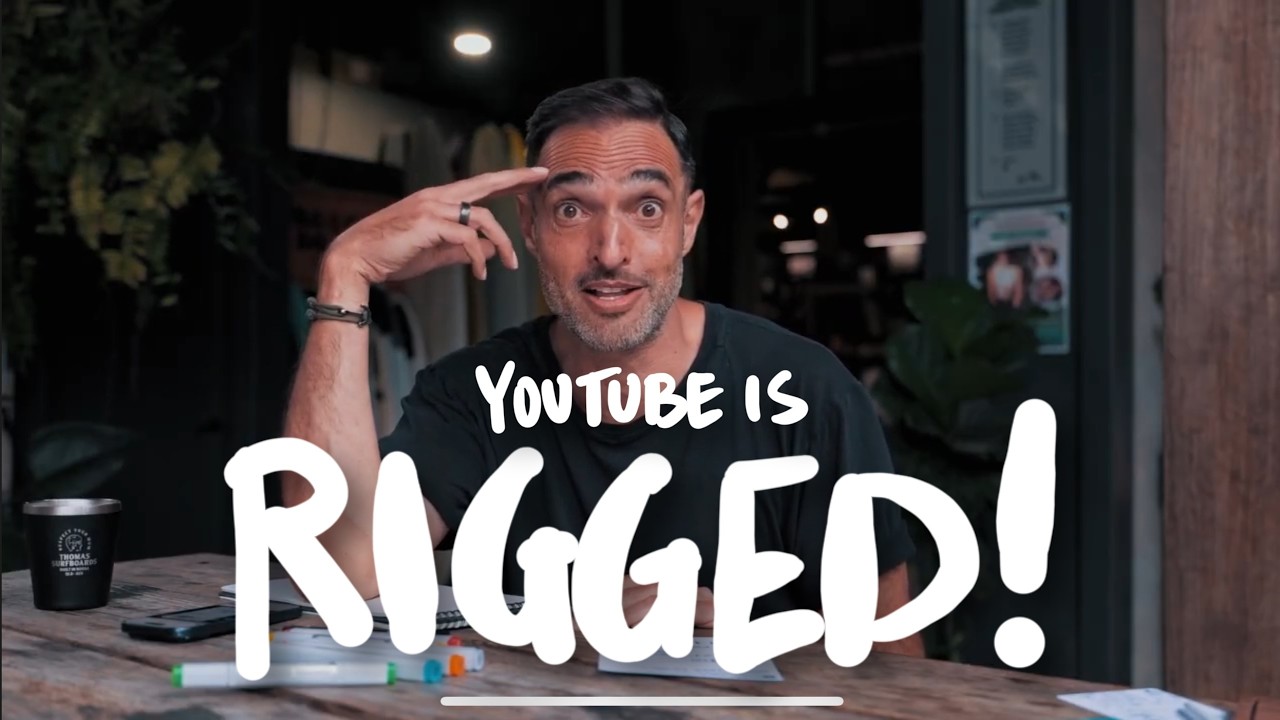
They told us that the bigger your audience is on YouTube, the more money you make. But they lied. Honestly, most of the advice they give us about YouTube is for YouTubers, not for coaches, and it doesn't work for us. When I rebooted this channel 14 months ago, honestly, it felt like YouTube was rigged. And I've discovered it is. But it's not rigged against us, it's rigged for us. To figure out why, you just got to follow the money. The way that YouTubers get paid is kind of weird. They get paid in AdSense and sponsorship and merch. We don't sell merch, we don't sell sponsorships, and we sure enough don't need to get paid in AdSense. All of those things are tiny cheap, and to make any money from that game, you've got to get a ton of views. And so, because they've got to make a ton of views, they've got to go viral. I don't want to go viral, I want to get clients. It's as simple as that. So, I'm pretty new to this. We rebooted this channel about a year ago, and in that year, we got half a million views, which I'm stoked about. I'm just a little guy. Little channel. When we started with 2,000 subs, now it's 20,000 subs, which is cool. But we both know subscribers don't matter. And views is just a vanity metric, because we want clients. If I had to be a YouTuber, here's what would happen. I asked Claude how much money would I've made in AdSense for the channel's views so far, and it was like, "Oh, well, in your niche, the CPMs are are much higher, so probably really well." I'm like, "Well, how much, Claude? Show me the money." You know what Claude said? It ran the numbers, and it said that after a year of religiously posting one video a week for a year, I would have made $7,500. $144 per video. I'm out here sweating ball bearings [clears throat] for you people for 144 bucks a video. Thank God I'm not a YouTuber. I'm a coach. I don't sell I don't make money off AdSense. I sign clients. So, during that same year, because I'm a coach, and because I set my channel up to actually sign clients, we signed 165 clients directly attributable to YouTube and made $5 million in in cash. I'm like, "Okay, well, that's way better, clearly." Claude's like, "Yep, it is." How much is that per video? $96,000 per video. Well, all right. I'm going to play this YouTube game for a little while. So, here's what we're going to do. We're going to ignore everything they told us about how to do YouTube, and we're going to focus on the only two things that actually matter as a coach. It's the show and the business. I call it show business, cuz show's job is to get future buyers to click and watch and binge and decide that you're their person, and the business's job is to turn warm viewers into leads, clients, and money. Five steps. Let's get into it. So, there are five key pieces to this system, and your audience is going to experience your show first and then flow into your business. We're not going to leave that to chance. We're going to do this on purpose, so we're going to build the business first. There's nothing more frustrating than feeling like you're working really, really hard and getting nothing back from it. Especially if you're putting in time and effort and money and getting no sales. We need to fix that first. So, the very first thing you need in your channel is to set up conversion bridges. Right now, your audience is on this island watching your videos and loving them, and you and your offer are on this island waiting for them, but there's no bridges. That's the biggest mistake [clears throat] we make. So, the solution is really simple. Before we build an audience, let's build the bridge from one to the other. So, I learned about conversion bridges at Terry Black's Barbecue in Austin, Texas with Ryan Dice. Had a great dinner, and he's like, "Hey, I'm starting to really get results from YouTube." I'm like, "What kind of results?" I was thinking, like, "Views?" He's like, "Actual clients on the regular." I'm like, "Okay, now you've got my attention." He explained the thing that I now call conversion bridges. It's that every single one of his videos all points to one core video, a VSL, and it's one of the three core conversion bridges, which I should tell you about right now. There's three kinds of people who watch your videos. There's people who are cold, skeptical leads. They don't know you. They don't trust you. There's people who are warm, curious prospects who are like, "This is kind of cool. I'm starting to go down the rabbit hole." And there's people who are hot to trot. They're hot and they're primed and they're ready. And as coaches, we don't really think about those three groups. We either go, "Hey, everyone's hot." And the end of every video we're like, "Oh, if this is useful for you, book a call with me below." Or we do the other extreme, which we assume everyone's cold. And we just sort of love them and give them content and nurture them. The mistake is treating everyone equal. Someone asked me on a workshop the other day, "Well, how do you know who's hot, warm, and cold so you can make the right offer?" I'm like, "No, no, no. I make the offers and they choose the offer that's the best match for them. It's super easy." Uh by the way, if you want me to do a whole video on conversion bridges and show you the naked funnel that we're using, like the actual mechanics of the funnel, uh just comment the word "bridge" below and I'll shoot that for you. So, there's three kinds of prospects, we need three bridges, and that's how we turn viewers into buyers. So, we've got a little system to get the clients and get the money. In order to get the clients and get the money, we need to talk about the right topics. We're reverse engineering. So, the next question is, what do we need to say? What should my videos be about? What are the topics I should pick to get the right people? Again, don't need to go viral. If I ever went viral, I'd be super disappointed. Like, if a million people ever watch one of my views one of my videos, I'd be gutted because 950,000 of them would be the wrong people. They can't buy anything from me. Like, I I'd be stoked that they enjoyed the content, but it's useless for my business. And next time I do a video that's actually useful for my clients, they'll hate it. Let's just skip all that stuff and just do stuff that actually matters. So, instead of going broad and thinking about that packaging first, what we're going to do is we're going to lean into the advantage we've got as a coach. You're already making great content for your clients and they love it and it works for them. You're solving their problems. And so, if we've got these clients who we're helping that look like this and we want more people like that to come into our world instead of inventing packaging to attract the masses, why don't we just take the problems that helped the people we've we've got and share them with the people we want? The product is the marketing. So, in our world, we don't invent things to talk about. Our flow kind of goes like this. I teach content to my clients to solve their problems. And they love it. Then, I run a workshop about it once a month. Pull one thing from my client cupboard, share it with the world. They love it, too. Then, I make a YouTube video like this for you about the same topic. Then, I'll make some socials to promote the workshop and all this stuff. Some reels, some carousels, some emails, blah blah blah blah. We'll just call that socials. Here's the one thing I want you to understand. I'm not inventing content. I'm taking content that worked for my clients and using it to attract people just like them. So, the secret to what do I talk about? Is we need a a simple content map. And the core principle here is forget about packaging and start solving problems. Optimize for useful. There's a whole process for this using the magic model that we do with clients, but let me give you the 60-second version you could do at home right now. Grab a sheet of paper or just download this one signed by me. In the middle, who's it for? You know, we all help somebody. And we help them to go from somewhere to somewhere else. So, just put, you know, the the start point and the end point. I help people go from six figures to seven figures, that's what I do. Then, go, "Okay, well, in order to help people go from here to here, what are the three core areas you help them with?" For me, I help them with marketing and getting leads, sales and signing clients, and then delivery, getting clients results and keeping them for years. You can do that, too. Next, just grab a pen, put 2 minutes on the clock and just write down every problem you can think of that they have about these issues. And then that is your content plan. Every problem is a video. That's how we do it. And one of the coolest things about this YouTube journey for me is who I've got to meet in the process. And last year, I got to meet this crazy cool dude called Caleb Ralston. Caleb, if you ever watch this, grateful. Um his second ever video on YouTube was a 6-hour course on personal branding. It's fantastic. Um that by the way, that's just mental. He's insane. A couple days ago, that video got a million views, which is cool. It also built his email list to like 50,000 people and has filled him with so much business it's not funny. And he posted a story on Instagram the other day. I wrote it down. I've got it here on my iPad and I'll read it cuz it's word for word good. Stop writing content with the goal of getting the most views and start writing content with the goal of solving the biggest problems for your customers. When you do that, you win. The goal of the content map is just a list of problems and you teaching the solutions. Stuff you figured out for yourself and stuff you figured out for your clients. If you do that, you will crush. Once you pick the problem, the next thing is you've got to make a brand new killer video from scratch. And that sounds like one thing but it's two. It's like what's my content? And number two, how do I structure the video so it actually works? That's two jobs. If you have to reinvent every video from scratch, content-wise and structure-wise, it's really hard. So instead of doing that, let's just pick one structure and make it easy. That way, your job each time is what's my content, which hopefully you're stealing from your client program. The way I think about this is like Scooby-Doo. It's a show that's been around for 60 years. It's got 400 episodes and every one of them is identical. They drive up, the Mystery Machine breaks down, they find some slightly creepy-looking place and they decide to stay there for the night. They meet a dude, there's problem there's things going on, they decide to solve the mystery, they get split up, they chase, there's Scooby Snacks involved and at the end they unmask the dude and they would have got away with it, too, if it wasn't for the pesky kids. Every episode's identical. Imagine how easy it would be to write a Scooby-Doo episode. All you got to do is like, where's it going to happen and who's the bad guy? And they spin the wheels. Oh, abandoned warehouse, janitor. Got it. It writes itself. If we can do that with your content, we've got one framework, it's really, really easy. And so the the thing we want here is what we call attention architecture. It's just like, what's the structure of my show so I can keep people's attention all the way through, from start to finish. So, I was getting all in my head about, you know, outlining a video or scripting and I talked to Ali Abdaal, one of our clients. He's got 6 million subscribers on YouTube. He's a legend. There's nothing I can teach him about YouTube. He's come to me for some business help. And I was like, "Man, how do you outline a video? Do you script it or do you outline it?" He goes, "No, no, no." He was a like a junior doctor when he got started and he had like 30 minutes a day after a graveyard shift to like bang out a vid once a week. He's like, "I didn't have time for scripting. So, you you just get a sheet of paper, put a circle in the middle, write the topic in the middle, and then just do like three to five big ideas and three to five sub ideas for each because every video is a list." So, I took that idea and I made this worksheet called the YouTube Show Designer, which is how I outline my episodes. I take my topic or my problem from the previous step and I put it in here. Here, I've just got my three to five points and then sub outlines off them. And so, outlining a YouTube video is as simple as filling in. These bits here, we're going to get to in the next step. And if you want to download the worksheet, it's in the description below. So, we know how to get a client, we know what to talk about, we've got a great structure. We've still got to get them to click. This is important. This is attention wrapping. This is packaging, uh titles, thumbnails, and introductions. We call this attention wrapping. And our job here is to click them and stick them, okay? It's like you know when you open up Netflix and you see this kind of screen full of thumbnail pictures of all the different shows. You hover over a thumbnail, it gives you a description of what's in it. The thumbnail's a thumbnail on on a YouTube, the description is the title under your thing. If you like the thumbnail and the description, you click and you can watch a trailer, 30 seconds or a minute. That's the introduction to your video. What YouTubers do is they figure out the packaging first and then what to say. We figure out the problem and now we get to the packaging. Once we've got something to say, now we've got to make sure that people want to hear it. Titles, thumbnails, and intros deserve a whole video of their own, so I'll get that ready. I will say that my first intros my first eight videos or something, my intro is like a minute and a half long. You don't have a minute and a half of anyone's attention these days. On short form, you got like 3 to 5 seconds. On YouTube, maybe it's 30. So, we use a three-sentence intro. It's a promise, it's proof, and it's a plan. Promise is either this thing is possible or you've got that problem. Proof is some actual results that you've got or your clients have got because if you haven't, don't make the [ __ ] video. And then the plan is, so in this video we're going to do one, two, and three. The last problem that I see people like us struggle with on YouTube is that you're great in person and we're [ __ ] on camera. And I'm not going to lie to you. Today, I've been a bit [ __ ] on camera. But we got here and that's okay. I think the difference between being great on camera and being a little bit wooden is how prepared you are. And it's not under-prepared or prepared, there's too much and too little. And today, I was too much. If you're too prepared, over-prepared, the structure is too tight, too rigid, and you end up a little bit wooden, and you get all in your head. At least I do. Too much the other direction, which I was over-correcting for today, and you're nervous, and you're unsure about it, and that doesn't come across well. You want to be just prepared enough to crush it on camera. In the Goldilocks zone. There's a bunch of ways to do this. Some people love a script and a teleprompter. If that's you, please lean into that. I hate that. Some people have bullet points. I don't find that enough. Others use slides. Not with walls of text, but like a picture and a a word that keeps you on track. If that's you, do that. For me, I like my cards. And today, I was testing out a different method. Turned out I overcooked it and I got all in my head. So, you don't want to be over-prepared, you don't want to be under-prepared. We want a natural outline, just prepared enough to crush it on camera. And the only way to figure out which way you are is to try them, like I did today and I learned that I was better off with my cars and my Bens. I'm not a YouTube guru. I'm not a pro. Just like you, I'm figuring this stuff out. Most of the time the videos come out great because the stuff's good and Sean's a good editor. But half the time it crushes and half the time I feel a bit I'm just doing my best. If you get these pieces right, even basic right. When you got conversion bridges to make sales and a content map to know what to talk about, that's how we've been able to sell out now 12 months in a row. We can get people's attention and hold it. That's how you get the brand width we talked about before. You get them time on brand being your stuff cuz if they binge, they buy. And if you got a good structure and a natural outline you become magnetic. And honestly, if you do those things, you can make big sales from a small YouTube channel. [ __ ] the views, we don't need them. Let's put some of this stuff into practice, shall we? If this has been useful and you're just checking me out and you want to go a honey bit deeper, then the workbook and the YouTube show designer, that's in the link below. Do you want to go down the rabbit hole and see a conversion bridge in action? It's called the million dollar plan. It's a video where I show you exactly how we grow coaching business from six figures to seven figures or all the steps are in between and a bunch of case studies to show you how they did it. That link is in the description below and depending on how YouTube works, it might be here or here or somewhere, but it's definitely in the description below. Hey, thanks for sticking with me today. Especially Sean. >> [laughter] >> Big love and I'll see you in the next one.