anzeigen
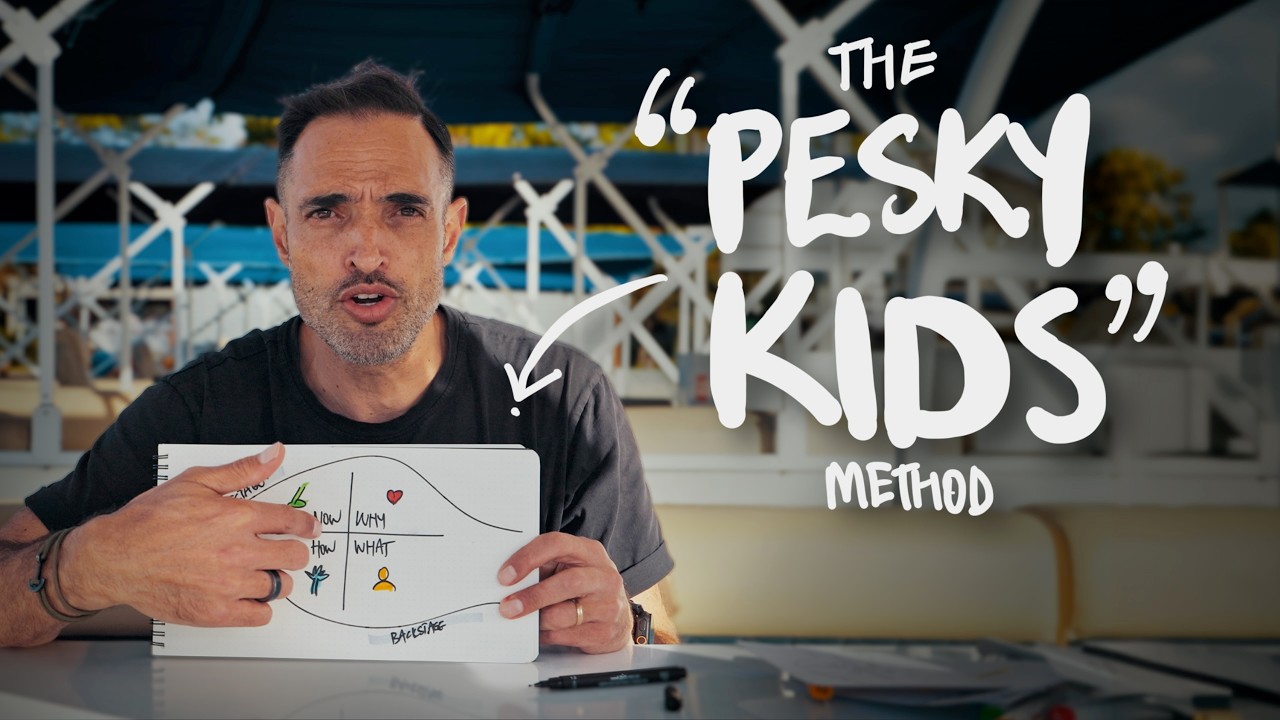
One of my clients asked me the other day, "How long does it take to build one of these workshops you run every week in Black Belt?" And I told him the truth. It's 22 minutes. He said, "Oh, it's taken me 6 hours to create a 1-hour Zoom call." Well, clearly he's doing it wrong. So, today what I want to do is show you the easiest way I know to build a killer client workshop that gets them engaged, it's fun, it's light for you, they implement the strategies and tactics, and I learned it all from a primary school teacher called Bernice and from Scooby-Doo. Together, they helped me build this worksheet, the world's longest workshop-building worksheet. And we're going to work through it together. I'm going to show you exactly how I build a weekly workshop. Oh, by the way, if you want to get a copy of this, just download it below and you can scribble along, build yours as we go. Most coaches struggle to create workshops because every time they do a new one, they have to create new content, fine. But because they don't have a a system for how a workshop runs, a framework for it, they have to create a new workshop every time. So, they're doing two news. I'm only doing one new. Every workshop I run, if you clock it almost to the minute over 16 years, if you go what's happening at 16 minutes, I can tell you exactly what's happening. At 32 minutes, I can tell you exactly cuz every episode, every workshop is exactly the same. What changes? The content, the topic. Just like every episode of Scooby-Doo is identical. For 60 years and 500 plus episodes, every episode's exactly the same. The only thing that changes is the bad guy's different and they're in a different scary location. You know, the Mystery Machine's driving along late at night, they break down somewhere, they find somewhere to stay, it's kind of scary, a local tells them to leave, and they don't. The monster's always got some kind of glowing eyes, red or or green. At some stage uh they decide to split up to investigate. They get lost, there's a chase scene, Shaggy jumps into Scooby's lap, "Ruh-rohs!" All of the stuff. Velma gets kidnapped, da da da. And at the end, at the crescendo, they find the bad guy, they unmask him, and he would have gotten away with it, too, if it wasn't for those pesky kids. It's identical! You want your workshops to be just like that. And even though every episode was the same, I watched every episode. You know why? Cuz it's fun. It doesn't matter. You look forward to the inside gags. The The is not just easy for the creators to create, but it makes it calm and safe for your participants as well. So, the first thing we're going to do is we're going to architect out a Scooby-Doo episode. So, how do we build a workshop like Scooby-Doo? Well, there's five steps. Here's the first one. I want you to assemble your art. Here's the thing, when your clients experience a workshop like this, it feels like art, but it's built like an assembly line. It's step-by-step-by-step. Uh there's a simple framework that every episode, every workshop follows. And all we're doing is we're freestyling in a framework. So, the first thing we need to know is like what's the framework? So, I want to be super clear. I didn't invent this framework at all. I learned it from a woman called Bernice McCarthy. She was a primary school teacher. She helped other primary school teachers develop lesson plans that rocked. She called it format, number four MAT. I don't know why, she just did. I kind of mostly use it the way she does it, and then I've added a little bit of Taki Coach Workshop spice that I think will really help. So, when you're teaching someone something new, there's four things, four phases we need to go through. The first piece we need to teach them is why it matters. They say you can lead a horse to water, but you can't make it drink. That's just not true. You can give the the horse a salt cube, a salt lick, it gets really thirsty, and it wants to drink. The why is the salt cube for your content. So, the first thing we do is we teach people, "You're You're here to do this. Here's why it matters." Next, we teach them what they need to know. It's three or five big ideas. It always is, it's never four or two or seven. It's three or five, trust me. Third, we show them how to do it, and then finally, we tell them what to do now. What's the very first steps they can do to take these new skills and put them into practice. The why is where you connect with their heart, you get them emotionally engaged. The what, we're teaching their head how to think. The how, we show them what to do with their hands, and then at the end, we tell their feet to march. Heart, heads, hands, feet. So, just to make this easy to remember, just think. We can start with why it matters. I'll make that red. What they need to know, yellow for a a bright idea. We're just going to teach their head what they need to know. Uh blue, how to, like blueprints for a plan. And then green till they take to go. Okay? So, that's the big idea. I'm going to show you how it maps to this builder. There's a lot going on here. I just want to call out some of the key pieces. Also, I'm the idiot who decided, "No, Sean. I don't want to shoot at home. I want to shoot outside. It's going to be great." So far we've dealt with rain and wind. This thing nearly blew into the river and got eaten eaten by a pelican. Sean was right. I was wrong. Okay, so there's a few things happening on this builder. And so my workflow goes like this. I have an idea for a workshop I want to run. I grab one of these, usually on my iPad, but I've printed it out here for you. And then I scribble on it from top to bottom. Takes me maybe 20 minutes. Uh then this goes off to someone on my team. Whoop. Uh even if you're doing it yourself, take the time to scribble this out. It makes everything else faster. Uh this builds the slides, the worksheets, the anything else you might need as assets for your clients. A few things going on here. The first bit, this top chunk right here. Is the why that we talked about before. This is the bit that gets people emotionally invested. There's three things going on. There's a little why stack at the top, three frustrations and a fear. If you don't get If you don't do this, here's the bad thing that happens. If you do this, here's the good thing that happens. A case study, like a client story. For me, I told you about that guy Steve. He's my case study for this one. Um that's the why piece. And those together, you know, take You just take a minute and you go, "If they get this wrong and they don't do it, what are the three frustrations they have and what's the fear that happens if they don't fix it? They get this right, what are the three things that they get instead, short-term ones? And then long-term, what's the dream? And then a client story that you can tell." That's the why piece. Next we've got the what. And the what is um three or five key points. If you're doing like a short teacher's like 15 or 20 minutes, three's great. If it's longer like an hour, I like five um quickly and then a lot of time to do the work and implement. So, this is our five key points. Each one's got room for the point and a metaphor. The point is the words which go on the slide. The metaphor is the picture that goes on the slide. We'll talk about that maybe another time. This is the what they need to know and we're teaching them how to how to think about it. So, we've got the first two components done. The next is how do you do it? That's usually worksheets for me and I just scribble out worksheets on a little page like this and I just add extra pages down the bottom where I'm scribbling out whatever the layouts might be. So, let's call this the the um sorry, the how. And the how is like, "Okay, show me what to do." It's either the script or the template or the the checklist to follow. Whatever the procedure is you want them to learn so they can install it into their their life, their business, their world. And the last piece, the now, is the last page of the workbook and it's the last thing we do in the in the workshop. This is where where we tell them uh we collect their insights, you know, best things, what did they learn, and their next three actions. First step, something super easy they can do in 2 minutes or less without really trying. Step after that, maybe a little bit more. And a stretch after that just to get them into motion. So, why, what, how, and the now usually happens at the end. Sometimes it's written. Often it's like uh we tell them what to do, give them clear instructions, make sure they understand the instructions, and then we set a timer and get them to do it right now, live, on the call. So, that's the outline. What's that I hear you say? But you didn't use the whole sheet. I know. That's because I've only shown you point number one. Before we go to point number two, let me give you one extra thing that's on the sheet that the clients never see. I add two layers. Uh one is some notes for me for how to deliver it front stage. So, when I'm on stage or on Zoom with clients, what are we going to do to make sure it's interactive and fun? And then backstage, I have some notes as well so that the team can produce the slides, the worksheets, and even like simple things like they know where to stick it in the website and how to categorize it afterwards. The stuff for the portal. So, that's this um that backstage stuff lives up the top here. It's got the name of the session so they know what to put on the front the tagline, you know, the the the benefit like the sub headline, uh what's the image or metaphor on the on the front page, where does it fit in our model so they know where to put it in the portal, is it for clients, back belt boardroom, or for the company as a whole, we just tick that. And do they do they need slides and worksheets or, you know, what's the framework? That's all backstage stuff that the clients never see, it just makes my team's job easier. We're getting rained on. We're going to move. I apologize. Stay with me. All right, I think I found a spot. Sean, check this out. Terrace Marina These boats are all occupied. I think there's one with the table. Maybe one of the big ones at the end. Should we check it out? Look at that. That's us right there. This is perfect. Well, this worked out great. We found a little boat thanks to Terrace Marina. Shout out to Terrace Marina. If you're ever in Noosa and you want a a nice boat, Terrace Marina. They let us have this boat and uh we're going to call it the HMS studio. We're talking about how the best workshops feel like art, but they're assembled like a manufacturing process. And we do why, what, how, and now. Showed you the sheet, which is now soggy. We need to teach three to five key points and I want to show you how to find them and how to make them great. So, the second big thing that we want to do is to distill your dish. The biggest temptation that we all fall into is we put too much content into our workshops. We try to pack everything we know instead of what they need to know. And they don't need to know much at all. They need to understand it at a high level and know what to do. It's just like a light switch. I don't know how electricity works, but I know when I click that button, the lights come on. That's enough for me. Your clients are kind of the same. So, the problem is you know you know too much. And uh if you try to teach that, all people's brains just explode. They get overwhelmed. So, we want to distill this thing down to uh down to three or five key points like a chef plating a dish at a restaurant. You ever done that? If you ever go out with a group to a restaurant, you all order the same dish or it's one of those like you know, formal things where it's a set menu and everyone gets the same dish. If you look at the plates, they're all identical. There's three potatoes and this many vegetables and three cuts of meat. It's always threes or fives, odd numbers. It just kind of works. So, we're going to distill it down to three to five big ideas. And the way it starts is just by dumping out all the things you can think of to help someone go from the problem they've got to the result they're after. I usually just do a mind map and I list down all of the um things they need to know or do. And I usually end up with this big fat mind map list of all of the stuff. It's great, but it's too much. That's totally normal. Just start with the dump. It's easy to sort afterwards. Step two. We're looking for Okay, if the if the job of this workshop is to help someone go from problem to solution, what do they actually need to know and need to do? And we're looking to like get rid of some of these pieces. Okay. We're probably still going to end up with yeah, maybe too many and that's okay. We're just going to see if we can group them together. I might end up with three or five. The next step is just to put them into a sequence. One, two, three. Four and five optional. And then what I like to do is I flesh out the content so they sound like legit points, not like shitty mind map scribbles. So, the formula for unpacking a point I learned from a guy called Matt Church in Sydney. Super smart dude. And he taught me for every point I teach to have a key point, a model, a metaphor, a a case study or some steps and a story. You don't have to go that far, but just understand that there's three levels we can teach content at. So, we're going to talk about stuff like that a little bit later. But for now, all I like to do is I like to name my points. And my There's lots of different ways you can do it. I like verb your noun. Very, very simple. Check this out. Distill your dish. There's a verb, that's what you do and there's a noun, that's what you do it to. That's how I like to name my stuff. It's very simple. Verb your noun feels kind of active my turn. You can do it fancy or formal or whatever you want. I like verb your noun. So, it's one thing to have great points and really great ideas, but if you really want to make them stick, you got to make them simple. And the best way I know to make an idea simple is to draw it. When we draw a visual model, magic happens. People instantly get the context. And this crazy thing happens where they project themselves into the model. They might argue with a fact or with a statement, but there's no disagreement at context. So, a model just allows people to project themselves into it and see themselves, "Oh, that's where I am. That's what I need, and this is what I need to do." They're beautiful, simple things. Uh so, the third key point is to draw insight. Before we go deeper, let's make sure you're tracking. Uh first thing we're going to do is we're going to assemble art. It feels like art. It's built like an assembly line. Like Scooby-Doo, every workshop's the same. We've got a format. Why, what, how. Now, that's the easy thing. Once you got the framework down, we just need to decide what our three to five key points are. That's just distilling the dish down to the core, basic, most important elements. Not everything, you know? Just what they need to do. But, you can do all that, have the best points in the world, but if it's just words, people remember like one squif- squifteenth. That's a scientific number. One squifteenth of what you're trying to get across. The best way I found to teach complicated things is to simplify them with a visual model. That's why our third key idea here is to draw insight. I love a visual model. Because in a simple shape, a circle, a triangle, or a square, we can we can say a lot without having to say very much at all. I mean, if you think about this model that I showed you before, instantly now, you get this. There's some little pictures. The pictures aren't that important, but there's a simple quadrant model. It's a basically a square, right? You know this now, and by seeing two lines and four words, you know how to build a workshop. That's the power of a visual model. A couple of years ago, Kerrie-Anne and my wife and I, we went to Uluru. Used to be called Ayers Rock. It's the big red rock in the middle of the Australian desert. And there are rock paintings on the caves there that have been there for a thousand thousand maybe 50 to 100 a long many years. That's what I'm trying to say. And to us they just look like you know, dot pictures. But each one of those pictures is is a symbol that has meaning. And so when people visit those locations, they instantly know the story of the land and the people who used to live there. So there's these concentric circles which means a meeting place for an important place. The bigger the circle, the more important the spot is. Small circle, small meeting place. And then there's lines between them. That's a travel or a journey. There's little footprints. All of those shapes mean something. And so without saying any words, before there was written language, there was a picture that people could make meaning from. I think that's kind of amazing. And our job is to make complicated things simple with simple drawings. The good news is there are only three shapes. There are circles, there's triangles, and there's squares. I don't usually make a model for each of my five key points, but I make one core model for each workshop. It's just easy that way. It gives people an understanding at a high level of what the context of these things is all about. So okay, I'm good at drawing with pictures. It's not natural to me. It's a learned skill. You can learn it too if you want to. Like I said, there's only circles, triangles, and squares. And the way I choose which model to to use is starting by figuring out which shape makes sense for the topic I'm teaching. There's a logger going past in the river trying to rock the boat. Don't mind them. So I'm going to give you an idea like a workshop topic. And I just want you to think, does that feel like a circle or a triangle or a square to you? There's no right or wrong here. Just intuit it. So if I say we're doing a workshop on the topic of community, does that feel like a circle or a triangle or a square? For me, I'd go, well, kind of circle, kind of togetherness. Again, it doesn't matter what you said. Whatever you choose is fine. Uh if I said um marketing funnel, you're probably going to go, well, that's a triangle. Yeah, cool. Um what if I said uh uh it's about building something stable for the future. I know that's vague, but you get the idea. Maybe that's a square. It doesn't really matter. So, you go, "What's this about? Does it feel more circular, more triangular, more square?" It's weird. Go with me. And then for each of those shapes, there are a bunch of like separate models that do different jobs. I was just going to sketch a few out for you uh so you can learn a couple of basic shapes. Here are some of the circles, triangles, and squares I use all the time. Now, there's a lot here and there's some advanced moves, but if I was just getting started, I'd probably just use these three down the side. We've got a three-circle Venn where we've got you know, three things and you need them all and where they intersect, there's something interesting going on. That's cool. Uh and that's really about the overlap between your idea number one, two, and three. Then we've got uh triangle. It's just there's three things you need to know. This is a super basic shape. You can get fancy and talk about what happens with the corners, but for now if like there's three things you want to do and you're just getting started, just say there's three things. You can put them in a triangle. It's not it's not the best, but it's a start and I'm I'm on your team. Next, we've got your basic quadrant model. There's a bunch of ways to do this, but the most common way I use it is like the result they want is on the top, the thing they don't want is at the bottom, like no sales, lots of sales. And then on the left, we've got the bad way of getting the sales and the good way of getting the sales. Right? And so that gives us four quadrants. You know, we've got bad's always bottom. We've got second bad over here. You don't get a good result. You're doing the right thing, but it's not it's not working out for whatever reason. We've got getting the right result, but it's hard work. And then we've got the top right green quadrant, which we really love over here. So, there's a bunch of different models. We can talk about them in a future video. If you want to know that, just comment below and let me know that'd be useful. But all we're going to do is we're going to get a circle or a triangle or a square to explain your workshop. By the way, if the last couple of minutes went over your head, skip it. It's your workshop. You can do what you want. I was terrified I just littered in the Neuse River and I would have been and from the shire. So, you'll just be talking about how to teach your stuff, which is cool, but if all you do is teach your stuff, you get exhausted and they get overwhelmed. It's like uh I think about running a workshop a little bit like breathing between you and the audience. Not mouth-to-mouth, that'd be weird. But every time I'm teaching content, I feel like I'm you know, blowing my knowledge, inspiration to the audience. And so, if all I do for the whole time is and I never have have a chance to breathe back in myself, I run out of energy. It gets exhausting. You've probably experienced that. And on the flip side, if you're in the audience and they're like, "Oh, I can't wait." They get their pen ready and their notebook and they're like, "Uh, ready?" And then you teach them some stuff. And you teach them some more. Teach them some more. More. [gasps] It's like, "This is really great stuff, but I can't hold it in." We need to let them breathe and let you breathe. So, the whole flow is that you're going to give them a bit and then give them a chance to breathe out, talk about it a little bit. That pause is where the magic happens. All learning happens in the space after you've given a bit of content and maybe open up a great question. So, the fourth key here is to plan spontaneity. After a quick cut, I now know how to spell the word spontaneity like a pro, I think. You got to plan some spontaneity. This is where you deliberately put in a few of those pause points, those breathe points. So, people can like pause, chew a little bit, share a little bit. It like resets their attention and it means that they can consume what you've just given them and they're ready for what comes next. And so, what I like to do is every 7 or 8 minutes, I put in a state change. Like uh a question I'll ask or an activity I'll get them to do, something to type into the chat or something to write down, someone to come off mute and we'll share. Uh it's it feels spontaneous, but it's planned. The easiest way to plan a great workshop which has really good flow between you give them some stuff and then there's a chance to pause and breathe is this. So, the way I do it is every time we transition from why to what or what to how? Or how to now? Are you deliberately install a spontaneous moment? The easiest way to do this is just to install the question. So, you just create a slide with a question on it that they ask. So, if you taught why this matters, maybe the question you put on the slide is, "Why do you want to master this? Or what's the hardest part about this for you? Or what would be great if you could?" A question that gets them to feel why they want it. If I'm doing what and I've taught them, you know, three key points or five key points, "If you implement these, how will it make your life better? Or which of those is most valuable for you?" And then when I teach the how, I'm like, "How is this different to how you've been doing it?" Each one of these is a question designed to to have them like pause to a little bit and go, "Oh, that bit was great." They can talk to their friends or they can talk in the chat, they can come off mute or whatever the activity is, and then they're ready for the next chunk. What I'd planned to do was show you on that big builder worksheet exactly how I do that, how I prep for this. But here's the thing, it was raining before, so the sheet got wet. And then, when we got here, the sun was beaming so high on me that we actually stuck sticky tape on it and put it up to try and block the sun. My beautiful worksheet now looks like a bit tattered. It looks like a pirate flag, but we're just going to go with it. So, every one of these interaction points has a spot on the builder. So, literally, we do the why, the frustrations and fears, the wants and aspirations, the little case study, and then, right here it's got question. That's the place for me to install a spontaneous planned moment. And then we teach them the five key points, and guess what? It's got question, and there's a chance for me to put in the question. Every time there's a transition, the worksheet forces you to create a little a little piece, so you know you're not just like blabbing at people. You give them a little bit, and they give them a chance to >> [sighs] >> breathe out and chew and reset. This is actually the perfect metaphor for what happens next. Because my number one goal when I run a workshop like this is that people don't leave smarter or or cleverer. They don't leave having gone, "That was really great, and I had a good time, and I learned some stuff." I want them to run home like a metaphorical kindergartner with something they've just made be able to go, "Mommy, Mommy, look what I made." and stick it on the fridge. If they come to the workshop and they just get smarter, but they don't produce anything, we've wasted each other's time. The goal of a workshop is to get them to work. So, point number five is to send them home with something they can stick on the fridge. Something their hands have actually made. Our job is to get people to do stuff. So, if they learn something new, we need to give them a chance to like practice it and send them home with something done. So, I think about a spectrum of like uh if this is I just learned something new, but I haven't done anything yet. And this is like I learned something new and I finished it. I mean, that would be a great goal. But, if we can get them started and clear about what the next couple of steps are, I think that's a real win. So, my goal is either I get them to here or we get them to here. And the way we do that is with activities that we can do in the workshop and some simple steps to do when they leave. The activities in the workshop depends on what the stuff you're teaching is. Uh if we're teaching sales, often it's a role play or we design a script. But, role plays are great like in groups of uh groups of three, you know, a coach, like a sales person, a prospect, and an observer. And they rotate through the bits. It could be uh if we're shooting videos, well, the best activity we run when we're teaching people to do short-form video is we teach them the structure of a great short like we help them pick a topic. Round one, everyone picks a topic. Great. Then they type in the chat, "Got one. Awesome." Then we teach them how to outline the video on these little uh banger cards that we've got. And so, they'll outline them. Super cool. Guess what we do then? Well, I could either go, "Okay, we'll go home and shoot them." You know as well as I do, they're not going to shoot them because it's scary. I'd rather them fail like try something and be a bit rough here with me on Zoom and then crush it out there in the real world. It's like the Navy SEALs say, "Sweat in training so we don't bleed in battle." That's the goal. So, if we're doing videos for example, guess what I get them to do next? Well, it's really easy. I'll just put a timer on the thing for two or three minutes. I'll get them to hold their phone, shoot the Instagram reel in the four chunks. Yeah, the hook, the build, the payoff, the the invite. And then that's an activity done. If I wanted to get even better, I could get them to get in a breakout group and share the videos. And so we'll get them to play the videos once with the sound off, just looking at the the visuals, like see how it how it looks visually. And then the second time we'll get them to play the video um with just the audio playing, so people just hear it. And then we All I'm saying is we want to take them from getting a thing to getting it done live with you, not sending them off with homework. So last night I was talking to my daughter Araha. She's 17 now. And uh she's just out of the new school, it's going pretty well. Uh when she was in year one, sort of six or seven years old, she was a very rule-following little kid. And uh every week the teacher would give the kids some homework, just light stuff uh that was due on Friday. Always like through the week you get the stuff, on Friday it's due. One Thursday night it's bedtime and I'm like, "Okay, bub, time for bed." She's like, "Ah, Dad, I haven't done my homework." I'm like, "It's all right. Um the teacher will understand." "No, no, no, no. If I don't give it in tomorrow, I'll get in trouble." And you know what kids are like, they don't want to get in trouble, little kids. When they're teenagers it's very different. I'm like, "Listen, it's late now. If we get up early, I can help you with it in the morning." "No, no, no, Dad, I really need to do it now." And I tried all of the parenting tricks in the parenting book and none of them worked. In the end, exasperated, I just say, "Listen, bub, they've got you for 8 hours a day. If they can't get the work done in 8 hours, that's their problem, not yours." And she goes, "All right." And goes to bed. So next day she gets to school, Friday morning, and the teacher does roll call, and it's alphabetical by first name. Her name is Araha, starts with an A, so she's up first. She goes, "Araha?" "Present, miss." And sits back down. "Araha?" She stands up again. "Yes, miss." "Have you done your homework?" "No, miss." And sits back down. And "Araha?" "Yes, miss." Stands up. Three times she stands up. "Yes, miss." "Why didn't you do your homework?" And Araha just looks her dead in the eye and with a very straight face as an as an innocent, trusting six- or seven-year-old goes, "Well, my dad says, 'You've got me for eight hours a day. And if you can't get the work done in eight hours, that's your problem, not mine." And the teacher is like [laughter] "Oh." And the teacher is like "Oh." Anyway, I got a call from the principal. But, I firmly believe if a client's going to spend some time in a workshop on Zoom with you, let's get the freaking work done live together and not send people away with homework that they're never going to do anyway. Our job is to do the work with them live and send them home like a kid being able to go, "Mommy, Mommy, look what I made." Stick it on the fridge. You know what's crazy? It actually took longer for me to talk about how to do this than to actually fill one of these things in. If you want a blank one, just grab it. There's a link in the description below. As well as I actually filled one of these out for this exact YouTube. And you can see the filled out one so you can see, "Oh, that's what he did. And that's what I just saw. I kind of get it now." Uh a couple of months ago, I was about to shoot a YouTube video with Shawn here. We're down in Sydney. And Mike on my team rang me and said, "Oh, the workshop tomorrow, I need the stuff." I was like, "Ah." So, instead of shooting the video we were going to shoot, I just built a workshop live using this builder. And you can watch me in action. There's a link for that as well. This video has been a hell of an adventure. We've been through a lot together, you and I. We've been in the wind, in the rain. Now we're on a boat. That says something special about you. There's really a little connection. So, thanks. Uh if you want to see what it'd be like to work together, to help grow you to seven figures with a lifestyle empire that has you help more people, have more fun, make more money, I shot a video about how to do that, too. It's called the Million Dollar Plan. There's a link in the description below to show you exactly what we do to work with you to grow you to a million bucks and beyond. Check it out. Listen, this has been fun. We've got to get off this boat. I appreciate the hell out of you. Ciao.